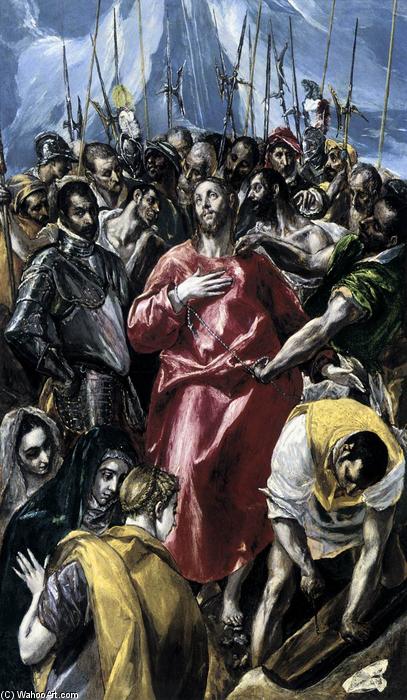
The Disrobing of Christ: A Masterpiece by El Greco
El Greco’s “Disrobing of Christ,” painted in 1577, is a profoundly moving and complex work that exemplifies the artist's unique style and spiritual depth. This particular version resides within the sacristy of the Church of San Felipe el Real in Madrid, Spain, offering viewers an intimate encounter with one of El Greco’s most celebrated creations.
Subject and Historical Context
The painting depicts a pivotal moment from the New Testament: Jesus being prepared for crucifixion. It portrays the scene where Christ is stripped of his garments by various figures, signifying both his vulnerability and the impending sacrifice that would redeem humanity. The work was created during the Counter-Reformation period, when the Catholic Church sought to reaffirm its doctrines and inspire religious fervor through art. El Greco’s dramatic style resonated with this renewed emphasis on emotional intensity and spiritual devotion.
Style and Technique
El Greco's distinctive artistic approach is immediately apparent in “The Disrobing of Christ.” He rejected the Renaissance ideals of naturalism and anatomical accuracy, instead embracing elongated figures, swirling compositions, and a vibrant color palette. The painting showcases El Greco’s mastery of oil on canvas, employing bold brushstrokes and dramatic chiaroscuro (the contrast between light and dark) to create an atmosphere of intense emotion. His use of perspective is unconventional; space appears compressed, drawing the viewer into the heart of the scene.
Symbolism and Emotional Impact
The painting is rich in symbolism. The figures surrounding Christ represent a range of emotions – sorrow, compassion, resignation – reflecting the human response to suffering. The disrobing itself symbolizes not only Jesus’s vulnerability but also his willingness to embrace sacrifice for the salvation of mankind. El Greco's masterful use of color further enhances the emotional impact: deep reds and purples evoke feelings of passion and mourning, while golden highlights suggest divine grace. “The Disrobing of Christ” is a work that transcends mere representation; it invites viewers to contemplate profound spiritual truths and experience the depths of human emotion.
El Greco: The Artist Behind the Masterpiece
Doménikos Theotokópoulos, known as El Greco (meaning “the Greek”), was born in Crete in 1541. He received his early training in icon painting before moving to Venice and later settling in Toledo, Spain. El Greco’s unique style—characterized by elongated figures, dramatic compositions, and a vibrant color palette—set him apart from his contemporaries. Though initially overlooked during his lifetime, El Greco is now recognized as one of the most important and innovative artists in Western history.