A Vision in Gold and Shadow: El Greco’s ‘The Virgin of the Immaculate Conception’
Dominikos Theotokópoulos, universally known as El Greco, possessed a singular gift – the ability to translate profound spiritual experience into visual form. His “Virgin of the Immaculate Conception,” painted between 1607 and 1613 in Toledo, Spain, stands as a testament to this extraordinary talent, a luminous embodiment of faith rendered with an intensity rarely seen in art. More than simply a depiction of a religious icon, it’s a journey into a realm where earthly boundaries dissolve, replaced by a swirling vortex of color, light, and emotion – a truly immersive experience for the viewer.
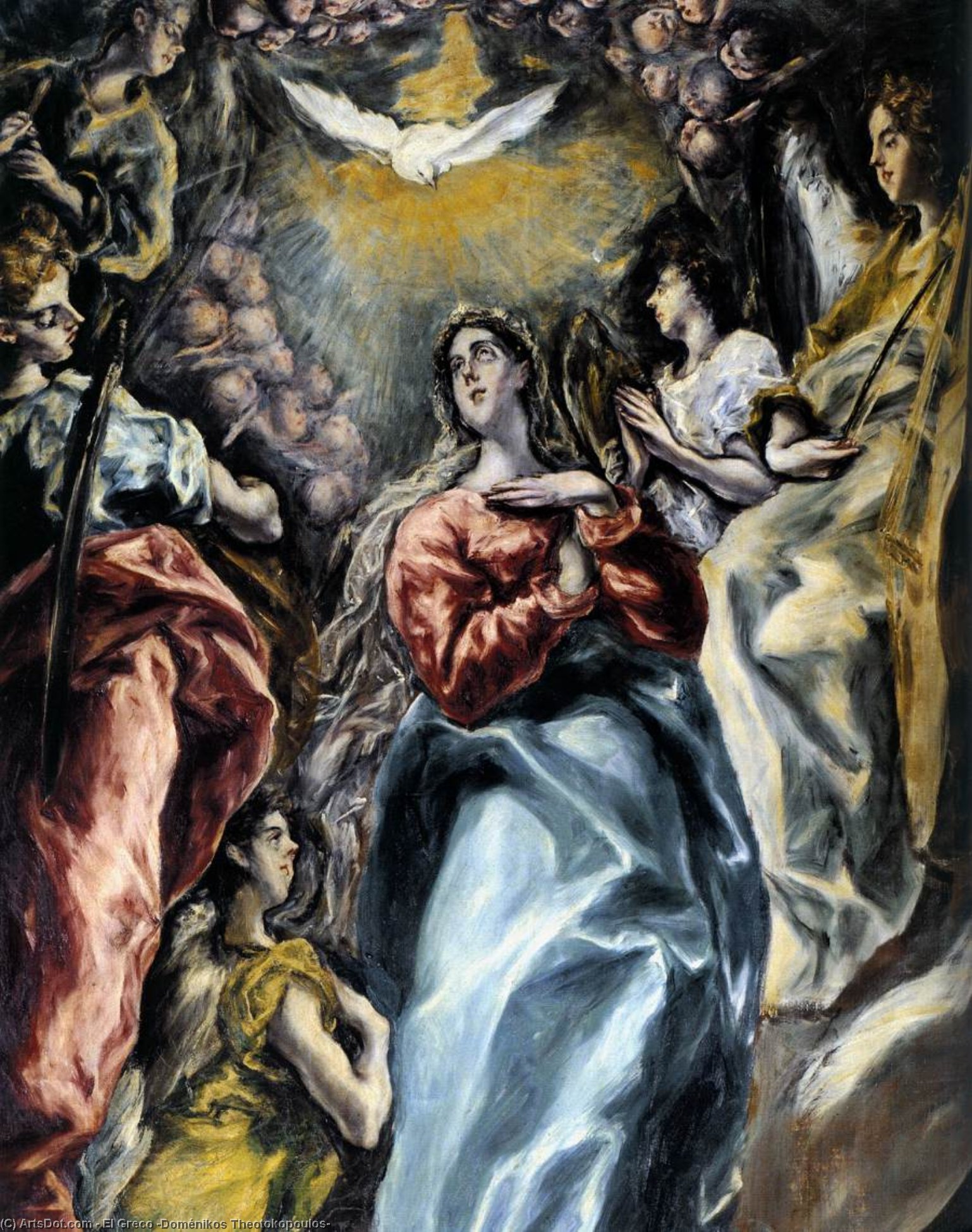
The painting immediately captivates with its dramatic composition. The Virgin Mary, rendered in an elongated, almost ethereal form characteristic of El Greco’s style, dominates the scene. Her hands are raised in prayer, not in a static pose, but as if caught mid-gesture, conveying a sense of fervent devotion. Around her, a multitude of angels – some soaring upwards, others clustered closer to the Virgin – create a dynamic and layered effect. They aren't merely attendants; they’re participants in this spiritual drama, their faces alight with joy and participation in the sacred moment.
The Language of Color and Light
El Greco’s mastery of color is nothing short of revolutionary. He eschewed the subtle gradations favored by many of his contemporaries, opting instead for bold, unblended hues that vibrate with energy. The dominant tones – rich reds, deep blues, and shimmering golds – are applied in thick impasto, creating a tactile surface that seems to pulse with life. Light isn’t merely illuminating the scene; it’s actively shaping it, cascading down from an unseen source, transforming the figures into radiant presences. Notice how the light catches the folds of Mary's robe, highlighting its intricate detail and adding depth to the composition. The use of contrasting colors – the cool blues of the background against the warm reds of the Virgin – further intensifies the visual drama.
Technically, El Greco employed a unique approach to painting. He built up his layers of paint with rapid brushstrokes, creating a sense of movement and spontaneity. This technique, combined with his unconventional use of perspective and scale, contributes to the painting’s otherworldly atmosphere. The background, seemingly receding into infinity, is filled with swirling clouds and distant landscapes – a symbolic representation of the vastness of God's realm.
A Window into Toledo and El Greco’s Soul
The “Virgin of the Immaculate Conception” was painted during a pivotal period in El Greco’s life. Having moved to Toledo in 1577, he found himself increasingly isolated from his Venetian artistic community. This sense of displacement – both geographical and emotional – is palpable in the painting's intensity. It reflects not only his personal struggles but also the broader anxieties of the era, marked by religious upheaval and social change. The painting can be seen as a deeply personal expression of faith, reflecting El Greco’s own spiritual journey.
The work was commissioned for the Chapel of Oballe in the Church of San Nicolás de Bari in Toledo, a location that further underscores its significance within the artist's career. It is now housed in the Museo de Santa Cruz, offering visitors a chance to experience this masterpiece firsthand. Beyond its religious subject matter, “The Virgin of the Immaculate Conception” remains a profoundly moving work of art – a testament to El Greco’s genius and his ability to capture the essence of human spirituality.
A Legacy of Emotion and Innovation
El Greco's influence extends far beyond the confines of Toledo. His innovative use of color, composition, and perspective paved the way for later movements such as Expressionism and Cubism. His work continues to resonate with audiences today, reminding us of the power of art to transcend time and connect us to something larger than ourselves. Reproductions of this iconic painting offer a remarkable opportunity to bring its luminous beauty into any space, inviting contemplation and inspiring awe.