A Vision of Tranquility Amidst Turbulent Times
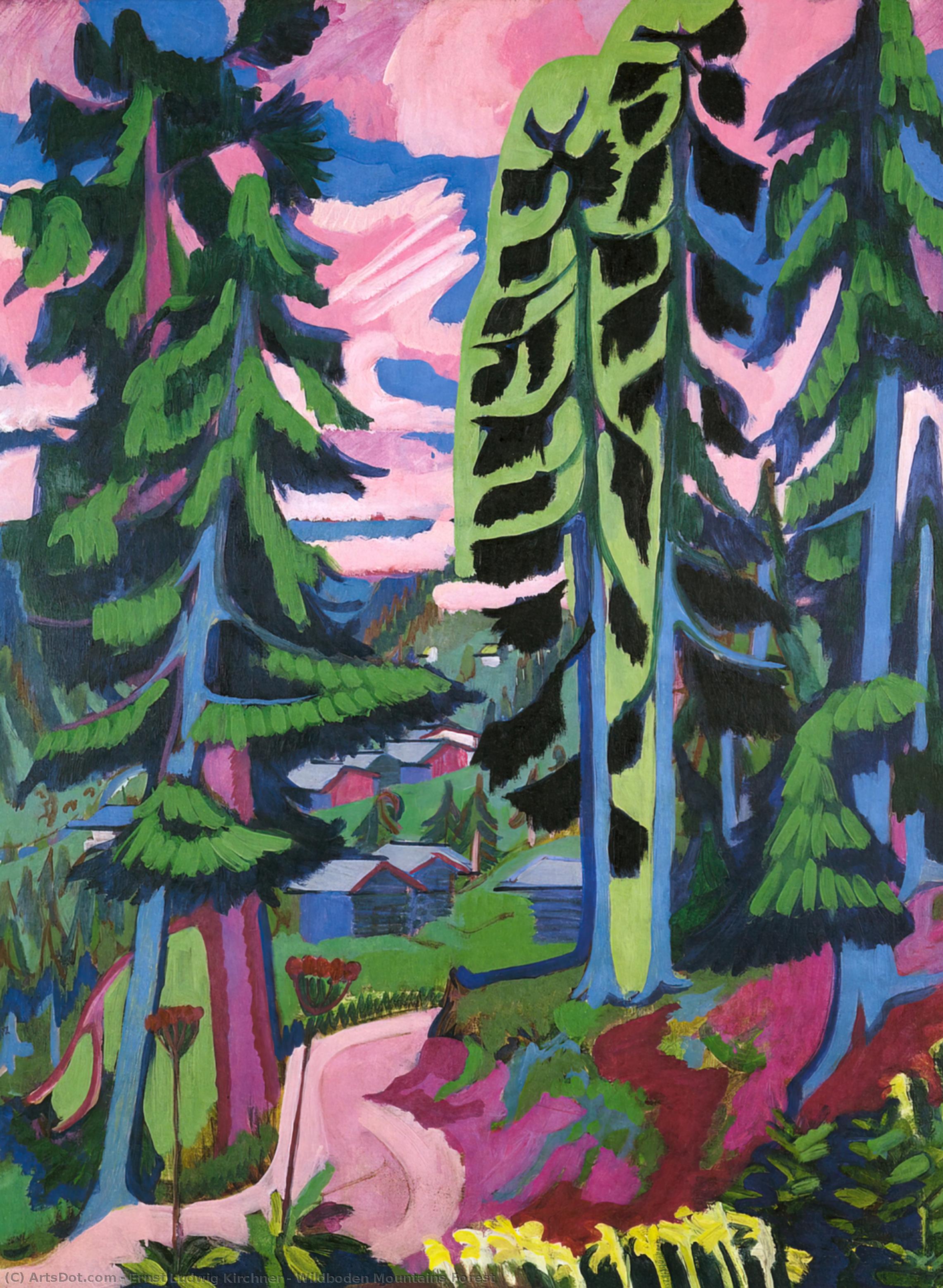
Ernst Ludwig Kirchner’s “Wildboden Mountains Forest,” completed in 1928, stands as a poignant emblem of Expressionist aesthetics—a movement born from the anxieties and uncertainties of Weimar Germany. More than just a depiction of a picturesque landscape, this painting delves into the psychological complexities of its subject matter, reflecting both the beauty of nature and the pervasive sense of unease that characterized the era.
- Subject Matter: The artwork portrays a dense forest scene dominated by towering mountains in the distance. A solitary house nestled amongst the trees adds a touch of domesticity to the otherwise wild expanse, creating a juxtaposition between human presence and natural grandeur.
- Style & Technique: Kirchner’s signature Expressionist style is immediately recognizable through its bold brushstrokes and flattened perspective. The artist employs a vibrant palette—primarily pinks, blues, greens, yellows, and reds—to convey emotion rather than precise representation. Thick impasto creates textural surfaces that heighten the visual impact and contribute to the painting's expressive character.
- Historical Context: Created during the turbulent years following World War I, “Wildboden Mountains Forest” embodies the disillusionment and psychological strain experienced by artists grappling with the aftermath of conflict. Expressionism sought to capture inner turmoil and emotional intensity—themes powerfully resonant in a society struggling to reconcile ideals of progress with the scars of devastation.
- Symbolism: The mountains represent resilience and permanence against the backdrop of human fragility, while the house symbolizes comfort and refuge amidst the overwhelming forces of nature. Kirchner’s deliberate use of color is laden with symbolic significance; pink conveys tenderness and vulnerability, mirroring the emotional landscape of the artist himself.
The painting's enduring appeal lies in its ability to evoke a profound sense of melancholy and contemplation. It invites viewers to consider themes of isolation, observation, and the confrontation between humanity and the sublime—questions that continue to resonate across generations. A reproduction of “Wildboden Mountains Forest” offers not merely an aesthetically pleasing image but also access to a powerful artistic statement rooted in the anxieties and aspirations of its time.