Paul Gauguin: Revolucionarni umetnik impresionizma poznat po intenzivnim bojama i egzotičkim motivima koji su oblikovali umetnost početka 20. veka. Istražite njegov stil, simbolizam i istorijski značaj ovog umetnika!
Откријте европско уметност из ренесансе до експресионизма у музеју Тихес-Борнемисза у Мадриду! Истражите шемаре великих уметника као Ван Гох, Рембрандт и Пикасо у дивним дворцима.
Музеј Тихес-Борнемисза, Мадрид, Шпанија, Европска уметност, Ренесанса, Експресионизам, Ван Гох, Рембрандт, Пикасо, Гоја, Архитектура, Дворец, Књига уметности
Музеј Тихес-Борнемисза
Шпанија
Мануела Риљарсвелд
Мадрид
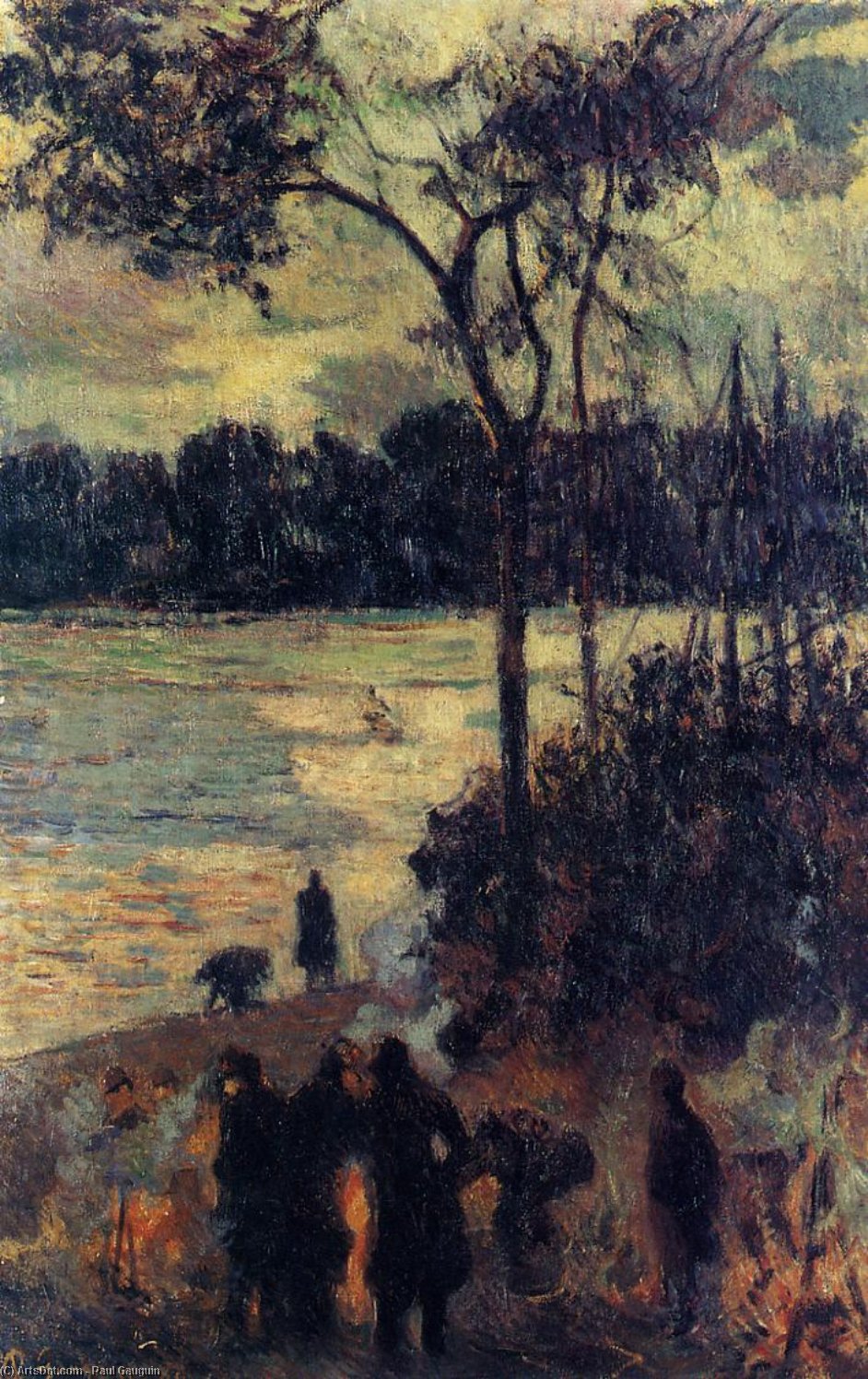
Fire by the Water
Paul Gauguin’s “Fire by the Water,” a captivating post-impressionist piece, invites viewers to immerse themselves in a serene and idyllic scene. Painted in 1886, this oil on canvas work is housed at the Thyssen-Bornemisza Museum in Madrid, Spain. It captures a moment of quiet contemplation amidst the lush vegetation of Brittany—a landscape that profoundly influenced Gauguin’s artistic vision during his Breton period.
The Composition
The painting depicts a group of people standing near a body of water, possibly a river or lake. The serene atmosphere is enhanced by the backdrop of trees and foliage, meticulously rendered with loose brushstrokes that convey texture and depth. Gauguin masterfully captures the connection between humans and their natural environment, creating a sense of harmony—a core theme in his oeuvre. Five figures are positioned strategically around the water’s edge, suggesting an intimate gathering under the watchful gaze of twilight. The boat floating on the surface adds visual interest and reinforces the impression of tranquility.
Artistic Style
“Fire by the Water” exemplifies Gauguin's post-impressionist style, characterized by bold colors and expressive brushstrokes. Unlike Impressionists who sought to capture fleeting moments of light, Gauguin prioritized conveying emotion and symbolism through his palette—dominantly blues and greens—which evoke feelings of coolness and stillness. The artist’s use of vibrant hues adds depth and emotion to the scene, while the loose brushwork creates a sense of movement and energy, subtly animating the static landscape. This technique is reminiscent of Cézanne's exploration of form and texture, demonstrating Gauguin’s engagement with avant-garde artistic trends.
Light in Painting
The play of light is a crucial element in “Fire by the Water.” Gauguin skillfully captures the interplay between light and shadow, creating a sense of volume and texture—a technique known as chiaroscuro—that lends dramatic intensity to the scene. The artist employs thick impasto, applying paint directly onto the canvas with visible brushstrokes, further emphasizing this textural effect. This masterful manipulation of light enhances the painting’s emotional resonance, conveying both warmth from the flickering firelight and coolness from the surrounding darkness.
Influences and Legacy
Gauguin was influenced by various artists, including Camille Pissarro, who played a significant role in the Impressionist movement. Gauguin's work, in turn, profoundly impacted subsequent generations of painters—particularly Picasso and Matisse—who embraced his expressive style and bold color choices. “Fire by the Water” remains relevant today due to its exploration of light, color, and composition—principles that continue to inspire contemporary artists. Its enduring beauty speaks to a timeless fascination with nature’s grandeur and humanity's place within it.
For those interested in exploring more of Gauguin's work, ArtsDot offers high-quality reproductions of his paintings, including
Chicken Coup,
Martinique Landscape (also known as Comings and Goings), and
Children in the Pasture (also known as Orchard below Bihorel Church).
For more information on Paul Gauguin and his contributions to art, visit
Paul Gauguin's Wikipedia page.