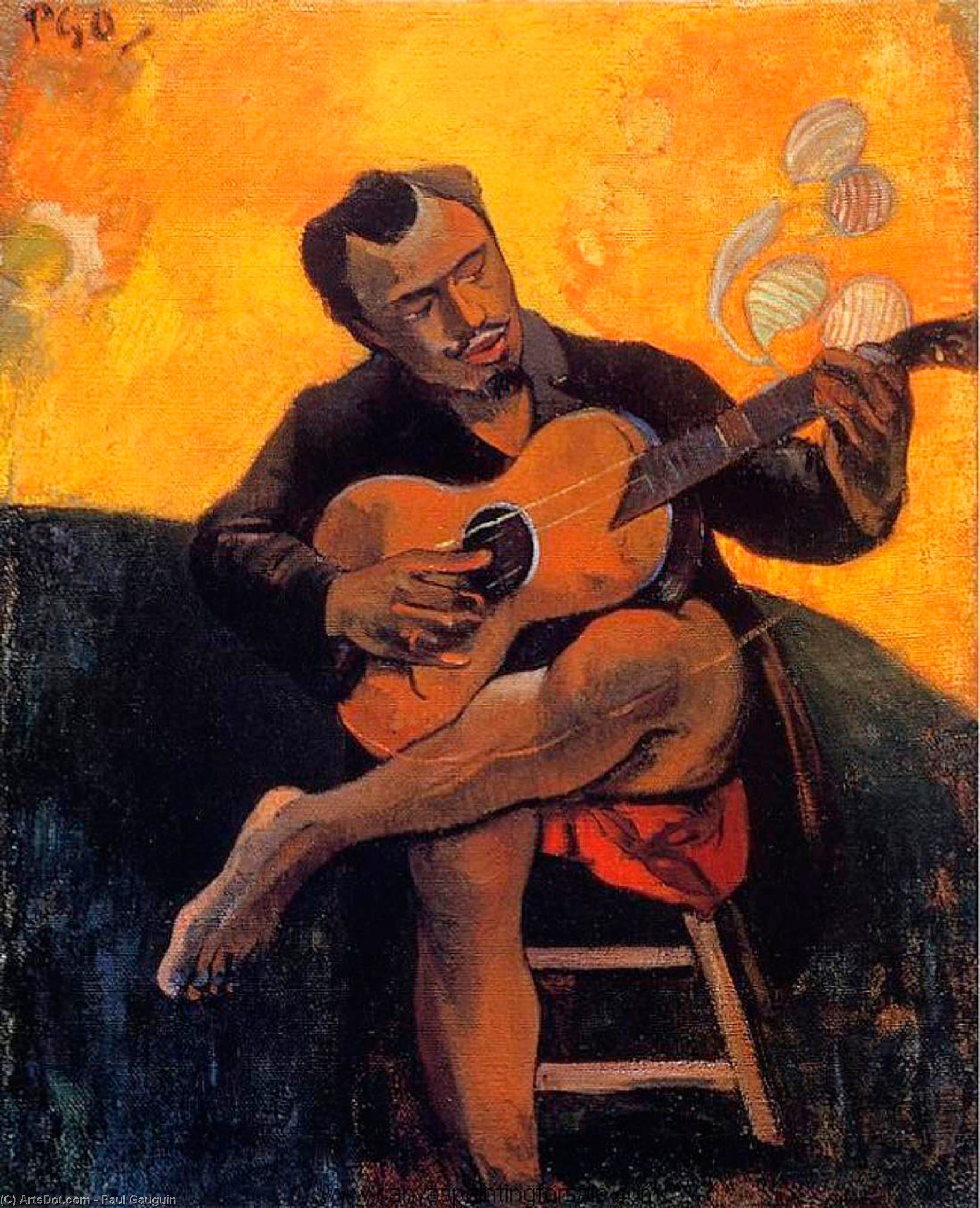
Experience Paul Gauguin's "The Guitar Player" – a Cloisonnism masterpiece capturing a Tahitian musician. Bold colors, symbolic details, and Gauguin’s unique style converge in this iconic work of art.
Paul Gauguin: Revolucionarni umetnik impresionizma poznat po intenzivnim bojama i egzotičkim motivima koji su oblikovali umetnost početka 20. veka. Istražite njegov stil, simbolizam i istorijski značaj ovog umetnika!
The Guitar Player: A Window into Gauguin’s Soul
Paul Gauguin's *The Guitar Player*, painted in 1894 during his pivotal time in Tahiti, is far more than a simple portrait of a man playing an instrument; it’s a profound exploration of solitude, spirituality, and the artist’s own evolving vision. This seminal work from the Cloisonnism movement—characterized by bold, flat forms delineated by strong black outlines—offers a captivating glimpse into Gauguin's unique artistic language and his deeply personal journey. The painting immediately draws the eye with its striking simplicity: a dark-shirted figure seated on a stool, completely absorbed in the act of playing his guitar, set against an almost unnervingly neutral background. Yet, within this apparent stillness lies a wealth of symbolic meaning and technical mastery.
The Cloisonnism style, which Gauguin championed, is evident in the painting’s deliberate flattening of space and the use of distinct, sharply defined shapes. The dark contours—a signature element of the movement—not only separate the forms but also create a sense of harmony and balance within the composition. Notice how the figure's body, the guitar, and even the stool are rendered with this same geometric precision, contributing to an almost sculptural quality. This deliberate reduction of detail wasn’t intended to be realistic; rather, it aimed to capture the essence of the subject—the man and his music—with a heightened sense of symbolic weight. The muted palette – primarily browns, ochres, and blacks – further enhances this effect, lending the scene an air of quiet contemplation and timelessness.
Composition and Symbolism: Layers of Meaning
Beyond its formal qualities, *The Guitar Player* is rich in carefully placed symbolic elements. The three apples positioned near the top right corner are a particularly intriguing detail. Apples have long been associated with temptation, knowledge, and even mortality – potent symbols that invite interpretation. Their presence here could suggest a contemplation of life’s fleeting nature or perhaps a reference to Gauguin's own struggles with morality and spirituality during his time in Tahiti. Similarly, the two oranges at the bottom left might represent fertility, abundance, or simply a grounding element within the composition. The bowl in the middle-left area adds another layer of visual interest, hinting at nourishment and sustenance—perhaps representing the artist’s need for creative fuel. The guitar itself is central to the painting's narrative; it represents not just musical expression but also a connection to Gauguin’s Tahitian roots, where music played a significant role in daily life.
A Window into Gauguin’s Tahiti
*The Guitar Player* was painted during a crucial period in Gauguin's artistic development—his time in Tahiti. Having returned to France in 1893, he dedicated himself to promoting his work and documenting his experiences in the South Pacific. This painting is one of the few completed during this period, reflecting his continued exploration of Cloisonnism and his desire to capture the essence of Polynesian culture. The scene evokes a sense of isolation and introspection—a feeling that resonates deeply with Gauguin’s own experience of being an outsider in both French society and the Tahitian community. It's a portrait not just of a man, but of a soul wrestling with identity and searching for meaning.
Legacy and Artistic Influence
Paul Gauguin’s influence on modern art is undeniable. *The Guitar Player*, along with his other works from this period, helped to pave the way for movements like Fauvism and Expressionism. His bold use of color, flattened forms, and symbolic imagery challenged traditional artistic conventions and opened up new possibilities for artistic expression. His association with the Synthetic movement and his friendship with artists like Charles Laval contributed significantly to the development of post-Impressionist styles. Reproductions of *The Guitar Player* continue to captivate audiences today, offering a powerful reminder of Gauguin’s innovative spirit and his enduring legacy as one of the most important figures in modern art. For those seeking a piece that embodies both artistic skill and profound emotional depth, a hand-painted reproduction of this iconic work is an exceptional choice.