Eugène Henri Paul Gauguin (1848-1903) was a French painter, sculptor, printmaker, ceramist, and writer whose work is primarily associated with the Post-Impressionist and Symbolist movements. He revolutionized painting with bold colors and expressive brushstrokes.
Introduction to the Painting
Paul Gauguin's
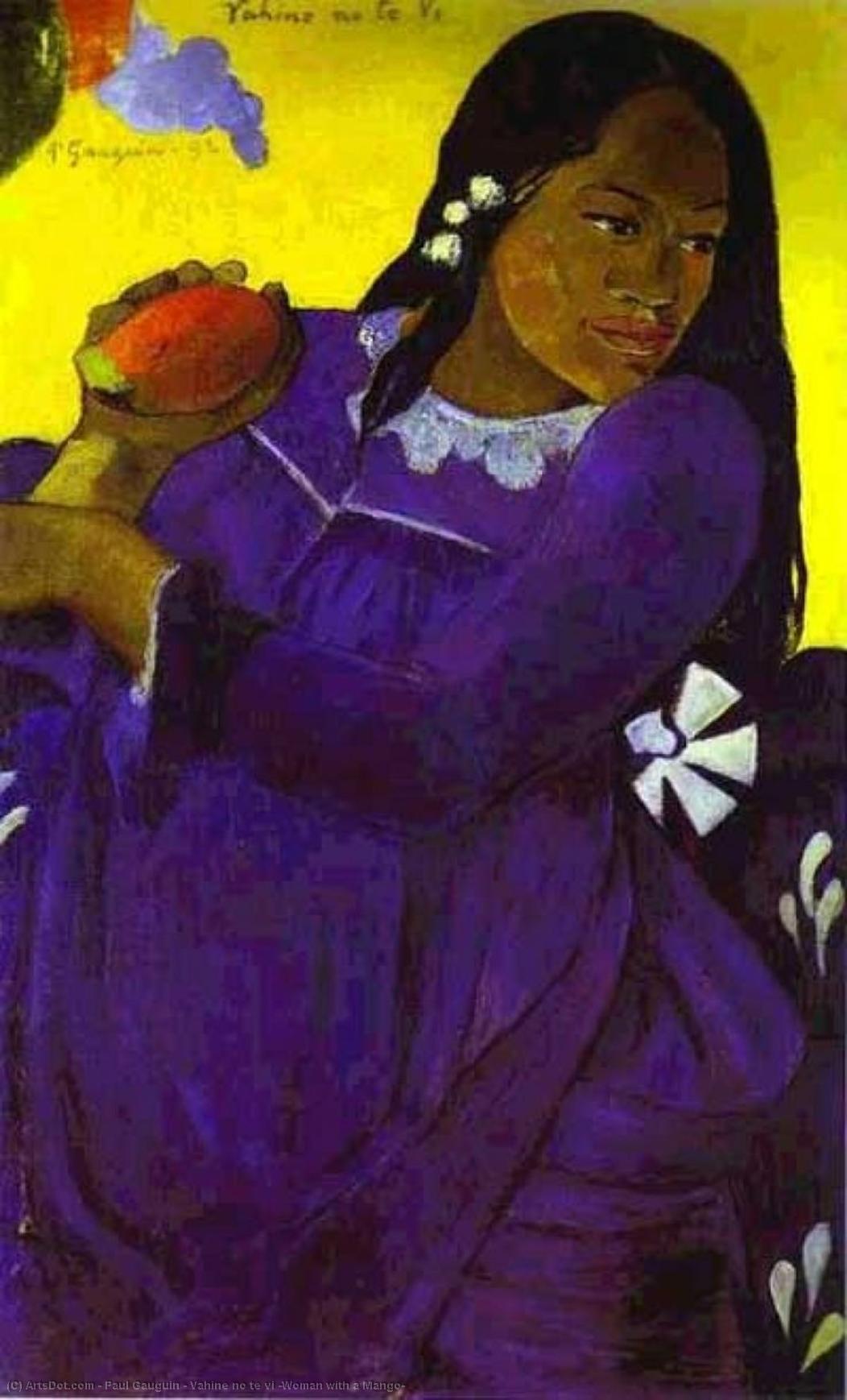
Vahine no te vi, which translates to "Woman with a Mango," is a captivating oil on canvas painting that showcases the artist's unique style and his fascination with the cultures of Tahiti. This piece is characterized by its use of bold lines, vibrant colors, and flat forms, exemplifying Gauguin's adoption of
Cloisonnism, a technique that emphasizes bold lines and flat forms.
Context and Inspiration
Gauguin's time in French Polynesia was marked by his desire to escape the constraints of Western society and immerse himself in a culture untouched by industrialization. His works from this period, including
Vahine no te vi, reflect this fascination and respect for the region's people and traditions. The painting features a Tahitian woman holding a mango, with lush vegetation in the background, inviting the viewer into her serene world.
Legacy and Impact
Today,
Vahine no te vi is considered a masterpiece of
Post-Impressionism, showcasing Gauguin's unique style and vision. The painting is part of the collection at the
Museum Galleria d'Arte Moderna in Brescia, Italy. For those interested in exploring more of Gauguin's works,
view the painting and discover the beauty of his art.
Recommended Similar Paintings
For enthusiasts of Gauguin's style,
At
ArtsDot.com, we offer high-quality hand-made oil paintings reproductions of
Vahine no te vi and other works by
Paul Gauguin. Our skilled artists meticulously recreate each detail, ensuring a faithful representation of the original work.
For more information on
Paul Gauguin and his artistic style, visit
his page on ArtsDot.com. Discover the world of
Post-Impressionism and explore the captivating works of this renowned artist.