Paul Gauguin: Revolucionarni umetnik impresionizma poznat po intenzivnim bojama i egzotičkim motivima koji su oblikovali umetnost početka 20. veka. Istražite njegov stil, simbolizam i istorijski značaj ovog umetnika!
Откријте векови уметности у Хумбертској галерији! Погледајте слике рембранта и други шемасте из три дивља здања у историјском Алтштату Хумберта.
Хумбертска галерија, музеј европске уметности, слике рембранта, пейзажи фридриха, немачка романтизам, барокна уметност, изложбе модерне уметности, архитектура Хумберта, купелсаал домина, импресионистичка уметност, колекција современе уметности, стил слик
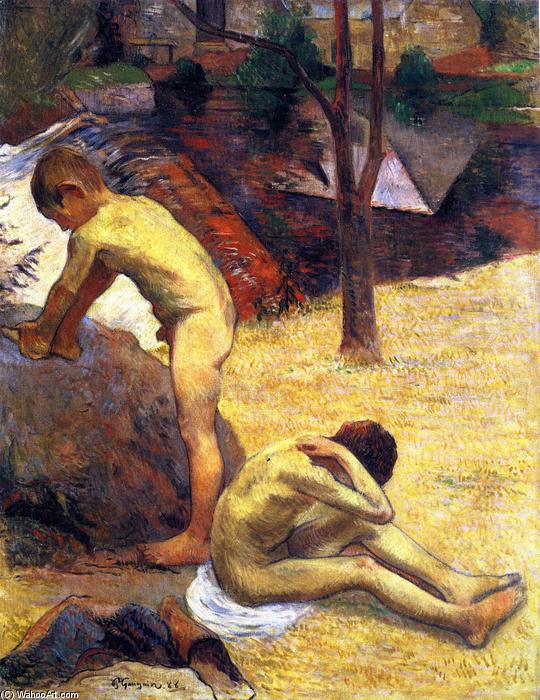
Young Breton Bathers: A Glimpse of Innocence and Harmony
Paul Gauguin's "Young Breton Bathers," created in 1888, stands as a poignant example of Post-Impressionism, capturing the essence of rural life and youthful innocence. Housed within the esteemed Hamburger Kunsthalle Museum in Hamburg, Germany, this oil on canvas painting offers a serene depiction of two young boys immersed in a simple, natural activity.
Artistic Context: Pont-Aven and Breton Influences
During his sojourn in Pont-Aven, Brittany, Gauguin found himself deeply influenced by the region's culture and landscapes. This period marked a significant phase in his artistic development, as he sought to synthesize traditional Breton motifs with emerging modernist techniques. "Young Breton Bathers" beautifully embodies this fusion, portraying two naked young boys engaged in a playful interaction near a tree within a tranquil outdoor setting. The painting reflects Gauguin's desire to move beyond the purely representational and delve into more symbolic and emotionally resonant imagery.
Visual Elements: Color, Composition, and Light
The composition of "Young Breton Bathers" is carefully balanced, with one boy standing on rocks and the other seated, creating a sense of natural interaction and harmony. Gauguin’s masterful use of color contributes significantly to the painting's overall impact. Earthy tones dominate the palette, providing depth and warmth, while vibrant accents highlight the boys' skin and the surrounding environment. The soft, diffused lighting enhances the feeling of tranquility and innocence that permeates the scene. Loose, expressive brushstrokes contribute to a sense of movement and spontaneity, characteristic of Gauguin’s evolving style.
Symbolism and Interpretation: Youth, Purity, and Nature
Beyond its aesthetic appeal, "Young Breton Bathers" carries profound symbolic weight. The boys themselves represent youth and purity, their nakedness symbolizing freedom from societal constraints. Their playful interaction signifies joy and a carefree existence, unburdened by the complexities of adult life. The natural setting underscores Gauguin's emphasis on the harmony between humans and nature – a recurring theme in his work. The painting evokes a sense of nostalgia for a simpler way of life, untouched by industrialization and urban sprawl.
Artistic Significance and Enduring Appeal
"Young Breton Bathers" is a significant contribution to Gauguin's oeuvre, showcasing his ability to blend traditional subjects with innovative artistic techniques. It reflects his broader interest in capturing the essence of rural life and celebrating the beauty of unspoiled nature. The painting’s timeless themes and artistic innovation continue to captivate art enthusiasts today, making it an important part of art history and a source of inspiration for generations of artists and art lovers alike.