A Vision of Ethereal Grace
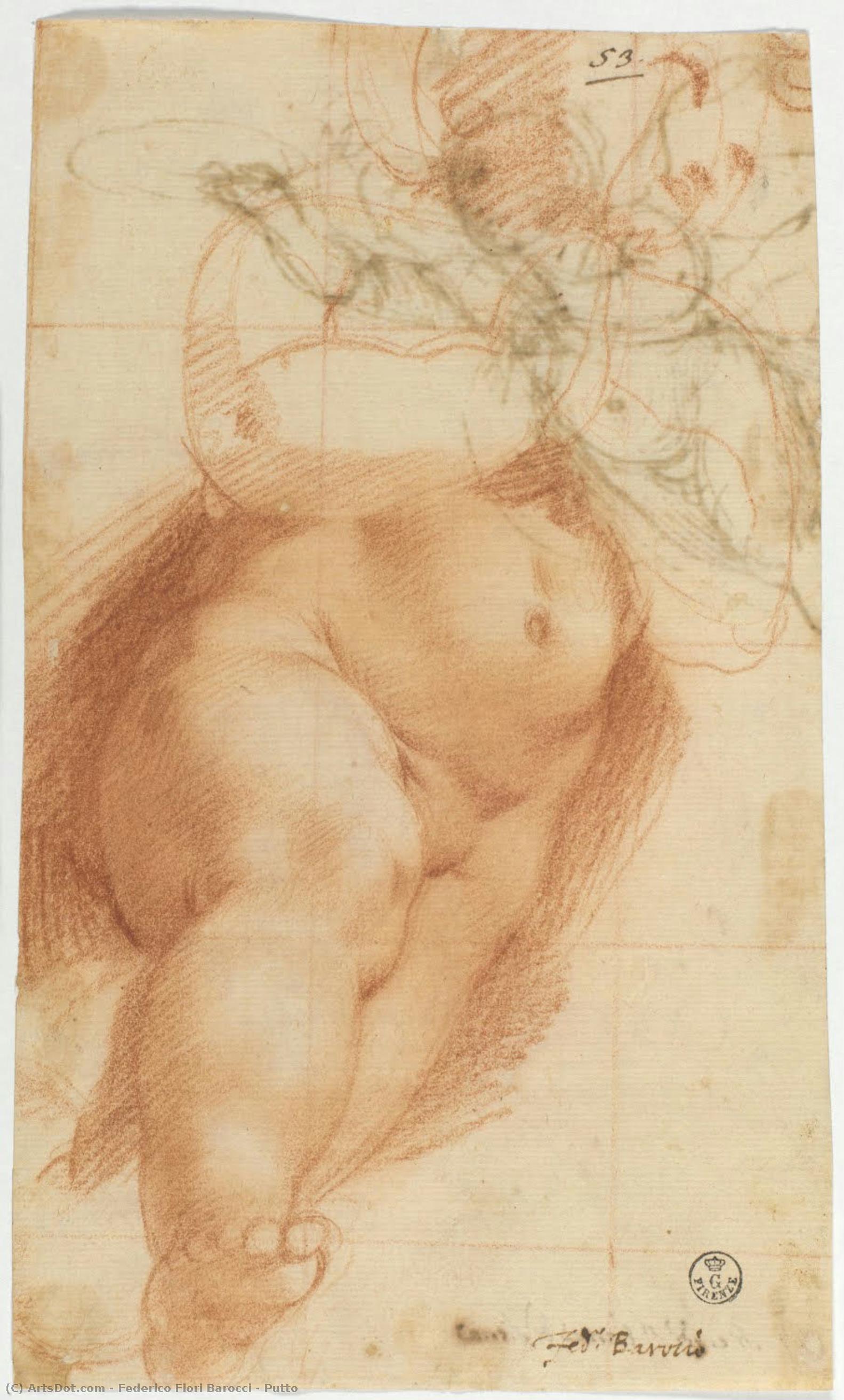
In the delicate interplay of light and shadow, Federico Fiori Barocci’s Putto emerges as a profound testament to the transitional beauty of the late Renaissance. This masterful black and white drawing captures a nude figure with an exquisite sense of movement, where the limbs appear elegantly elongated and curved, guiding the viewer's eye through a rhythmic, almost dance-like composition. The subject, a tenderly rendered cherubic form, is not merely a study of anatomy but an exploration of grace. As the figure stretches outward, there is a palpable sense of weightlessness, as if the boundaries between the earthly and the divine are momentarily dissolved. For the discerning collector or interior designer, this piece offers a sophisticated focal point that brings a timeless, classical elegance to any curated space.
The technique employed in this work serves as a precursor to the dramatic intensity of the Baroque era. Barocci, an artist whose influence would later ripple through the works of masters like Peter Paul Rubens, utilizes subtle tonal gradations to breathe life into the monochrome medium. The absence of color allows the viewer to focus entirely on the structural integrity of the form and the soft, atmospheric quality of the linework. There is a quiet intimacy in the way the figure is cradled, suggesting a protective, angelic presence that adds a layer of spiritual depth to the composition. This mastery of chiaroscuro—the contrast between light and dark—creates a sculptural dimension that makes the drawing feel remarkably three-dimensional despite its delicate nature.
Beyond its aesthetic brilliance, the Putto carries a profound emotional resonance. It evokes a sense of innocence and primordial beauty, making it an ideal selection for those looking to infuse their environment with tranquility and classical prestige. Whether integrated into a contemporary gallery setting or paired with opulent, traditional decor, this reproduction serves as a window into the soul of Italian art history. To possess such a work is to hold a fragment of the transition from the balanced harmony of the Renaissance to the emotive power of the Baroque, offering an enduring source of inspiration and a sophisticated touch of historical grandeur.