The Enigmatic Figure: Unveiling “Pierrot the Photographer”
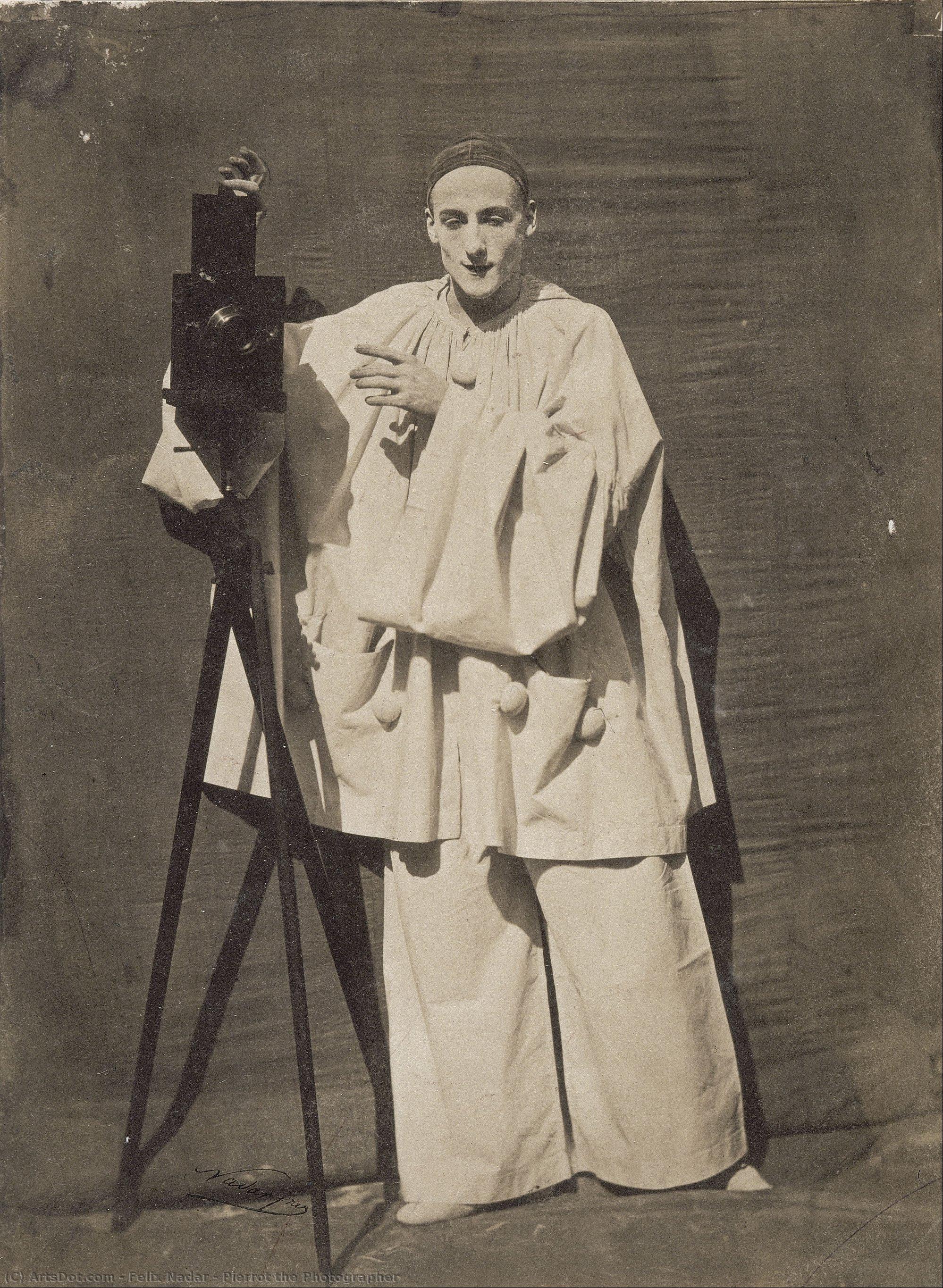
Félix Nadar’s “Pierrot the Photographer,” created in 1854, isn't merely a portrait; it’s a meticulously constructed tableau vivant—a staged scene brimming with quiet observation and subtle commentary on the burgeoning world of photography. The image immediately draws the eye to Pierrot, a figure both familiar and unsettlingly modern, holding a camera poised as if capturing not just a likeness but an essence. He embodies the nascent spirit of the photographer himself – a blend of artist, observer, and documentarian, all wrapped in the playful guise of a traditional clown. The photograph’s power lies not simply in its technical execution, but in the carefully orchestrated narrative it presents, inviting us to contemplate the very nature of representation and identity.
The work's historical context is crucial to understanding its significance. Nadar was a pioneer, pushing against the conventions of portraiture prevalent during the mid-19th century. He rejected the opulent backdrops and theatrical poses favored by his contemporaries, instead opting for natural light and an intimate approach that prioritized capturing the sitter’s personality. “Pierrot the Photographer” exemplifies this shift—a deliberate departure from traditional formality, suggesting a new era of visual storytelling.
A Dance of Light and Shadow: Technical Details & Artistic Choices
Examining the photographic process reveals layers of artistry. “Pierrot the Photographer” was undoubtedly produced using one of the early wet collodion techniques, a demanding method requiring immediate development after exposure. This explains the image’s distinctive grainy texture—a hallmark of photographs from this period—and the subtle variations in tone that contribute to its aged and evocative quality. The careful control of light is particularly noteworthy; diffused illumination creates a soft, almost melancholic atmosphere, highlighting the textures of Pierrot's costume and casting gentle shadows that add depth and dimension.
Nadar’s compositional choices further enhance the photograph’s impact. The tripod, a stark vertical element, anchors the scene while simultaneously creating a sense of formality and precision. Pierrot’s slight tilt of his head—a subtle gesture of engagement—draws us into the frame, inviting us to share in his moment of observation. The two indistinct figures in the background offer a hint of context without disrupting the central focus, suggesting a studio setting and hinting at the collaborative nature of photographic production.
Symbolism & Emotional Resonance: Beyond the Surface
“Pierrot the Photographer” is rich with symbolic meaning. The clown costume itself—a traditional symbol of playfulness and theatricality—contrasts sharply with the seriousness of the act of photography, creating a fascinating tension. The camera becomes an extension of Pierrot’s personality, transforming him into both subject and observer. The image speaks to the evolving role of the photographer in society – moving from mere recorder of reality to active participant in shaping it.
Furthermore, the photograph evokes a sense of nostalgia and timelessness. Its aged appearance—the subtle imperfections and tonal variations—suggests that it has witnessed countless moments, carrying with it the weight of history. “Pierrot the Photographer” is not simply a portrait; it’s a meditation on memory, identity, and the enduring power of visual representation.
A Legacy in Reproduction: Bringing Nadar's Vision to Life
Reproductions of “Pierrot the Photographer” offer a unique opportunity to experience the artistry of Félix Nadar firsthand. The meticulous detail captured in this early photograph—the textures of the costume, the subtle nuances of light and shadow—are faithfully reproduced in high-quality prints, allowing viewers to appreciate the depth and complexity of Nadar’s vision. Whether displayed as a statement piece in a contemporary interior or studied as an historical artifact, this iconic image continues to captivate and inspire.