A Window Into the Soul: Ferdinand Bol’s ‘Portrait of a Scholar’
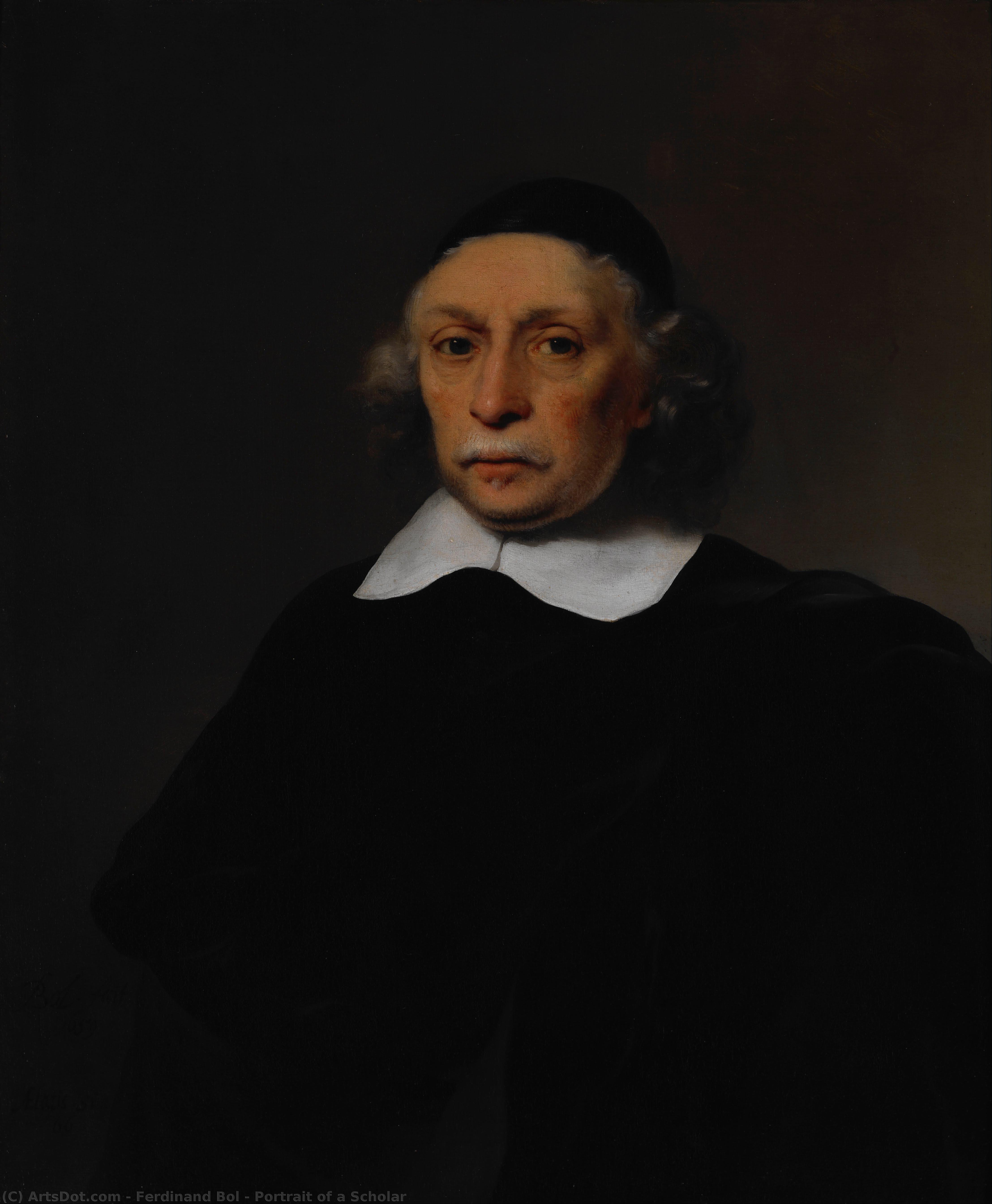
Ferdinand Bol's “Portrait of a Scholar,” painted in 1659, isn’t merely a likeness; it’s a carefully constructed meditation on intellect, dignity, and the quiet contemplation inherent in scholarly pursuits. Emerging from the vibrant, often turbulent, world of 17th-century Dutch painting, this work offers a rare glimpse into the artistic sensibilities of a master frequently overshadowed by his more celebrated contemporaries. Bol, a student of Rembrandt’s, skillfully inherited the master's dramatic lighting and psychological depth while forging a distinctly personal style—one characterized by an almost unnerving realism and a profound understanding of human character.
The painting immediately draws the viewer in with its somber palette – deep blacks dominate the background and clothing, creating a sense of enclosure and introspection. These dark hues are skillfully offset by subtle variations in flesh tones, rendered in muted beiges and grays, and punctuated by the crisp white collar that serves as a visual anchor. This restrained color scheme isn’t simply decorative; it speaks to the subject's profession – a life dedicated to study and reflection, one likely spent within dimly lit libraries and manuscript rooms. The overall effect is profoundly contemplative, inviting us to share in the scholar’s quiet world.
The Anatomy of Light and Shadow
Bol’s mastery of chiaroscuro—the dramatic contrast between light and shadow—is central to the painting's impact. A single, unseen light source illuminates the subject’s face from above and slightly in front, casting deep shadows across his cheekbones and forehead. This technique doesn’t just sculpt the features; it imbues them with a sense of gravitas and wisdom. The play of light reveals the subtle lines etched by age and thought around his eyes and mouth, hinting at years spent wrestling with complex ideas. Notice how the light catches the texture of his clothing – the folds of his robe, the sheen on his collar—adding layers of visual interest and reinforcing the sense of tangible reality.
The meticulous detail in rendering the scholar’s face is remarkable. Bol doesn't shy away from portraying imperfections; the wrinkles around the eyes are not smoothed out but rather subtly emphasized, suggesting a life lived fully and thoughtfully. The careful observation of anatomy—the precise curve of the nose, the defined shape of the chin—demonstrates Bol’s technical skill and his commitment to capturing the essence of his subject.
Symbolism and Context
The portrait is deeply rooted in the artistic conventions of 17th-century Dutch portraiture, particularly those influenced by Rembrandt. However, Bol subtly departs from tradition, imbuing the image with a sense of melancholy that transcends mere likeness. The scholar’s gaze, directed squarely at the viewer, isn't one of arrogance or self-importance but rather a quiet intensity—a suggestion of profound thought and perhaps even a touch of sadness. The dark background, devoid of any distractions, reinforces this mood, creating an atmosphere of solitude and introspection.
Painted during the Golden Age of Dutch art, “Portrait of a Scholar” reflects the burgeoning interest in humanism and intellectual pursuits that characterized the era. Scholars were increasingly valued for their contributions to society, and portraits served as a means of commemorating their achievements and celebrating their status. Bol’s work stands as a testament to this cultural shift, offering a dignified representation of an educated man engaged in his lifelong pursuit of knowledge.
A Timeless Reflection
“Portrait of a Scholar” is more than just a beautiful painting; it's a poignant meditation on the human condition. Bol’s masterful use of light and shadow, combined with his keen observation of anatomy and psychological insight, creates an image that resonates deeply with viewers across centuries. It invites us to contemplate the value of knowledge, the dignity of intellectual pursuits, and the quiet beauty of a life dedicated to learning. Reproductions of this work capture not only its visual splendor but also the profound sense of contemplation it evokes—making it a compelling addition to any collection or a thoughtful choice for interior design.