A Tableau of Royal Intrigue and Romantic Tension
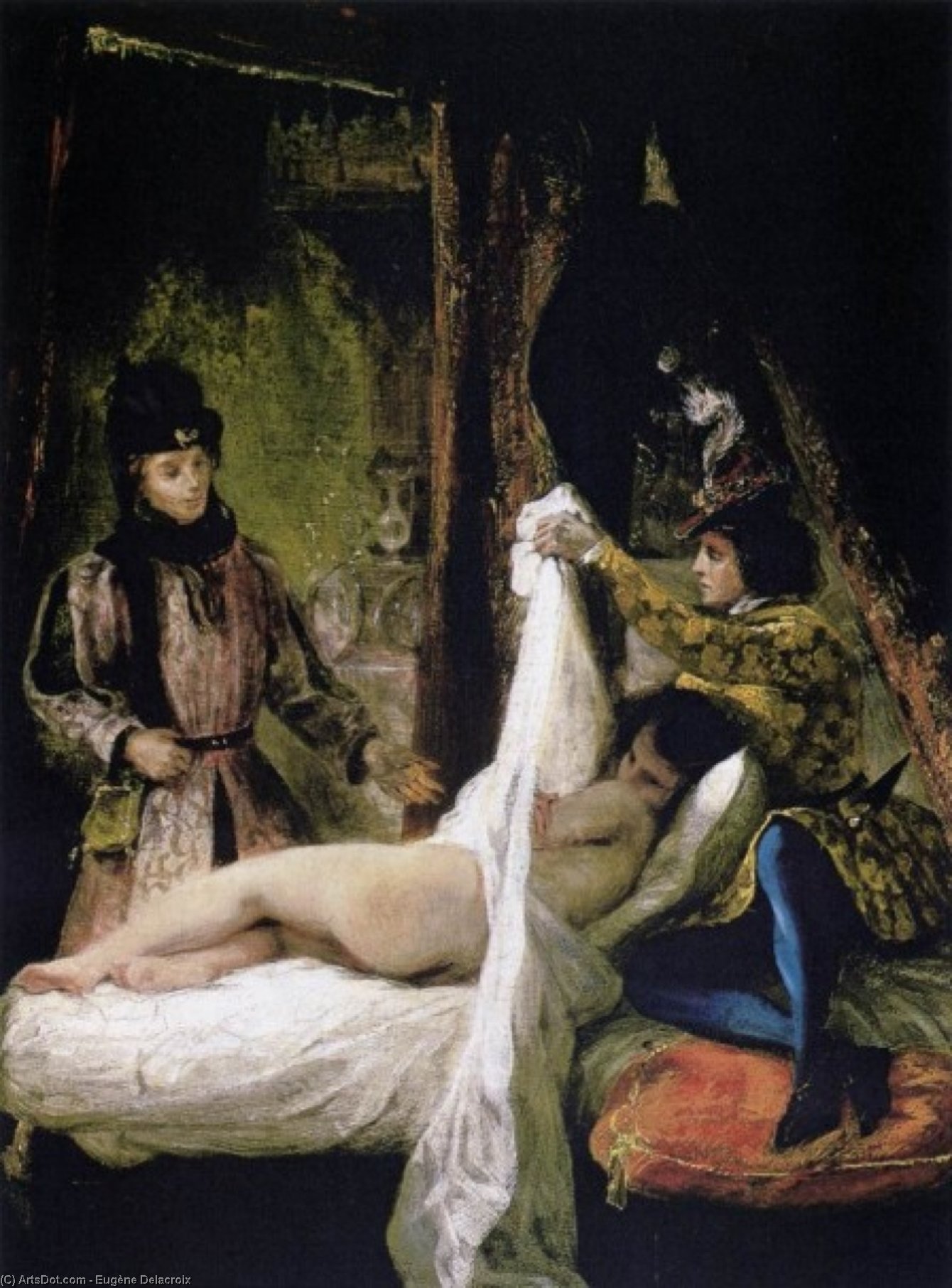
In the hushed, opulent corridors of French history, few moments capture the essence of scandal and societal transgression as poignantly as Eugène Delacroix’s Louis d'Orléans Showing His Mistress. Painted between 1825 and 1826, this masterpiece serves as a window into a private, almost voyeuristic moment within the French aristocracy. The scene unfolds with a delicate yet heavy tension: the Duke of Orléans, Louis I, presents his mistress, Mariette d'Enghien, to his chamberlain, Albert Le Flamenc. The true sting of the narrative lies in the silent revelation that Le Flamenc is not merely an observer, but also the woman’s husband. Delacroix does not rely on overt passion to convey this drama; instead, he utilizes a subtle, atmospheric composition that invites the viewer to witness a complex dance of power, infidelity, and shared secrets.
The painting is far more than a mere historical anecdote; it is a profound exploration of the human condition under the weight of social expectation. As the Duke lifts the veil, there is an undeniable sense of vulnerability and exposure. The figures are caught in a fleeting, breathless instant, suggesting that the stability of this aristocratic world is as fragile as the silk drapery surrounding them. For the collector or the lover of fine art, the piece offers a captivating study of how intimacy can be both a sanctuary and a stage for public display.
The Mastery of Romantic Technique and Color
Delacroix, a titan of the Romantic movement, breaks away from the rigid, clinical precision of Neoclassession to embrace a more visceral, emotive approach. In this work, one can see the profound influence of Baroque masters such as Rubens and Titian. Rather than sharp, defining outlines, Delacroix employs loose, expressive brushwork that breathes life into the textures of skin, heavy fabrics, and shadowed interiors. This technique creates a sense of movement and vitality, making the scene feel less like a static portrait and more like a living memory.
The artist’s use of light is nothing short of theatrical. He employs a dramatic, diffused lighting style that casts deep, velvety shadows across the chamber, punctuated by luminous highlights on the figures' flesh and the white linens of the bed. This chiaroscuro effect heightens the emotional intensity of the scene, pulling the viewer’s eye toward the central drama while leaving much of the room shrouded in mystery. The rich, layered application of oil paint provides a tactile quality that is particularly striking in high-quality reproductions, where the interplay of light and shadow can be truly appreciated in a domestic setting.
A Timeless Addition to the Sophisticated Interior
For interior designers and art enthusiasts seeking to infuse a space with character and historical depth, this painting offers unparalleled inspiration. Its themes of beauty, mortality, and the transient nature of pleasure resonate deeply within the context of classical decor. The artwork’s palette—a sophisticated blend of warm skin tones, deep shadows, and opulent textures—complements a variety of high-end environments, from stately libraries to modern, minimalist galleries that crave a touch of historical soul.
Owning a reproduction of this Delacroix masterpiece is an invitation to engage with the grandeur of the French Restoration period. It serves as a conversation piece that transcends mere decoration, offering a profound emotional impact and a window into the turbulent, beautiful heart of Romanticism. Whether placed as a focal point in a grand salon or as a subtle accent in a private study, Louis d'Orléans Showing His Mistress brings with it an aura of mystery, elegance, and enduring artistic brilliance.