A Captivating Glimpse into the Circus of Modernity
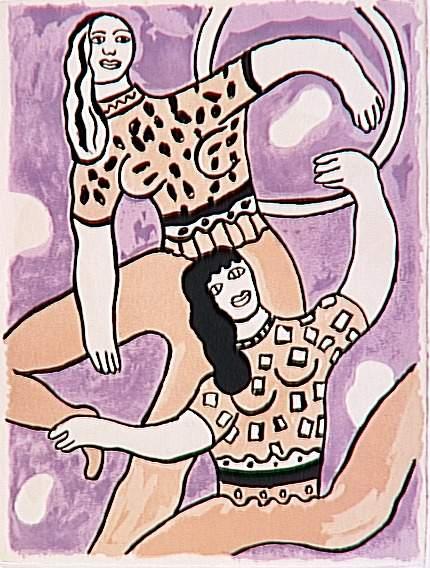
Fernand Léger’s “The album ‘Circus’,” completed in 1950, is more than just a depiction of two women amidst a circus performance; it's a potent distillation of the anxieties and fascinations surrounding modernity itself. Painted during a period of rapid industrialization and technological advancement, Léger sought to translate the dynamism of the machine age – its angular forms, its relentless movement – into a visual language that was both strikingly abstract and deeply connected to the human experience. This work exemplifies his signature style, often categorized as naive art or primitivism, characterized by bold geometric shapes, simplified figures, and a deliberate rejection of traditional representational techniques.
- Subject Matter: The scene unfolds with an almost theatrical quality, featuring two women engaged in a precarious performance. One stands on her hands, embodying strength and defiance, while the other is seated upon her shoulders, creating a dynamic vertical composition. This arrangement immediately evokes the spectacle of the circus – a realm of illusion, daring feats, and captivating displays.
- Style & Technique: Léger’s technique is instantly recognizable. He employs flattened planes of color, utilizing thick impasto to create a tactile surface that emphasizes the geometric forms. The leopard print shirt worn by one of the figures adds a layer of visual interest and subtly references the exoticism often associated with circuses.
- Historical Context: Created in 1950, “The album ‘Circus’” reflects the post-war world, where technological progress was accelerating at an unprecedented rate. Léger's work can be seen as a commentary on this transformation – a celebration of the machine while simultaneously acknowledging its potential impact on human life and relationships.
Decoding the Symbolism: Form and Human Connection
Beyond its surface appearance, “The album ‘Circus’” is rich in symbolic meaning. The geometric forms that dominate the composition represent Léger's fascination with industrial design and his desire to capture the essence of modern life. However, within this abstract framework, the figures themselves retain a sense of humanity. Their interaction – one supporting the other – suggests a connection between individuals amidst the overwhelming forces of modernity. The ring they hold could symbolize both performance and communication, highlighting the importance of human relationships in an increasingly mechanized world.
- Geometric Abstraction: Léger’s use of geometric shapes isn't merely decorative; it represents a deliberate attempt to strip away illusion and reveal the underlying structure of reality. This approach aligns with the broader modernist movement, which sought to challenge traditional notions of representation.
- The Circus as Metaphor: The circus itself serves as a powerful metaphor for life – a world of spectacle, risk, and wonder. Léger’s depiction captures this essence, inviting viewers to contemplate their own place within the grand performance of existence.
A Legacy of Modern Vision
Fernand Léger's “The album ‘Circus’” stands as a testament to his unique artistic vision and his profound engagement with the challenges and opportunities of the 20th century. Born in Argentan, Normandy, in 1881, Léger’s early life experiences – working on farms – profoundly shaped his artistic sensibility. He rejected academic training and developed a distinctive style that combined abstraction with a deep understanding of human form. This painting exemplifies his ability to translate the complexities of modern life into a visually arresting and emotionally resonant work. Its naive aesthetic belies a sophisticated engagement with the core tenets of modern art.
Artist: Fernand Léger
Birth Year: 1881
Death Year: 1955