A Symphony of Steel and Light: Exploring Fernand Léger’s “The Tug in the City”
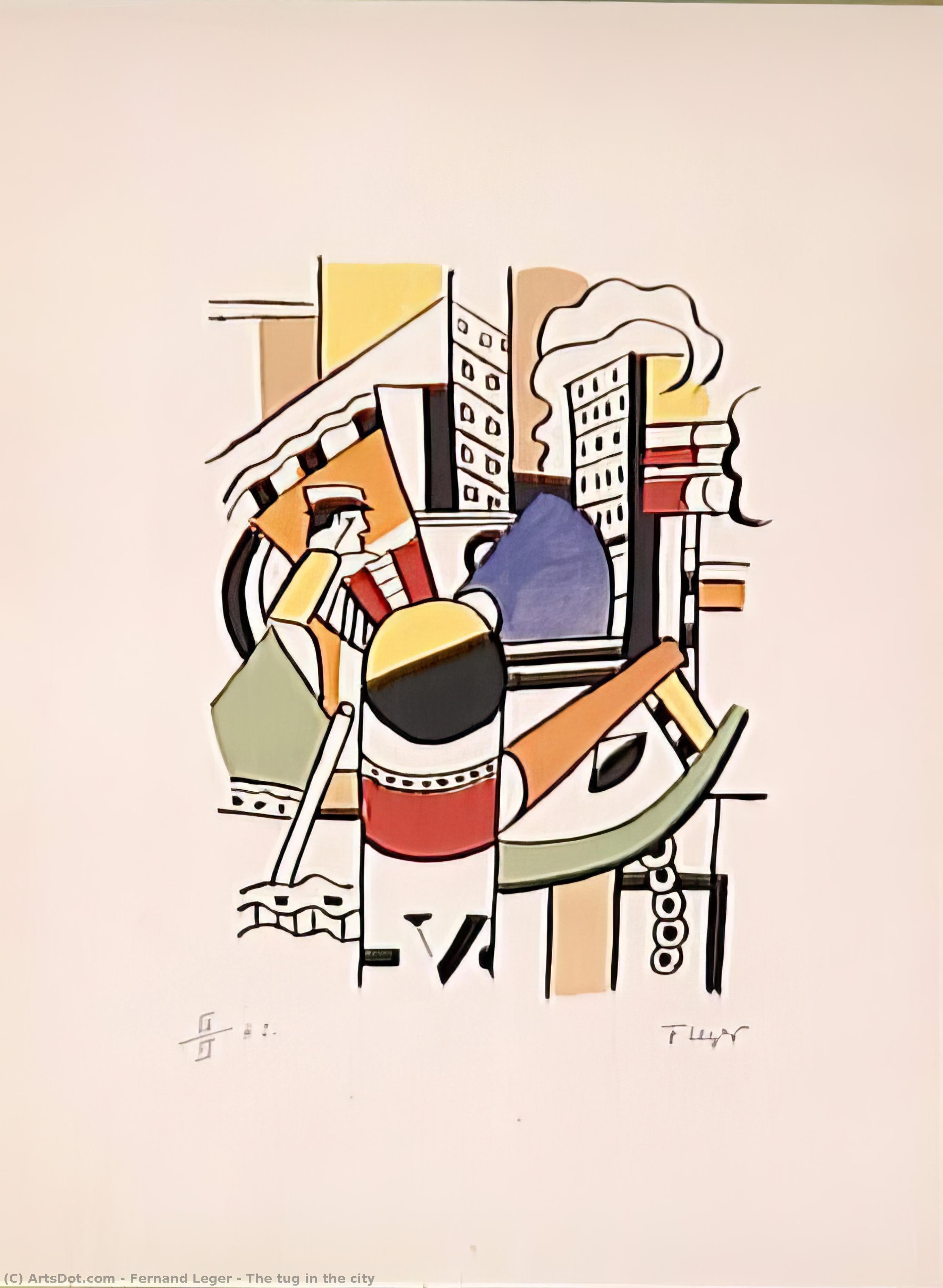
Fernand Léger's "The Tug in the City" isn’t merely a depiction of urban life; it’s an assertion of artistic conviction—a bold declaration that abstraction could simultaneously honor observation and convey the transformative power of industrial progress. Painted sometime between 1913 and 1914, during the height of Léger's engagement with Cubism and Futurism, this artwork encapsulates a pivotal moment in art history where artists wrestled with how to represent the rapidly changing world around them. The painting’s immediate impact is one of energetic movement—a visual pulse driven by the soaring airplane dominating the upper portion of the canvas and punctuated by the purposeful strides of figures traversing the cityscape below.
- Subject Matter: Léger meticulously captures a bustling urban scene, focusing on elements like buildings, vehicles (cars and trucks), and crucially, an airplane – a symbol of technological advancement that was becoming increasingly prominent in the early 20th century.
- Style & Technique: The artwork firmly resides within the realm of Cubism and Futurism, blending geometric abstraction with fragmented perspectives. Léger employs bold, simplified forms—primarily rectilinear shapes—to construct buildings and vehicles, rejecting traditional realism in favor of conveying dynamism and spatial relationships. Thick brushstrokes contribute to a textured surface that emphasizes the materiality of the depicted environment.
Historical Context: Embracing the Machine Age
The painting’s creation coincided with a period of profound societal upheaval fueled by industrialization and scientific breakthroughs. Léger wasn't simply documenting what he saw; he was actively responding to the anxieties and aspirations of his time. Futurists, like Léger, championed speed, dynamism, and the glorification of machines—values that directly mirrored the burgeoning influence of factories and railways on European life. Cubism, pioneered by Picasso and Braque, similarly challenged conventional artistic conventions by fracturing objects into geometric planes, mirroring the fragmented realities experienced in industrialized spaces.
Symbolic Resonance: Form as Expression
Beyond its stylistic innovations, “The Tug in the City” speaks to a deeper symbolic concern. Léger’s deliberate simplification of forms isn't merely decorative; it represents an attempt to distill the essence of urban experience—to capture the underlying structure and rhythm of industrial society. The airplane itself serves as a potent emblem of progress, ambition, and the relentless march forward into an uncertain future. Léger believed that form could communicate emotion just as effectively as color or narrative, prioritizing visual impact over representational accuracy.
Emotional Impact: A Vision of Optimistic Transformation
Ultimately, “The Tug in the City” conveys a sense of hopeful anticipation—a conviction that technological advancement would usher in an era of unprecedented creativity and vitality. Léger’s artwork isn't pessimistic about the challenges posed by industrialization; rather, it celebrates its transformative potential, presenting a stylized cityscape as a canvas for optimistic expression. It invites viewers to contemplate not just what is seen but how form itself embodies the spirit of a new age—a legacy that continues to inspire artists and designers today.