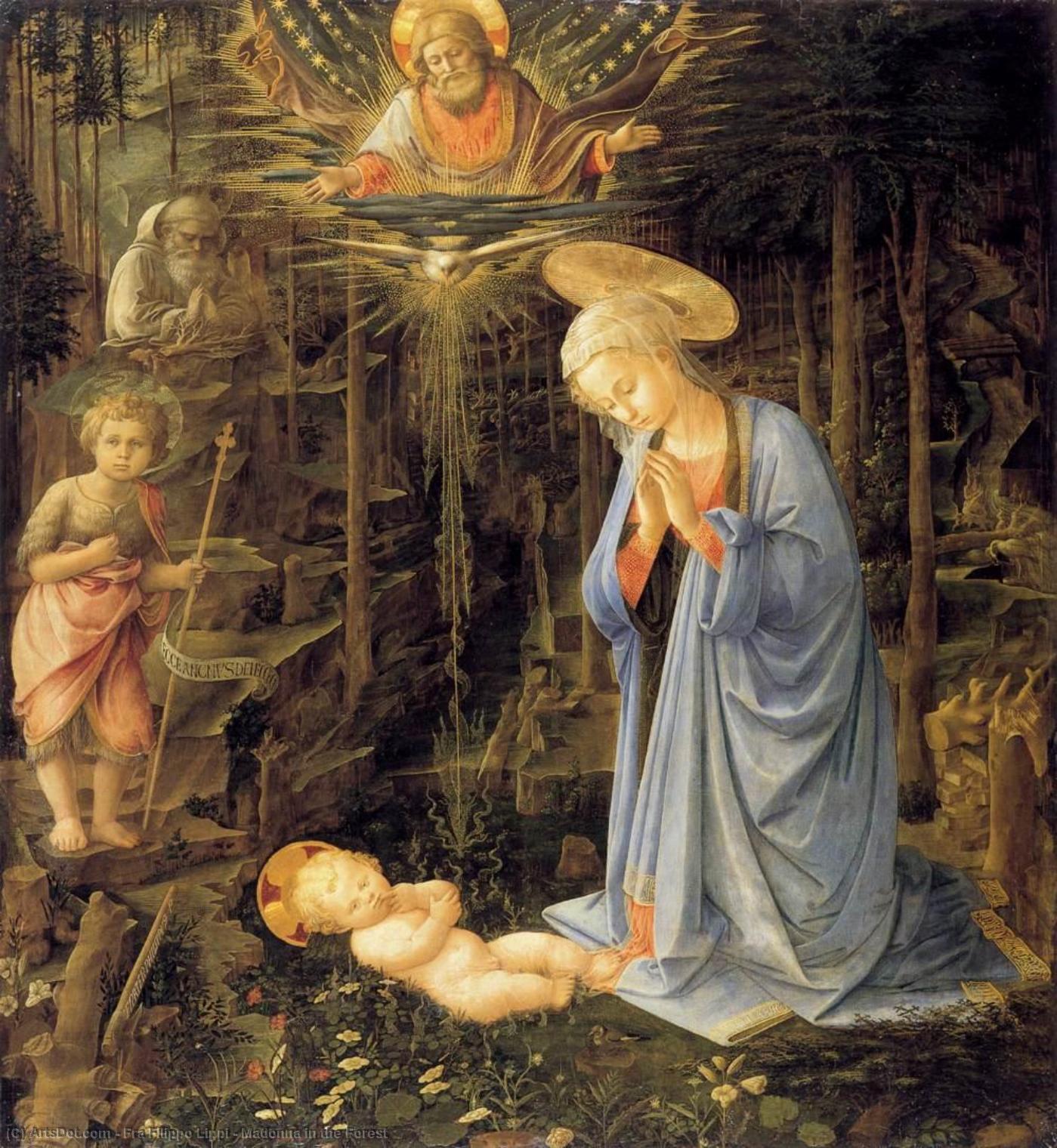
Filippo Lippi’s ethereal Madonna in the Forest captures Renaissance serenity through luminous tempera paint and masterful trompe l'oeil illusionism—a testament to Florentine artistry and spiritual devotion, inviting you to explore this captivating masterpiece.
Филипо Липи (1406-1469): ренесансни сликар познат по лиричним Богородицама, реализму и иновативним композицијама. Утицао је на Ботичелија и обликовао уметност Кватрочента. Истражите његов живот и дело!
Otkrijte Berlinovu istoriju i umetnost u Staatlichen Museen! Istražite Nefertiti, drevne artefakte i remek-dela u 17 muzeja na Museum Islandu i dalje.
A Vision of Serenity: Exploring Filippo Lippi’s Madonna in the Forest
Filippo di Tommaso Lippi, a Florentine rebel at heart, embodies an artist whose life intersected dramatically with his prodigious talent. Born in 1406 amidst familial hardship – orphaned young and entrusted to the care of his aunt – Lippi's formative years instilled within him a profound appreciation for resilience and a spirit that would ultimately defy convention. This early influence profoundly shaped his artistic trajectory, fostering a harmonious blend of spiritual devotion alongside burgeoning humanist sensibilities; an equilibrium evident throughout his oeuvre.
The Fresco’s Genesis: Contextualizing Mystical Nativity
Lippi's decision to join the Carmelite Order in 1420 represents more than simply a religious vocation; it constituted a deliberate rejection of societal expectations and a commitment to artistic pursuits considered unorthodox for the time. This pivotal moment propelled him into an environment that nurtured his creativity, fostering a distinctive style characterized by meticulous detail and masterful illusionistic perspective – techniques honed during his formative years at the convent. The *Mystical Nativity*, completed around 1459 as an altar piece commissioned for the chapel of San Lorenzo Maggiore in Pavia, exemplifies this artistic ethos perfectly. It stands as a testament to Lippi’s unwavering dedication to both faith and artistic innovation, reflecting the broader intellectual currents of Renaissance Italy.
A Symphony of Color and Light: Artistic Technique
Lippi's masterful execution is immediately apparent upon observation. Employing tempera paint on plaster—a technique favored by Florentine artists during this period—he achieved remarkable luminosity and vibrancy. The careful layering of pigments, combined with meticulous blending and glazing, created an ethereal quality that captures the essence of the forest setting. Notably, Lippi utilized *trompe l'oeil*, a technique designed to deceive the eye into perceiving depth where none exists; creating an illusionistic panorama that draws viewers into the scene’s tranquil atmosphere. This masterful manipulation of perspective underscores Lippi’s commitment to realism while simultaneously elevating the artwork beyond mere representation.
Symbolism Rooted in Faith: Decoding the Imagery
The Madonna and Child, central figures within the fresco, are rendered with exquisite tenderness and grace—a reflection of the Carmelite Order's emphasis on maternal piety. The Virgin Mary is depicted in flowing robes of deep blue, symbolizing purity and divine grace, contrasting beautifully against the verdant hues of the forest foliage. Surrounding her are two men – believed to be Saint Jerome and Saint Augustine – representing intellectual contemplation and spiritual guidance. Above them floats an angel, embodying celestial benevolence and protecting the sacred family. The inclusion of a bird—a symbol of hope and resurrection—further reinforces the artwork’s overarching message of divine providence and eternal salvation.
Emotional Resonance: Capturing Tranquility and Devotion
“Madonna in the Forest” transcends mere visual representation; it evokes a profound sense of serenity and spiritual contemplation. Lippi's skillful portrayal captures not only the beauty of the natural world but also the emotional depth of faith—a testament to his ability to communicate complex theological ideas through evocative imagery. The luminous colors, combined with the subtle interplay of light and shadow, create an immersive experience for the viewer, transporting them into a space of profound peace and reverence. It remains a captivating masterpiece that continues to inspire admiration for its artistic brilliance and spiritual significance.