The Stone Witness: Bodhidharma at Shaolin
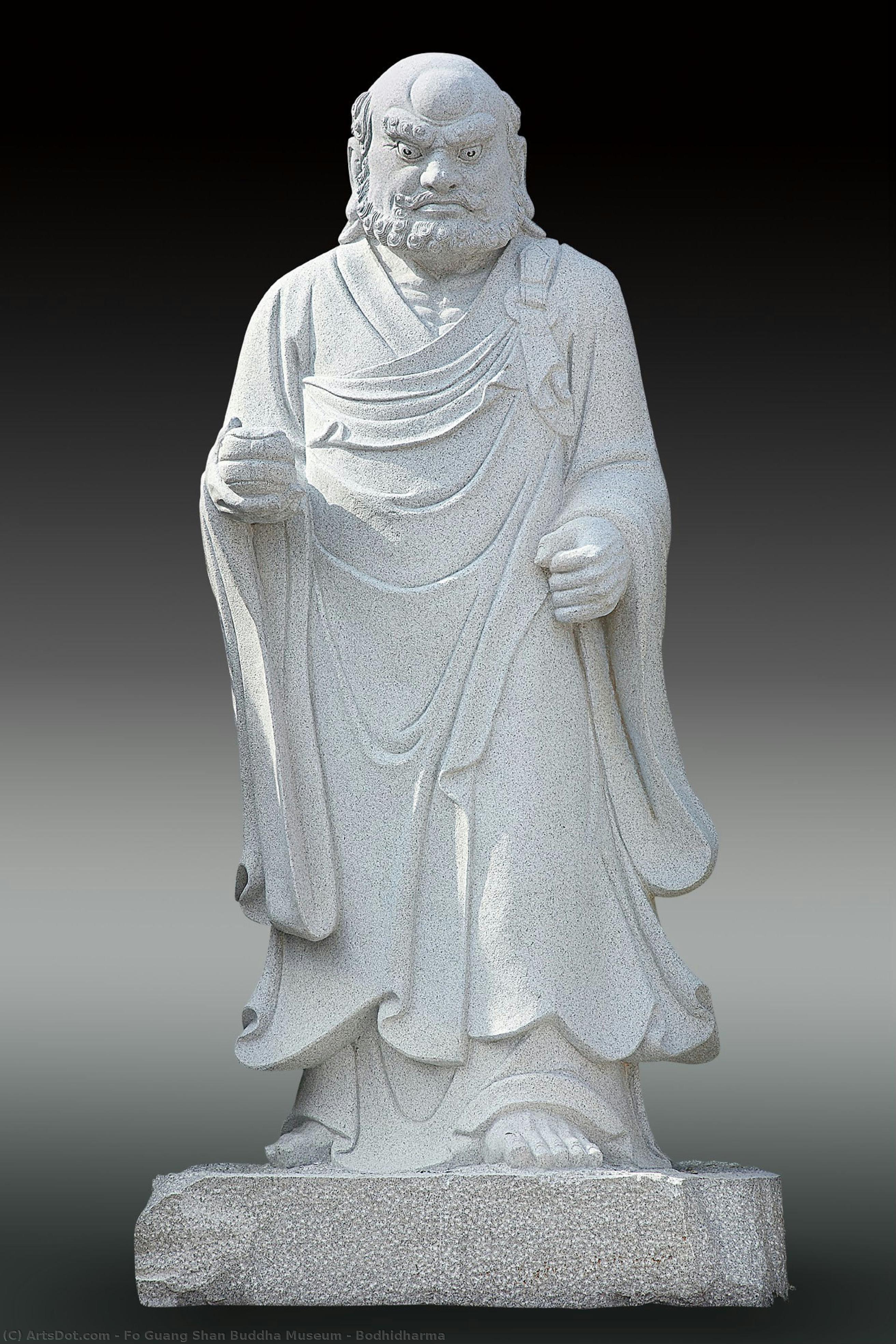
Before us stands a monumental figure carved from stone – Bodhidharma, the First Patriarch of Chan Buddhism. More than just a statue, it’s an invitation to contemplate the essence of meditation and the profound journey toward enlightenment. The image captures a moment frozen in time: the venerable monk, rendered with remarkable realism, facing a simple, unadorned wall. This isn't merely a depiction of a seated figure; it’s a visual embodiment of unwavering focus, a testament to nine years spent in silent contemplation, a practice that would ultimately shape the very foundation of Chan Buddhism.
The photograph, taken in 2011 by the Fo Guang Shan Buddha Museum, reveals a masterful understanding of texture and light. The rough-hewn surface of the granite speaks to the enduring nature of time and the physicality of the practice itself – the years spent honing one’s mind through disciplined meditation. Subtle variations in grey and beige create an atmosphere of quiet reverence, while the diffused lighting eliminates harsh shadows, allowing the form of Bodhidharma to emerge with a dignified serenity. The background wall, deliberately plain, serves as a powerful visual anchor, drawing all attention to the central figure and reinforcing his dedication to inner exploration.
A Legacy Forged in Silence
The story behind this statue is deeply intertwined with the history of Chan Buddhism’s arrival in China. Bodhidharma, traditionally believed to have originated from India or Central Asia, traveled to Luofu Mountain in Jiangsu province during the Liang Dynasty (502–557 CE). He spent nine years meditating before a wall at the Shaolin Monastery, a period that became synonymous with his unwavering commitment and the genesis of Chan’s distinctive meditative approach. The legend surrounding this time – the “Wall-Gazing Brahmin” – highlights the importance of direct experience over intellectual understanding; it's a story of stripping away distractions to access the core of one’s being.
The statue itself is not simply a representation of Bodhidharma, but rather an attempt to capture his essence. The posture—legs crossed, hands resting in the traditional mudra – speaks to stability and inner peace. His gaze, directed slightly off-center, suggests a gentle awareness, a quiet observation of the world without judgment or attachment. The subtle lines etched into his face convey wisdom accumulated through years of practice, hinting at the profound insights he imparted to generations of Chan monks.
Symbolism and Artistic Technique
Beyond its historical significance, the statue is rich in symbolic meaning. The wall itself represents the barrier between the external world and the inner realm of consciousness – a challenge that Bodhidharma sought to overcome through sustained meditation. The choice of granite as the medium speaks to the enduring nature of his teachings; stone is a material associated with permanence, stability, and spiritual strength. The artist, Fo Guang Shan Buddha Museum, employs a realistic style, prioritizing accuracy in depicting the physical form while subtly conveying the figure’s inner state.
The composition—centered on the statue against a simple background—creates a sense of balance and harmony. Strong vertical lines emphasize Bodhidharma's stature, while curved lines define the folds of his robe and the contours of his face. The use of geometric shapes – the pedestal and wall – provides a grounding element, anchoring the figure within its context. The overall effect is one of profound stillness and contemplative power, inviting viewers to reflect on their own journey toward inner peace.
A Timeless Meditation
Reproductions of this powerful image offer more than just decorative value; they provide a tangible connection to the heart of Chan Buddhism. The Fo Guang Shan Buddha Museum’s rendition captures not only Bodhidharma's physical appearance but also his spirit—a spirit of unwavering dedication, profound wisdom, and the transformative potential of meditation. This statue is an invitation to embrace stillness, cultivate awareness, and embark on a path toward enlightenment, one mindful breath at a time.