A Window into the Past: The Soul of the Albaicín
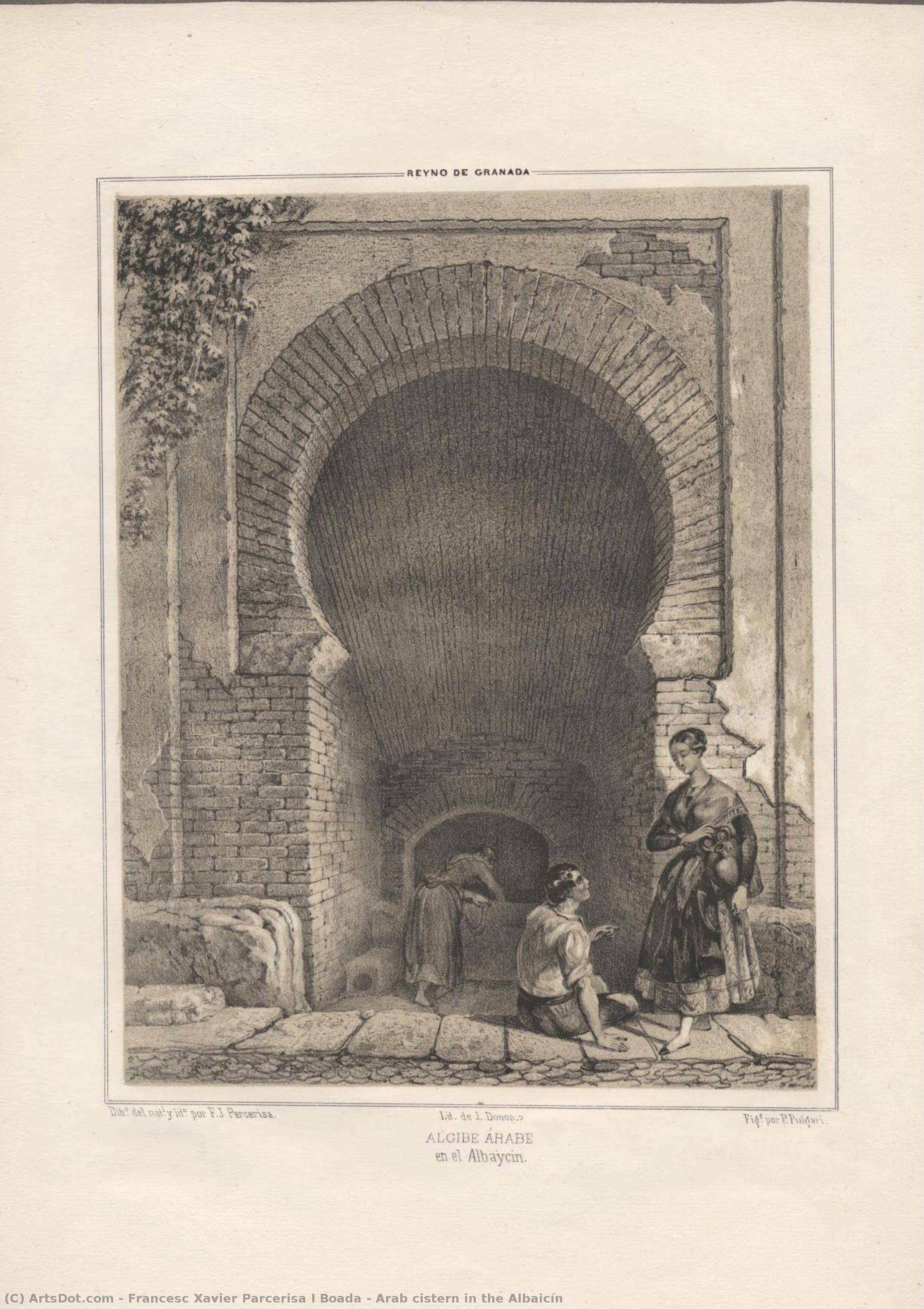
In the delicate interplay of light and shadow captured within this 1850 lithograph, we are transported to a bygone era in Granada. Francesc Xavier Parcerisa i Boada, a master of Spanish Romanticism, invites us into the heart of the Albaicín to witness a quiet moment of communal life centered around an ancient Arab cistern. The scene is not merely a depiction of architecture, but a profound study of human connection and historical continuity. Through the meticulous use of monochrome tones, the artist breathes life into the weathered brickwork of the cistern, making the stone feel tactile and heavy with the weight of centuries. The composition draws the eye inward, where figures are scattered across the landscape—some lost in deep conversation, others paused in solitary contemplation—creating a rhythmic movement that guides the viewer through this historic Spanish enclave.
The technique employed here is a testament to the precision of mid-19th-century lithography. Parcerisa i Boada utilizes a sophisticated range of grayscale values to define depth and atmosphere, transforming a flat print into a three-dimensional experience. The way the light catches the edges of the stone steps and the subtle textures of the figures' garments evokes a sense of nostalgia and reverence for the Moorish heritage of Spain. There is an inherent symbolism in the cistern itself; as a vessel for life-sustaining water, it serves as a metaphor for the enduring nature of culture and memory amidst the passage of time. The gathering of people around this central structure suggests that even as empires rise and fall, the fundamental human need for community and shared space remains unchanged.
An Elegant Addition to the Sophisticated Interior
For the discerning collector or interior designer, this reproduction offers much more than a mere decorative element; it provides a narrative anchor for a room. The monochromatic palette of the lithograph possesses a timeless versatility, allowing it to integrate seamlessly into various design aesthetics, from the moody, dramatic tones of a contemporary industrial loft to the refined, classical elegance of a traditional study. Its historical gravity adds a layer of intellectual depth to a space, sparking conversation and inviting guests to linger on its intricate details.
When selecting a piece for a curated collection, one looks for works that possess both technical mastery and emotional resonance. This artwork achieves both, offering a window into the Romantic movement's obsession with ruins, history, and the sublime. Whether framed as a focal point in a grand hallway or part of a gallery wall in a private library, Arab cistern in the Albaicín brings with it an aura of worldly sophistication and a quiet, contemplative beauty that transcends the boundaries of time.