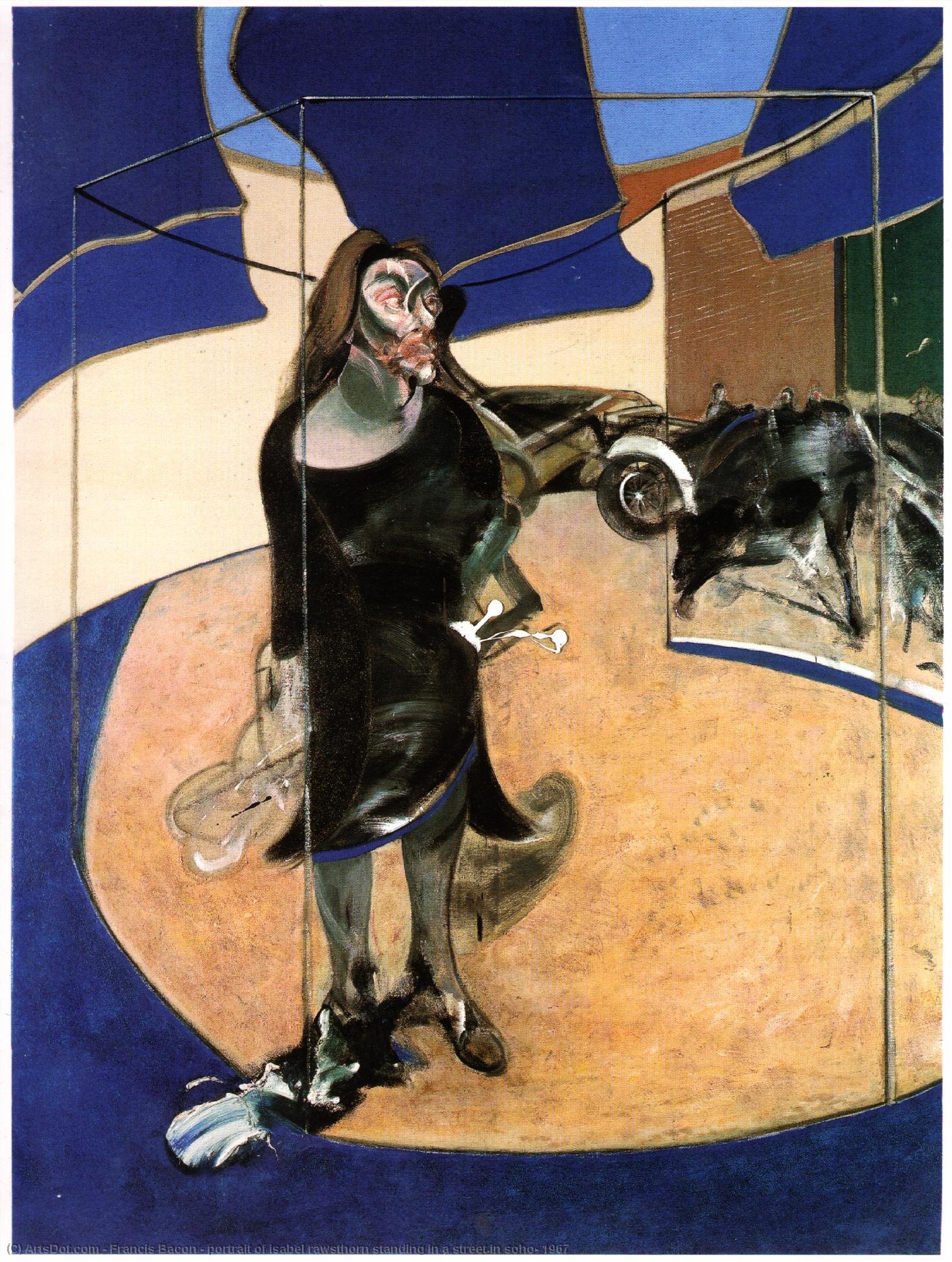
Portrait of Isabel Rawsthorne Standing in a Street in Soho, 1967 – A Study in Existential Angst
Francis Bacon’s “Portrait of Isabel Rawsthorne Standing in a Street in Soho,” created in 1967, isn't merely a depiction of a woman; it’s an embodiment of the pervasive anxieties and uncertainties characteristic of the mid-20th century. Executed in oil on canvas with Bacon’s signature brutal technique—characterized by fractured planes, distorted figures, and jarring color palettes—the painting transcends representational art, delving into the depths of psychological torment. This piece firmly establishes Bacon as a pivotal figure within Expressionism, mirroring his broader exploration of human vulnerability and confronting viewers with uncomfortable truths about the human condition.
- Subject Matter: The portrait captures Isabel Rawsthorne, Bacon’s collaborator and muse, positioned amidst the bustling chaos of Soho’s streets. Rawsthorne herself is rendered in a semi-abstract form, her gaze averted—a deliberate gesture that underscores feelings of isolation and detachment.
- Style & Technique: Bacon's method involved applying paint thickly onto canvas, layering textures to create an unsettling surface that resembles flesh rather than pigment. The fragmented composition reflects the disintegration of identity and perception, mirroring the artist’s own preoccupation with existential themes.
- Color Palette: Dominant hues—primarily reds, yellows, and browns—are employed not for decorative purposes but to convey visceral emotion. These colors pulsate with intensity, mirroring the turbulent inner landscape of the subject and amplifying the painting's unsettling atmosphere.
Influences & Context – Surrealism’s Shadow and Beyond
Bacon’s artistic vision drew heavily from Surrealist principles, particularly the exploration of subconscious imagery and dreamlike distortions—a connection evident in the unsettling juxtaposition of figures and environments within “Portrait.” However, Bacon's approach differed significantly from his contemporaries. He rejected overtly intellectual interpretations, prioritizing raw emotion and visceral experience above all else. The painting reflects a broader cultural preoccupation with trauma and disillusionment following World War II, capturing the pervasive sense of unease that permeated European society during this period.
- Surrealist Roots: Bacon’s fascination with Freud's psychoanalytic theories fueled his desire to depict inner turmoil—a stylistic hallmark shared with Surrealists like René Magritte and Salvador Dalí.
- Post-War Anxiety: The painting speaks to the anxieties of a generation grappling with loss, trauma, and the crumbling foundations of traditional values.
Symbolism & Emotional Resonance – A Window into the Soul
The inclusion of dogs—particularly one positioned prominently near Rawsthorne’s feet—adds another layer of symbolic complexity. Dogs have historically represented loyalty, instinct, and primal urges, yet in Bacon's depiction, they appear menacing and unsettling, mirroring the anxieties lurking beneath the surface of consciousness. The car parked in the background serves as a visual reminder of societal pressures and the inescapable forces shaping human experience. Ultimately, “Portrait of Isabel Rawsthorne Standing in a Street in Soho” compels viewers to confront uncomfortable truths about themselves—a testament to Bacon’s unparalleled ability to translate psychological anguish into enduring artistic expression.
Availability & Legacy – Own a Piece of Artistic History
High-quality reproductions of this iconic artwork are available on ArtsDot.com, allowing art enthusiasts worldwide to experience the profound emotional impact of Bacon's masterpiece. Recognized for its contribution to modern art history and celebrated in museums across Europe—including The National Gallery of Canada—"Portrait of Isabel Rawsthorne Standing in a Street in Soho" continues to resonate with audiences today as a powerful symbol of existential dread and artistic innovation. Explore ArtsDot.com to bring this unforgettable image into your home.
Visit
ArtsDot.com for more information.
Learn more about
Francis Bacon’s “Three Studies of Lucian Freud” on ArtsDot.com.
Discover the work of other notable artists, such as
Zani Corrado on ArtsDot.com.