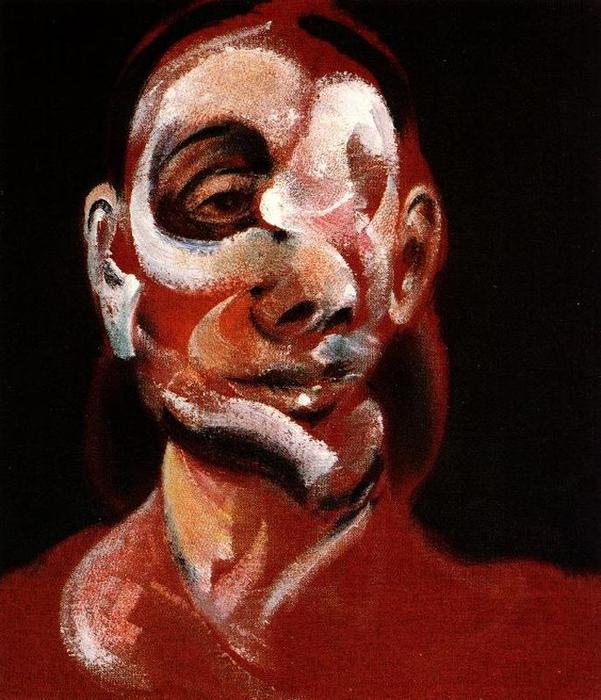
The Unsettling Portrait of Muriel Belcher
Francis Bacon’s “Three Studies of Muriel Belcher 2” is not merely a portrait; it's an excavation of the human psyche, a visceral rendering of anxiety and isolation that continues to haunt viewers decades after its creation. Painted in 1978, this work exemplifies Bacon’s signature style – a brutal honesty stripped bare, revealing the raw nerve beneath the surface of experience. The subject, Muriel Belcher, a friend of the artist, is presented with an almost unbearable intensity, her open mouth and distorted features embodying a profound sense of distress. This isn't a flattering depiction; it’s a confrontation with vulnerability, a refusal to sanitize or sentimentalize human suffering.
Expressionist Anatomy and Technique
- Oil on Canvas: Bacon employed oil paint – a medium known for its rich texture and ability to capture subtle nuances of light and shadow – on a primed canvas. This technique allows for layering, building up the image through multiple applications of paint, creating depth and complexity.
- Distorted Forms: The figure’s anatomy is deliberately fractured and exaggerated, reflecting Bacon's interest in exploring the limits of representation. He wasn't striving for realism; he was aiming to convey an emotional truth that transcended physical accuracy. The elongated limbs, the contorted head, and the gaping mouth contribute to a feeling of unease and impending collapse.
- Layered Brushwork: Bacon’s brushstrokes are visible, adding to the painting's sense of urgency and immediacy. They aren't blended smoothly; instead, they retain their individual character, contributing to the overall texture and dynamism of the composition.
A Reflection of Existential Angst
Created during a period of intense personal struggle for Bacon – marked by illness and emotional turmoil – “Three Studies of Muriel Belcher 2” is deeply rooted in the anxieties of the post-war era. The painting speaks to a broader sense of alienation, disillusionment, and the breakdown of traditional values that characterized much of 20th-century art. Bacon’s work aligns with the Expressionist movement's focus on subjective experience and emotional intensity, rejecting the objective representation favored by earlier artistic traditions. Belcher herself was a complex figure, and her portrayal suggests a deeper exploration of mortality and the fragility of human existence – themes central to Bacon’s oeuvre.
Symbolism and Emotional Impact
The red hue dominating the background is particularly significant. Red has long been associated with blood, passion, and danger, intensifying the painting's unsettling atmosphere. The open mouth can be interpreted as a scream of silent anguish, a desperate plea for help, or simply an embodiment of primal fear. Bacon’s ability to evoke such powerful emotions through seemingly simple forms is what makes “Three Studies of Muriel Belcher 2” so profoundly affecting. It's a work that demands attention, forcing the viewer to confront uncomfortable truths about themselves and the human condition.