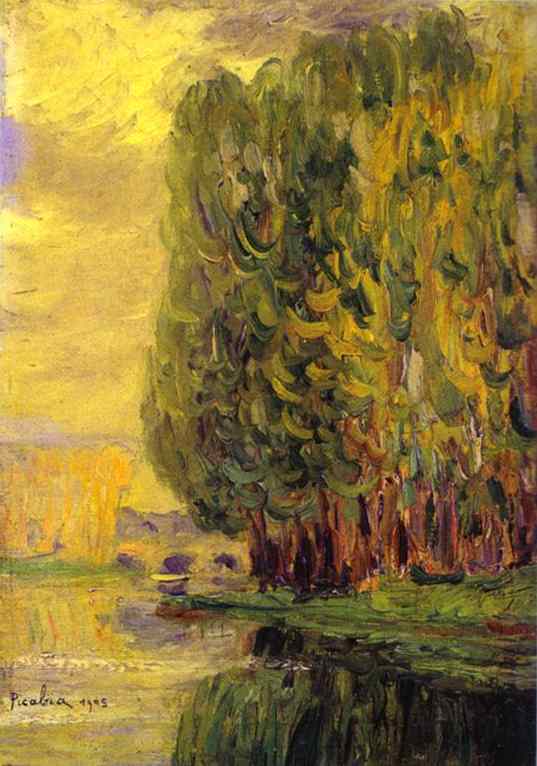
The painting Riverbank by
Francis Picabia is a beautiful representation of nature, showcasing the artist's skill in capturing the serene atmosphere of a riverbank. Created in 1905, this oil on canvas piece measures 27 x 19 cm and is a prime example of the
Dadaism style.
Composition and Style
The painting features a tranquil landscape scene with trees lining the riverbank, creating a sense of symmetry and balance. The colors used are predominantly green, with some yellow hues from the sunlight reflecting off the water, adding warmth and depth to the piece. The overall composition is well-balanced, inviting viewers to appreciate the peacefulness of the scene.
Dadaism was a cultural and artistic movement that emerged during World War I, and
Francis Picabia was one of its leading figures. His work often featured unconventional and chaotic approaches to artistic expression, but in Riverbank, he showcases his ability to create serene and harmonious pieces.
Dadaism was not the only style that
Francis Picabia explored during his career. He also worked with
Fauvism,
Cubism, and
Surrealism, making him a versatile and innovative artist. The
Museum of Modern Art (MoMA) has an extensive collection of his work, including pieces like
Tableau Rastadada and Caoutchouc.
The serene atmosphere of Riverbank makes it a captivating piece that invites viewers to appreciate the beauty of nature. As a handmade oil painting reproduction, it can be enjoyed in the comfort of one's own home, bringing a touch of
Dadaism and the artistic genius of
Francis Picabia to any room.