A Divine Revelation in Shadow & Light: Exploring Zurbarán’s *La Cena de Emaús*
This captivating monochrome rendition of Francisco de Zurbarán's *La Cena de Emaús* (The Supper at Emmaus) offers a profoundly moving encounter with one of the most poignant episodes from the New Testament. While originally painted in rich color, this striking black and white version amplifies the drama and spiritual intensity inherent in the scene, making it an exceptional focal point for any collection or interior space.
The Narrative Unveiled: A Moment of Recognition
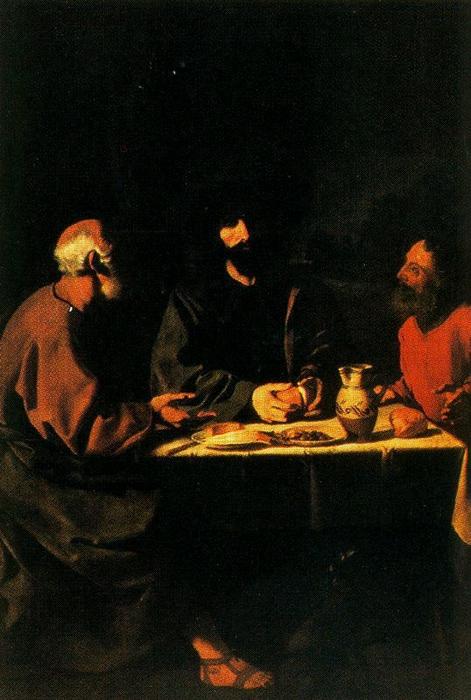
Zurbarán masterfully depicts the moment immediately following Jesus’ resurrection when He reveals Himself to two disciples during a meal in Emmaus. Initially unrecognized, Christ breaks bread with them – an act that miraculously opens their eyes to His true identity. The painting captures this precise instant of dawning realization: a blend of astonishment, wonder, and burgeoning faith etched upon the faces of those present. The simple table setting—with its carefully rendered bread, fruit, and wine glass—grounds the miraculous event in the everyday, emphasizing Christ’s humility and accessibility.
Baroque Mastery & The Power of Tenebrism
Francisco de Zurbarán (1598-1664) was a leading figure of the Spanish Baroque period, deeply influenced by the revolutionary *tenebrism* of Caravaggio. This technique—characterized by dramatic contrasts between intense light and deep shadow—is powerfully evident in *La Cena de Emaús*. The stark illumination focuses our attention on the figures’ expressions and gestures, heightening their emotional impact. The monochrome palette further intensifies this effect, stripping away distraction and directing all visual energy towards the core narrative. Zurbarán's early training under Alejandro de la Mina and Alonso de Najera provided a solid foundation for his distinctive style – a compelling fusion of realism and spiritual fervor.
Symbolism & Religious Significance
Beyond its narrative power, *La Cena de Emaús* is laden with religious symbolism. The bread and wine are central elements, representing the Eucharist—the sacrament commemorating Christ’s sacrifice and embodying His presence. The unadorned setting underscores Christ's humility and connection to ordinary life.
This painting isn’t merely a depiction of an event; it’s a meditation on faith, revelation, and the transformative power of recognizing the divine in the mundane. Zurbarán was renowned for his devotional works, particularly those featuring monks and saints, consistently imbuing them with quiet dignity and profound spirituality.
Emotional Resonance & Enduring Appeal
The monochrome presentation of this work evokes a powerful sense of solemnity and introspection. It invites viewers to contemplate the disciples’ emotional journey—their initial doubt, their growing curiosity, and ultimately, their ecstatic recognition.
This is a painting that speaks not just to the eye, but to the soul. Its enduring appeal lies in its ability to convey a timeless message about faith, hope, and the possibility of encountering the divine within our own lives.
Collecting & Interior Design Considerations
- Style Compatibility: This piece complements interiors ranging from traditional Spanish Colonial to modern minimalist spaces, adding depth and sophistication.
- Color Palette: The monochrome palette offers versatility, harmonizing with a wide range of color schemes. It provides a striking contrast against both light and dark backgrounds.
- Focal Point: Its dramatic composition makes it an ideal focal point for dining rooms, libraries, or contemplative spaces.
- Reproduction Quality: When considering a reproduction, prioritize high-resolution printing on archival quality materials to capture the nuances of Zurbarán’s technique and ensure longevity.
Further Exploration