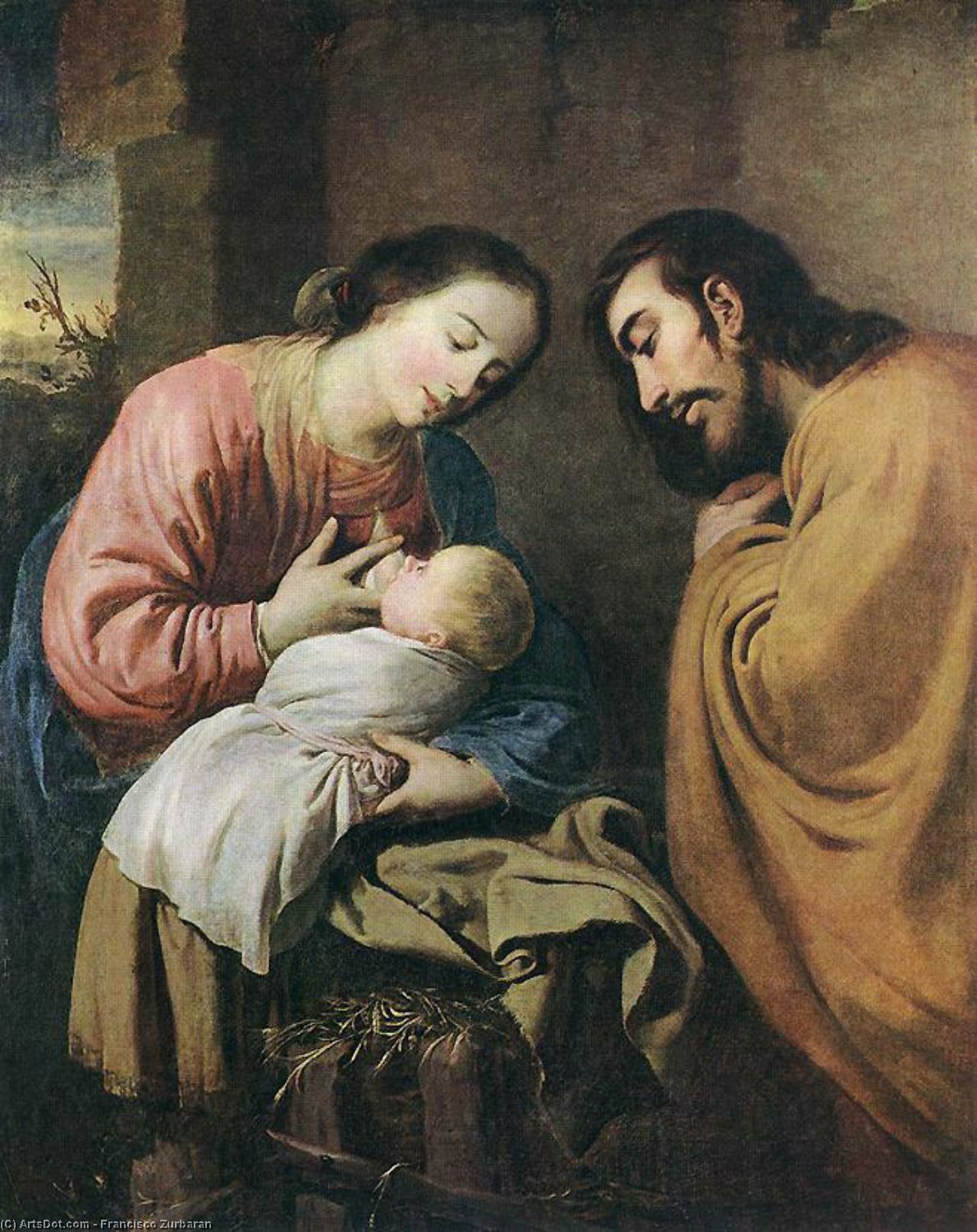
A Moment of Serenity Amidst Pilgrimage: Analyzing Zurbarán’s “Rest on the Flight to Egypt”
Francisco de Zurbarán's "Rest on the Flight to Egypt," completed in 1659, stands as a cornerstone of Spanish Baroque art—a testament to its profound ability to convey spiritual contemplation and idealized realism. Executed in oil on canvas, this painting transcends mere depiction; it invites viewers into an intimate tableau capturing a pivotal biblical narrative: Joseph, Mary, and Jesus fleeing persecution in Egypt following the Magi’s visit.
- Subject Matter & Narrative Depth: The scene portrays a serene domestic interior—a dining room bathed in diffused light—where Joseph, Mary, and the infant Jesus repose. This deliberate choice underscores the importance of familial piety and highlights the biblical tale's core message: unwavering faith amidst adversity.
- Baroque Style & Dramatic Lighting: Zurbarán’s masterful application of tenebrism – a technique characterized by stark contrasts between light and dark – dominates the composition. The luminous glow emanating from Mary’s face and Jesus’ chest draws attention to their figures, emphasizing their sanctity and creating an atmosphere of solemn reverence. This dramatic lighting wasn't merely stylistic; it served to heighten emotional impact and imbue the scene with spiritual significance.
- Technical Precision & Realistic Detail: Zurbarán’s meticulous rendering of textures—the rough wool cloak of Joseph, the smooth skin of Mary—demonstrates an unparalleled commitment to realism. He achieved this remarkable feat through painstaking observation and skillful blending techniques, capturing the physicality of his subjects with astonishing accuracy.
Symbolism & Spiritual Resonance
Beyond its visual splendor, “Rest on the Flight to Egypt” is laden with symbolic meaning. The donkey symbolizes humility and pilgrimage—a deliberate allusion to Jesus’ journey to Jerusalem. The birds perched atop the table represent divine providence, suggesting God's watchful care over the Holy Family. These subtle emblems reinforce the painting’s overarching theme of faith, hope, and unwavering devotion.
Historical Context & Artistic Influence
Created during Spain’s Golden Age—a period marked by artistic flourishing and religious fervor—Zurbarán's work reflects the prevailing aesthetic sensibilities of the time. He drew inspiration from Caravaggio’s dramatic chiaroscuro, adapting its principles to create a uniquely Spanish interpretation of Baroque art. “Rest on the Flight to Egypt” became an exemplar for subsequent generations of painters, establishing Zurbarán as ‘The Spanish Caravaggio,’ cementing his legacy as one of Spain's most influential artists.
Emotional Impact & Contemporary Reception
“Rest on the Flight to Egypt” continues to captivate viewers today with its profound emotional resonance. The painting’s stillness and luminosity evoke a sense of tranquility and spiritual contemplation—a powerful reminder of the enduring beauty and solemn dignity of religious art. Its meticulous realism invites viewers to engage in a dialogue with the depicted figures, fostering empathy and prompting reflection on themes of faith, family, and divine grace.