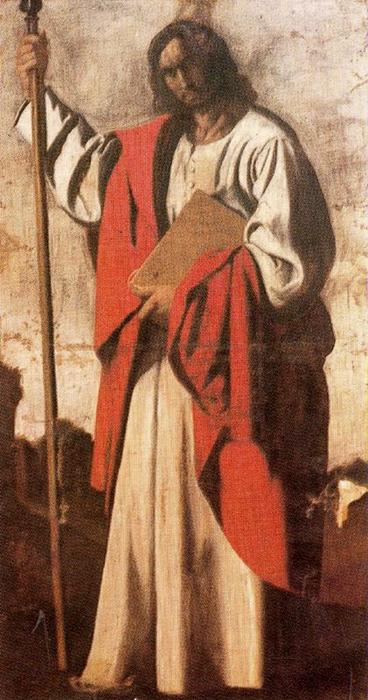
A Testament to Faith: Francisco de Zurbarán’s Santo Tomás
Francisco de Zurbarán's “Santo Tomás” stands as a cornerstone of Baroque art, embodying the spiritual fervor and meticulous realism that characterized Spain during its Golden Age. Painted circa 1630-1635, this monumental altarpiece transcends mere depiction; it strives to convey an experience of profound contemplation and divine grace.
- Subject Matter: The painting portrays Saint Thomas Aquinas, the influential Dominican theologian and philosopher, kneeling in prayer before a radiant crucifix. This iconic pose—a hallmark of Catholic piety—immediately establishes the artwork’s devotional purpose.
- Style & Technique: Zurbarán's mastery lies in his masterful use of chiaroscuro – dramatic contrasts between light and dark – which dominates the composition. The artist employs tenebrismo, a technique popularized by Caravaggio, to sculpt the figure of Aquinas with breathtaking precision. Light emanates from the crucifix, illuminating Aquinas’s face and hands, highlighting the solemnity of his posture and emphasizing the spiritual illumination he seeks.
- Historical Context: Created during a period marked by intense religious devotion and papal patronage, “Santo Tomás” reflects the broader artistic trends of its time. The Baroque style prioritized emotional intensity and grandeur, aiming to inspire awe and reverence in the viewer. Zurbarán’s work aligns perfectly with this aesthetic ideal, serving as a powerful visual expression of Catholic faith.
Symbolism: Light and Darkness – Divine Revelation
The pervasive darkness surrounding Aquinas serves not merely as an artistic device but carries significant symbolic weight. It represents the earthly realm—the world of human imperfection and suffering—against which Aquinas’s inner radiance stands in stark opposition. The crucifix, bathed in ethereal light, symbolizes Christ’s sacrifice and divine grace, offering salvation to those who turn towards God with humility and devotion.
- The Crucifix: Its radiant glow signifies divine illumination—the source of Aquinas's spiritual enlightenment.
- Aquinas’s Hands: Positioned outstretched in prayer, Aquinas’s hands are rendered with astonishing detail, conveying a palpable sense of earnest supplication. They symbolize faith and humility, representing the human desire for communion with God.
Emotional Impact & Artistic Legacy
"Santo Tomás" continues to resonate powerfully with viewers today due to its ability to evoke feelings of serenity, contemplation, and spiritual aspiration. Zurbarán’s unwavering commitment to realism—combined with his masterful manipulation of light—creates an image that transcends time, capturing the essence of Christian piety in a form of unparalleled beauty and solemnity. It remains a testament to the enduring power of art to inspire faith and illuminate the human spirit.