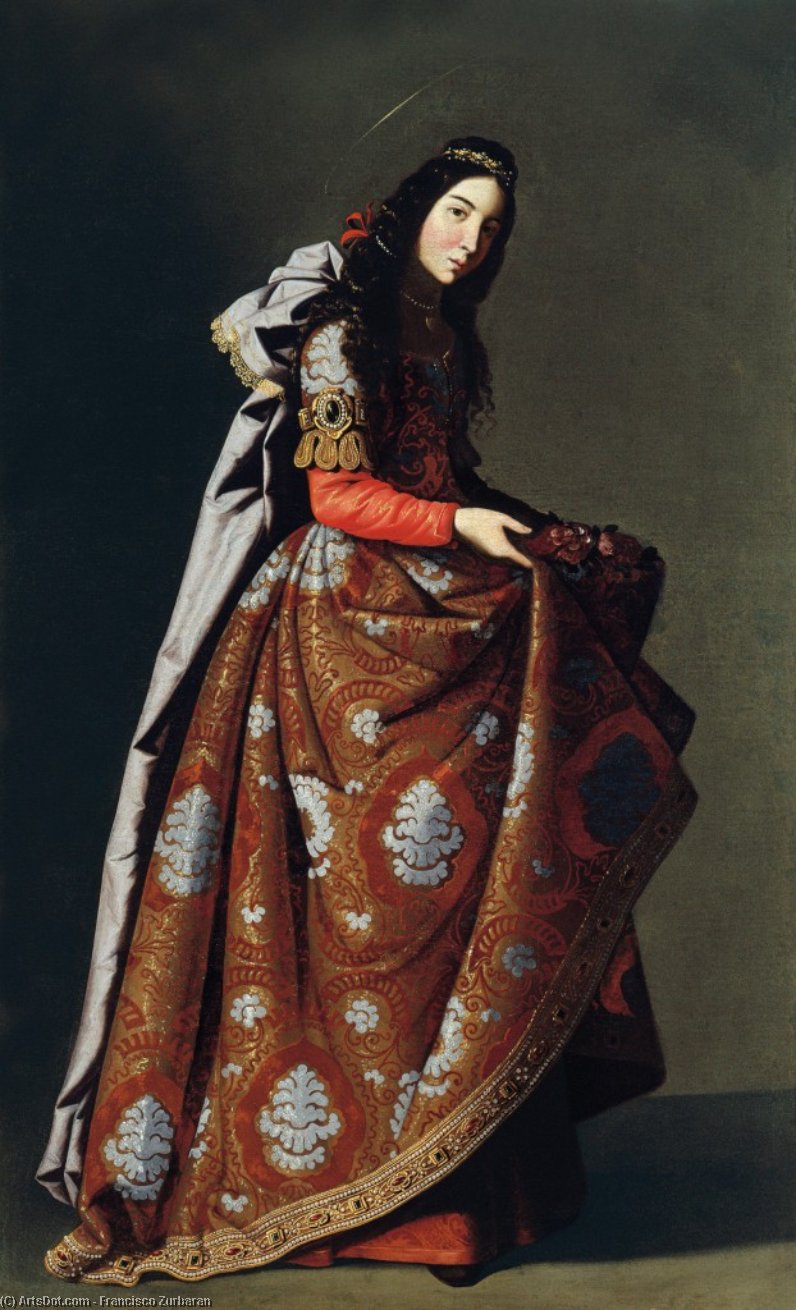
Франциско Де Зурабон (1598 - 1664)

Фрањо де Зубаран био је шпански барокни мајстор који се одликује драматичним тенбризмом и религиозним уметностима. Погледајте слике монахиња, свештеника и тислифа – највећи каравђаго из Шпаније!

The Artist: Francisco Zurbaran

CITEFrancisco Zurbaran (1598-1664) was a renowned Spanish Baroque painter, known for his religious and still life paintings. He was born in Fuente de Cantos, Spain, and later moved to Seville where he established himself as one of the leading painters of his time. Zurbaran's style is characterized by its simplicity, realism, and a deep sense of spirituality.

The Painting: St. Casilda

CITESt. Casilda is a stunning oil painting on canvas created by Zurbaran in 1630. The painting depicts St. Casilda, a Spanish princess who lived in the 11th century and was known for her acts of charity towards the poor. In the painting, she is shown holding a basket of bread, symbolizing her charitable nature.

Media and Style

Zurbaran's use of chiaroscuro (the contrast between light and dark) in CITESt. Casilda is particularly noteworthy. The technique adds depth and volume to the figure, making her appear almost lifelike. Zurbaran also used a limited color palette, consisting mainly of earth tones, which further emphasizes the painting's somber mood. The artist's brushwork is precise and meticulous, with each stroke carefully calculated to create the desired effect. The texture of the saint's robes, for example, is rendered in great detail, giving them a tactile quality that invites the viewer to reach out and touch them.

Analysis

At first glance, CITESt. Casilda may appear to be a simple depiction of a saint performing an act of charity. However, upon closer examination, the painting reveals itself to be a complex and nuanced work of art. The saint's expression, for instance, is one of quiet contemplation rather than joyful giving. This suggests that she is not merely performing an act of charity but is deeply engaged in the spiritual significance of her actions. The use of chiaroscuro also adds a sense of drama and tension to the painting. The contrast between light and dark creates a visual hierarchy, drawing the viewer's attention to the saint's face and hands, which are illuminated by a soft, divine light. In conclusion, CITESt. Casilda is a powerful and evocative painting that showcases Zurbaran's mastery of the Baroque style. Its somber mood, limited color palette, and precise brushwork all contribute to its overall impact, making it a truly remarkable work of art. If you are interested in purchasing a hand-made oil painting reproduction of CITESt. Casilda or any other masterpiece, please visit our website at https://ArtsDot.com.
  • Francisco Zurbaran: A Brief Overview of His Life and Work - Link
  • The Art of Chiaroscuro: A Key Element in Zurbaran's Paintings - Link
  • The Symbolism of Bread in Zurbaran's Paintings - Link