A Vision of Devotion: The Ethereal Presence of St Margaret
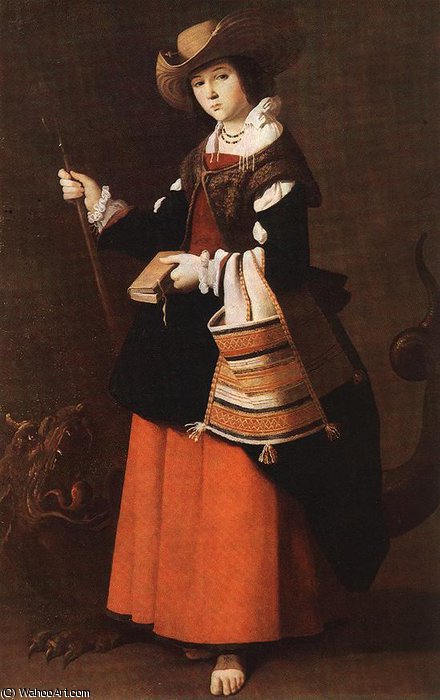
In the grand tapestry of the Spanish Golden Age, few works capture the intersection of earthly realism and divine transcendence as poignantly as Francisco de Zurbarán’s St Margaret. Completed in 1631, this monumental canvas serves as more than a mere portrait; it is a profound window into the soul of the Baroque era. As one stands before this work, the sheer scale of 194 x 112 cm commands an immediate, breathless silence. The central figure, St Margaret of Antioch, emerges from the shadows not with a cry of agony, but with a serene, unwavering gaze that speaks of a peace forged in the fires of trial. Zurbarán invites the viewer into a space of deep spiritual contemplation, where the boundaries between the physical world and the celestial realm begin to blur.
The mastery of the piece lies in Zurbarán’s unparalleled command of chiaroscuro. Often referred to as the "Spanish Caravaggio," the artist utilizes a dramatic interplay of light and shadow to sculpt form out of darkness. A single, purposeful shaft of light descends from above, illuminating St Margaret with a celestial brilliance that highlights the meticulous textures of her attire and the soft, youthful contours of her face. This technique does more than create depth; it directs the viewer's emotional journey, pulling our eyes away from the surrounding gloom toward the luminous symbol of faith. The stark contrasts create an illusionistic weight, making the saint feel tangibly present within the room, a quality that makes a high-quality reproduction of this work a breathtaking centerpiece for any sophisticated interior.
Symbolism and the Triumph of Faith
Beyond its technical brilliance, the painting is rich with a narrative language understood by the faithful of the 17 century. Flanking the saint are two dragons, creatures that represent the demonic forces and the harrowing torments from which Margaret was miraculously delivered. These elements introduce a subtle tension to the composition, yet they do not overwhelm the serenity of the subject. Instead, their presence reinforces the moral triumph of the saint; they are the vanquished shadows beneath her spiritual light. The simplicity of the composition—the upright posture, the focused light, and the symbolic beasts—ensures that the painting’s message remains clear and powerful: that even in the face of overwhelming darkness, devotion provides an unshakeable sanctuary.
For the collector or the interior designer, this artwork offers a unique opportunity to introduce a sense of historical gravity and quiet drama into a space. Whether placed in a sunlit gallery or a moody, library-style study, the painting’s ability to evoke solemn reverence is unmatched. It is a work that does not merely decorate a wall but transforms an environment, offering a timeless connection to the spiritual intensity of Spain's most celebrated artistic era. To possess a reproduction of St Margaret is to hold a piece of history that continues to inspire awe, reminding us of the enduring power of light over shadow and faith over fear.