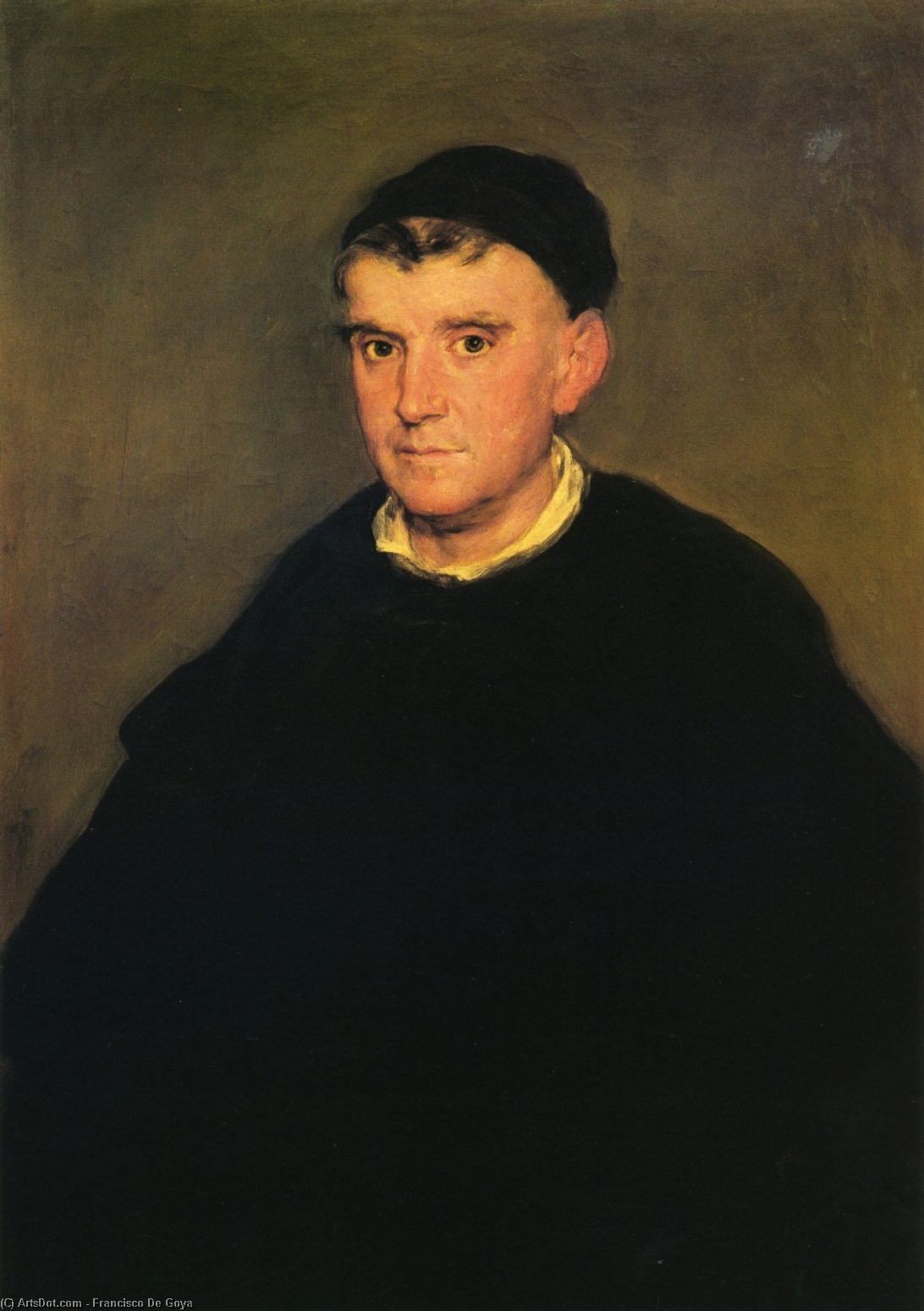
Brother Juan Fernandez de Rojas: A Portrait of Dignity Amidst Darkness
Francisco José de Goya y Lucientes, a titan amongst Spanish artists, bequeathed to posterity an oeuvre that transcends mere visual representation—it embodies the anxieties and profound humanity of his era. “Brother Juan Fernández de Rojas,” painted in 1800 during Goya’s Romantic period, stands as a masterful distillation of this artistic spirit, captivating viewers with its understated power and haunting beauty. This monumental canvas (75 x 54 cm) resides within the Museo de Bellas Artes de Santander, offering visitors an unparalleled opportunity to immerse themselves in the genius of Goya's vision.
The Canvas Speaks Volumes: Style and Technique
Goya’s Romanticism wasn’t merely a stylistic preference; it was a philosophical stance—a rejection of Neoclassical ideals in favor of emotional intensity and psychological realism. “Brother Juan Fernández de Rojas” exemplifies this approach through its meticulous oil painting technique on canvas. Goya employed layering, glazing, and scumbling to achieve remarkable tonal gradations, capturing the subtle nuances of light and shadow that imbue the portrait with an atmosphere of solemn contemplation. The artist’s masterful brushwork conveys a palpable sense of texture—the folds of the robe, the weathered skin of the subject—drawing the eye into a detailed exploration of form.
A Figure Steeped in Symbolism: Context and Narrative
Painted against a muted backdrop, Brother Juan Fernández de Rojas depicts a Franciscan monk rendered with unflinching honesty. His gaze directly confronts the viewer, conveying an unwavering seriousness that speaks to themes of faith, duty, and perhaps even disillusionment. The inclusion of two smaller figures flanking the central figure—likely attendants—suggests a hierarchy of authority and reinforces the solemnity of the scene. Considering Goya’s broader artistic output, including “Charles IV of Spain” and “The Clothed Maja,” this portrait aligns with his preoccupation with portraying human vulnerability alongside social critique. The monk's posture embodies resilience and dignity, reflecting the spiritual fervor prevalent during Goya’s time—a period marked by political upheaval and religious reform.
More Than Just Paint: Emotional Resonance
“Brother Juan Fernández de Rojas” transcends its formal qualities to evoke a profound emotional response. The artist skillfully captures the inner life of his subject, inviting viewers to contemplate questions of morality, spirituality, and the human condition. Like many of Goya’s works, it eschews sentimental melodrama, opting instead for a quiet contemplation that lingers in the mind long after viewing. It's a testament to Goya's ability to transform observation into feeling—a hallmark of Romantic art that continues to resonate with audiences today.
- Artist: Francisco José de Goya y Lucientes
- Year: 1800
- Style: Romanticism
- Medium: Oil on Canvas
- Dimensions: 75 x 54 cm
- Location: Museo de Bellas Artes de Santander, Spain