Francisco Goya, španski umetnik poznat po portretima, mračnim satiram i ciklusima 'Ratni jadi'. Pionir romantizma, njegov rad je ključan za razumevanje istorije umetnosti.
A Moment Frozen in Shadow: Analyzing Goya’s “Hush”
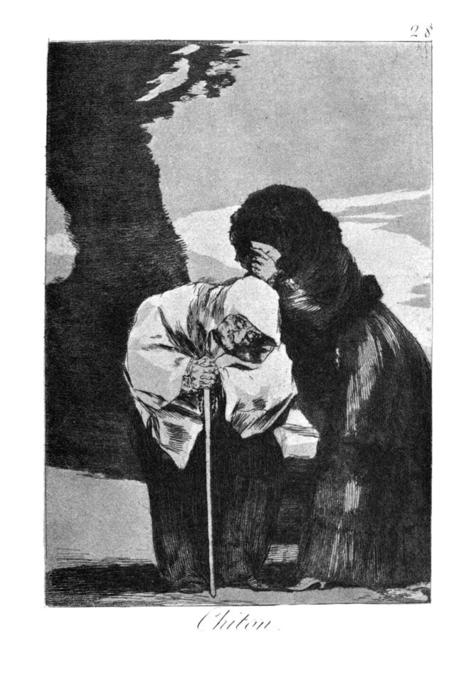
Francisco José de Goya y Lucientes' "Hush," plate 28 from Los Caprichos, transcends mere visual representation; it embodies the anxieties and profound introspection characteristic of the Romantic era. Created in 1799 during a period marked by political upheaval and societal critique—a time when Goya himself wrestled with personal demons—the etching captures an arresting tableau of two figures enveloped in quiet contemplation amidst a subtly rendered landscape. This artwork isn’t simply a depiction of scenery; it's a carefully constructed psychological portrait, brimming with symbolic resonance and masterful execution.
Composition and Technique: Mastery of Line
The composition prioritizes verticality, emphasizing the stature of the individuals against the backdrop of an ambiguous terrain. Goya’s genius lies in his unparalleled command of etching technique—specifically cross-hatching—which achieves remarkable tonal gradation and textural depth. Fine lines weave intricate patterns across the surface, mimicking the roughness of clothing and hinting at the contours of trees and snow. This meticulous process isn't merely decorative; it serves to convey a palpable sense of atmosphere and emotional intensity. The diffused lighting contributes to this effect, casting gentle shadows that sculpt the forms of the figures and lending an air of melancholy to the scene.
Symbolism and Emotional Resonance: Masks and Quietude
The central figure on the left wears a hooded mask—a deliberate choice that immediately introduces an element of mystery and concealment. This symbol speaks volumes about anonymity, repression, and perhaps even hidden desires. Simultaneously, the woman positioned beside him clasps her hands together in a gesture indicative of apprehension or profound thoughtfulness. Her posture conveys vulnerability and invites contemplation on themes of anxiety and inner turmoil. The walking stick she holds reinforces this impression—a tool for support but also representing resilience amidst uncertainty. Collectively, these gestures contribute to the artwork’s overarching mood of introspection and quiet sorrow.
Historical Context: Romanticism's Dark Side
“Hush” firmly establishes itself within the Romantic movement, a period defined by an obsession with emotion and psychological realism—a reaction against the Enlightenment’s emphasis on reason and order. Goya’s unflinching portrayal of human suffering aligns perfectly with this artistic sensibility. Los Caprichos, as a whole, functioned as a scathing critique of Spanish society, exposing hypocrisy and injustice. “Hush” encapsulates this spirit of rebellion, urging viewers to confront uncomfortable truths about the human condition—a legacy that continues to resonate powerfully today.
A Legacy of Dramatic Expression
Goya’s etching stands apart not only for its technical brilliance but also for its ability to evoke profound emotional responses. It's a testament to his capacity to transform observation into artful contemplation, capturing a fleeting moment imbued with symbolic significance and enduring artistic merit. Reproductions of “Hush” offer an opportunity to appreciate Goya’s genius—a reminder that true beauty resides in confronting darkness and embracing vulnerability.