Francisco José de Goya y Lucientes: A Portrait of Innocence Amidst Romantic Shadows
Francisco José de Goya y Lucientes (1746–1828), a name synonymous with Spanish artistic genius, stands as an unparalleled figure in the annals of art history. He wasn’t merely a painter; he was a chronicler of his time—a visionary who wrestled with societal anxieties and ultimately liberated painting from academic constraints, ushering in the era of Romanticism.
Born in Fuendetodos, Spain, Goya's journey began humbly, yet culminated in extraordinary achievement. Initially trained under José Luzán y Martinez, he honed his skills at the Madrid court with Anton Raphael Mengs, absorbing the traditions of Old Masters while simultaneously forging a path toward unprecedented expressive freedom. This formative period instilled in him mastery of form and composition—evident throughout his prolific oeuvre.
Manuel Osorio de Zuniga: A Study in Romantic Detail
“Manuel Osorio de Zuniga, ca Detalj, M,” painted in 1788, exemplifies Goya’s Romantic sensibilities. Measuring 127 x 101 cm, this oil on canvas portrait transcends mere representation; it's a carefully constructed tableau brimming with symbolic resonance and capturing the boy’s youthful innocence against a backdrop of brooding darkness.
The subject is Manuel Osorio de Zuniga, son of Isabel Vicente Osorio de Moscoso, Count of Altamira. He wears a sumptuous red costume—a bold statement of fashion at the time—complete with white lace collar and sleeves. His gaze is direct, unwavering, inviting the viewer into an intimate connection with the scene.
Symbolism Woven Into Canvas
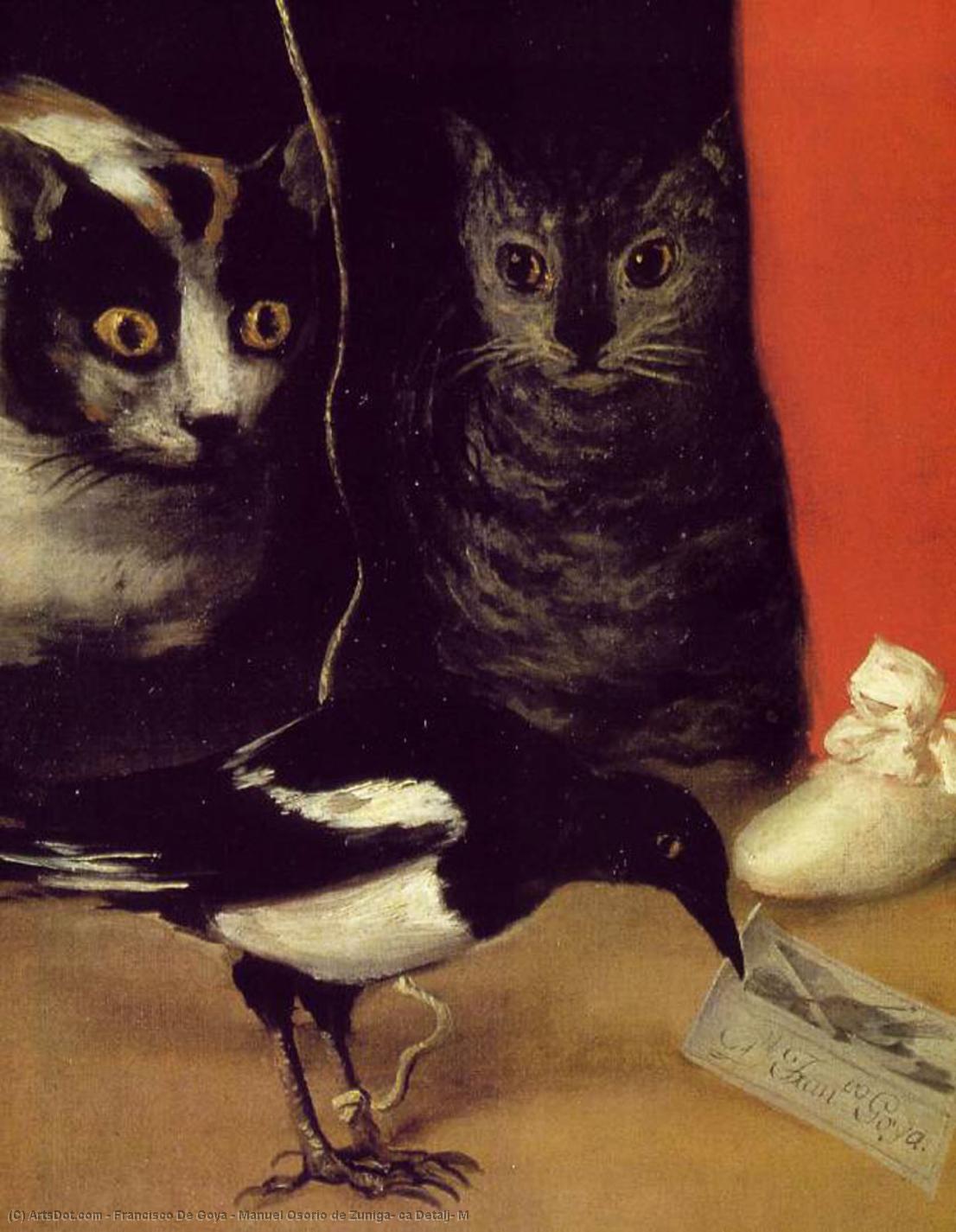
Goya’s masterful use of animals elevates “Manuel Osorio de Zuniga” beyond a simple portrait. A magpie stands beside the boy's feet, clutching a calling card bearing his name and birthdate—a symbol of curiosity and, crucially, representing the soul in Christian tradition. Three cats observe from the shadows, embodying instincts and malice—a deliberate contrast to the child’s purity.
Furthermore, a birdcage containing finches sits beside Manuel, symbolizing freedom juxtaposed with confinement. This subtle layering of imagery underscores Goya's profound understanding of human psychology and his ability to infuse his paintings with deeper meanings.
Romantic Technique and Dramatic Impact
Goya’s stylistic approach aligns perfectly with Romanticism—characterized by emotional intensity and an embrace of darkness. The dark background serves to accentuate the vibrancy of the red costume, creating a striking visual effect that commands attention. His meticulous brushwork captures minute details, conveying a remarkable sensitivity to texture and light.
"Manuel Osorio de Zuniga" remains a cornerstone of Goya’s legacy—a testament to his artistic brilliance and a poignant meditation on childhood innocence within the turbulent currents of Romantic idealism. Its enduring appeal lies in its ability to evoke emotion and provoke contemplation, cementing its place as one of the most celebrated portraits of its era.