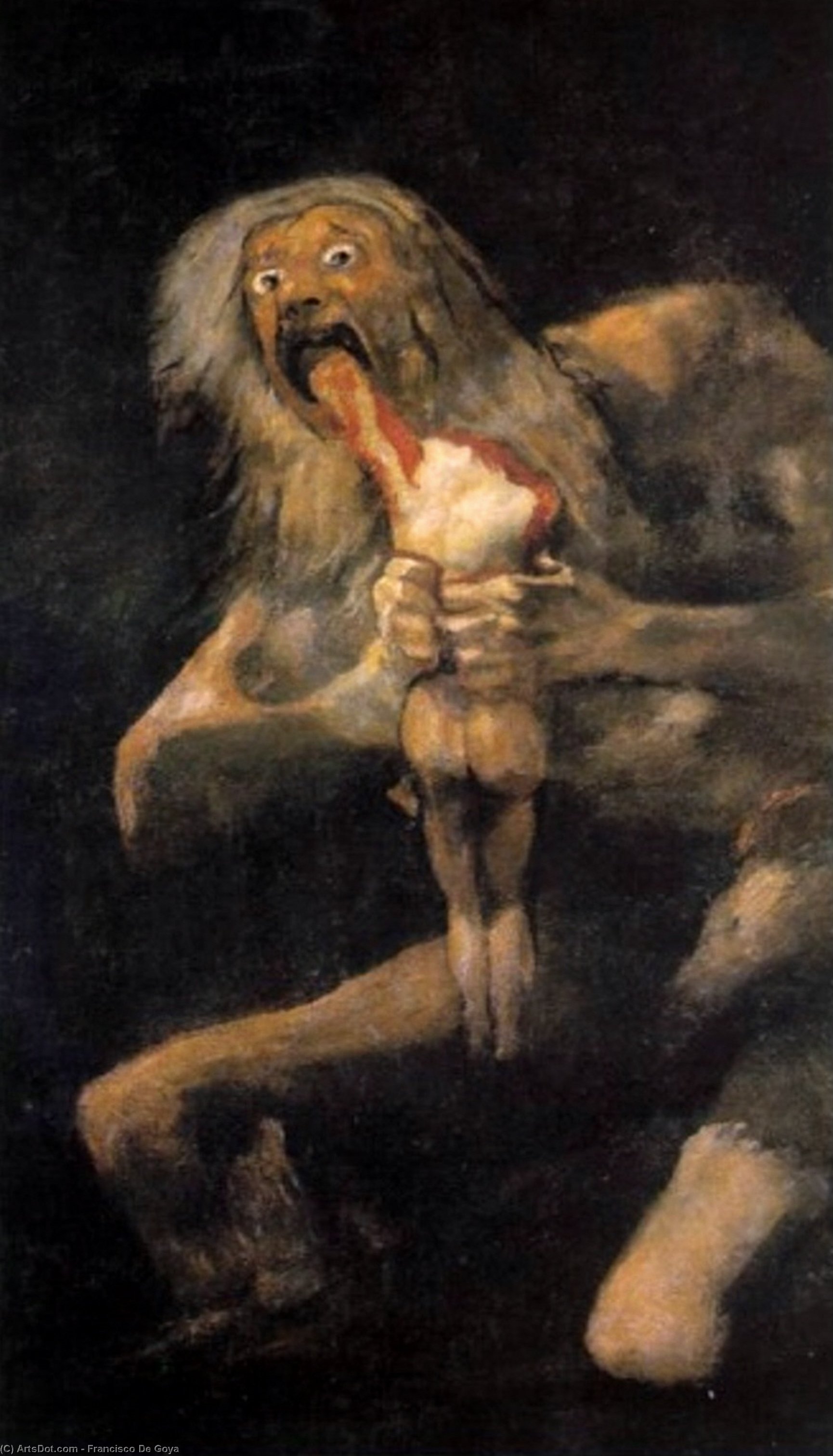
Saturn, ca Oil on plaster remounted
Francisco de Goya’s Saturn, ca Oil on plaster remounted stands as a chilling testament to the artist’s psychological turmoil and an unparalleled exploration of mythic symbolism. Painted in 1823 during his bleakest period—a time marked by debilitating illness and profound disillusionment—this monumental canvas is part of Goya's infamous Black Paintings, executed on the walls of his Quinta del Sordo estate.
The Painting’s Context: Goya was grappling with immense personal suffering when he embarked upon this unsettling project. Diagnosed with tuberculosis and facing physical deterioration alongside mental instability, he retreated from society into a solitary existence that profoundly influenced his artistic vision. The Black Paintings are not merely decorative; they represent a visceral outpouring of emotion—a confrontation with mortality, fear, and the darkness within.
Artistic Significance: Goya’s masterful technique—characterized by loose brushstrokes and a muted palette—captures the horror of the mythic narrative. He employs oil paint on plaster, transferring the original artwork to canvas around 1874, ensuring its preservation for posterity. The composition is deliberately jarring; a man clutching a baby in his arms stares directly at the viewer while simultaneously consuming the child’s head. This grotesque image embodies Saturn devouring his offspring—a potent symbol of destruction and regeneration.
Themes and Symbolism: Beyond its gruesome depiction, Saturn, ca Oil on plaster remounted delves into profound themes of aging, violence, and the cyclical nature of existence. The man’s anguished expression conveys desperation—a futile attempt to ward off inevitable decay. Saturn represents not only divine authority but also the inescapable force of time consuming all things.
Historical Context: Created during Spain's turbulent era under Napoleon’s occupation, Saturn, ca Oil on plaster remounted reflects Goya’s deep dissatisfaction with the political landscape of his time—a disillusionment fueled by the horrors of war and the repressive policies of the Bourbon monarchy. The painting serves as a haunting reminder of the fragility of human life against the backdrop of historical upheaval.
Preservation and Exhibition: Currently housed in the Museo de Bellas Artes de Santander, Saturn, ca Oil on plaster remounted offers visitors a chance to experience Goya’s genius firsthand. The museum meticulously maintains the artwork's condition and presents it alongside other masterpieces of Romanticism, providing invaluable insight into Goya’s artistic legacy.
Relevance Today: Saturn, ca Oil on plaster remounted continues to resonate powerfully with audiences today—a timeless meditation on mortality and the destructive forces inherent in both nature and human ambition. Its unsettling imagery compels contemplation and invites interpretation, cementing Goya’s place as one of art history's most enduring figures.
Photo Description: The image depicts a man holding a baby in his arms while consuming the child’s head. The man appears to be a monstrous figure with long hair and a beard, reflecting Saturn's mythological role as a devourer of children. Goya utilizes a dark palette and loose brushstrokes to convey the horror and psychological intensity of the scene. The painting captures the essence of existential dread and explores themes of violence, aging, and death.
Size: 146 x 83 cm
Date: 1823