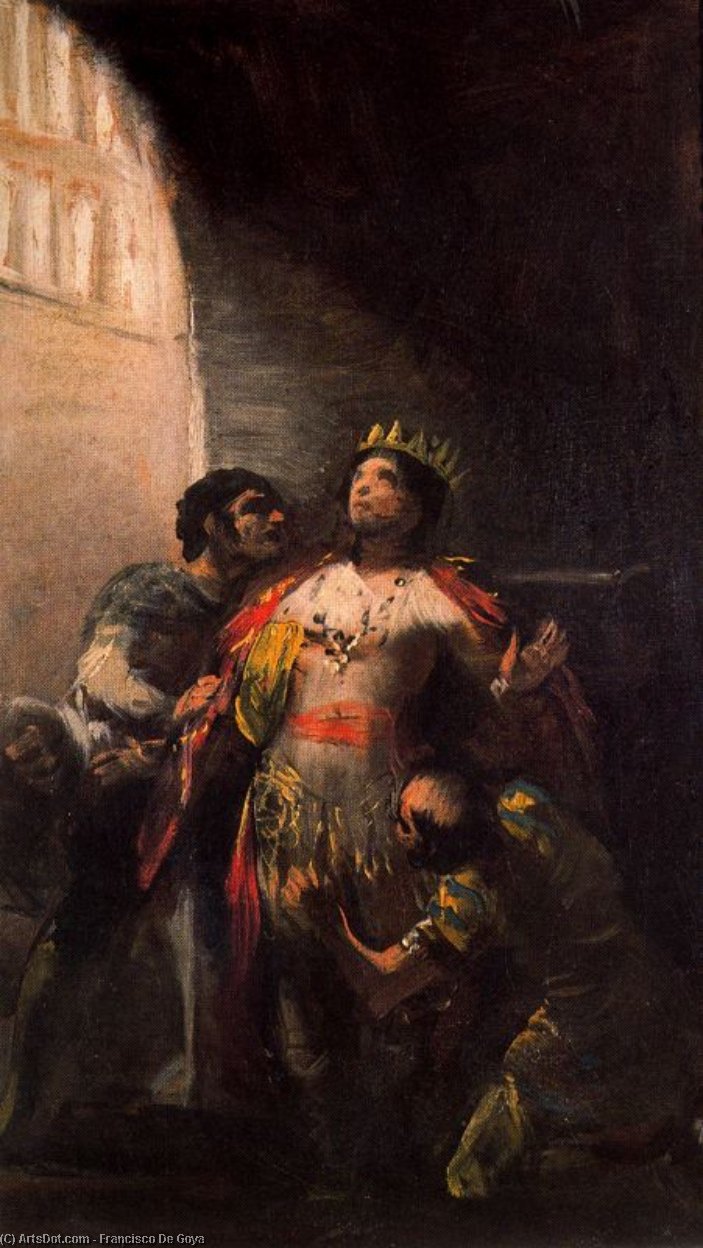
St Hernenegildo in Jail – A Study in Romantic Suffering
Francisco José de Goya y Lucientes’ “St Hernenegildo in Jail” stands as a haunting testament to the artist's unflinching gaze upon human misery and his mastery of capturing psychological torment. Executed around 1799, this oil painting transcends mere depiction; it embodies the spirit of Romanticism itself – prioritizing emotion over rational observation and utilizing bold brushstrokes to convey profound anguish.
- Subject Matter & Historical Context: The scene portrays Christ imprisoned in a cell, subjected to brutal restraint and palpable pain. This imagery draws heavily from the Peninsular War (1808-1814), a period of intense conflict between Spain and Napoleon’s forces. Goya meticulously researched historical accounts to imbue his work with authenticity and underscore themes of oppression and sacrifice – mirroring the struggles faced by ordinary Spaniards during wartime.
- Style & Technique: Goya's distinctive style is immediately recognizable through its loose, expressive brushwork—a hallmark of Romantic painting. Thick impasto creates a tactile surface that amplifies the emotional intensity of the composition. The artist eschews precise anatomical detail in favor of conveying psychological states with visceral immediacy.
- Composition & Lighting: Verticality dominates the canvas, emphasizing Christ’s vulnerability against the oppressive darkness surrounding him. Stark directional lighting illuminates his figure while plunging the other prisoners into shadow, intensifying the dramatic effect and highlighting the central subject's isolation. Lines are dynamic and gestural, contributing to a palpable sense of movement.
- Color Palette & Symbolism: The painting utilizes a predominantly dark palette—deep browns, blacks, and muted reds—reflecting the bleakness of incarceration and mirroring the artist’s own preoccupation with morbidity and decay. Color choices are deliberate, serving as symbolic representations of suffering and despair. The use of warm hues – particularly in Christ's face – offers a glimmer of hope amidst overwhelming darkness.
- Emotional Impact: “St Hernenegildo in Jail” is undeniably unsettling. Goya’s masterful portrayal captures the essence of human endurance under duress, prompting contemplation on themes of faith, resilience, and injustice. The painting's enduring power lies in its ability to evoke empathy and provoke reflection on the darker aspects of human experience.
Further research into Goya’s oeuvre reveals his profound engagement with philosophical ideas prevalent during his time—particularly Rousseau’s concept of the sublime – which championed the awe-inspiring beauty found within suffering. This artistic impulse aligns seamlessly with the broader Romantic movement's rejection of Neoclassical ideals and embrace of subjective emotion.