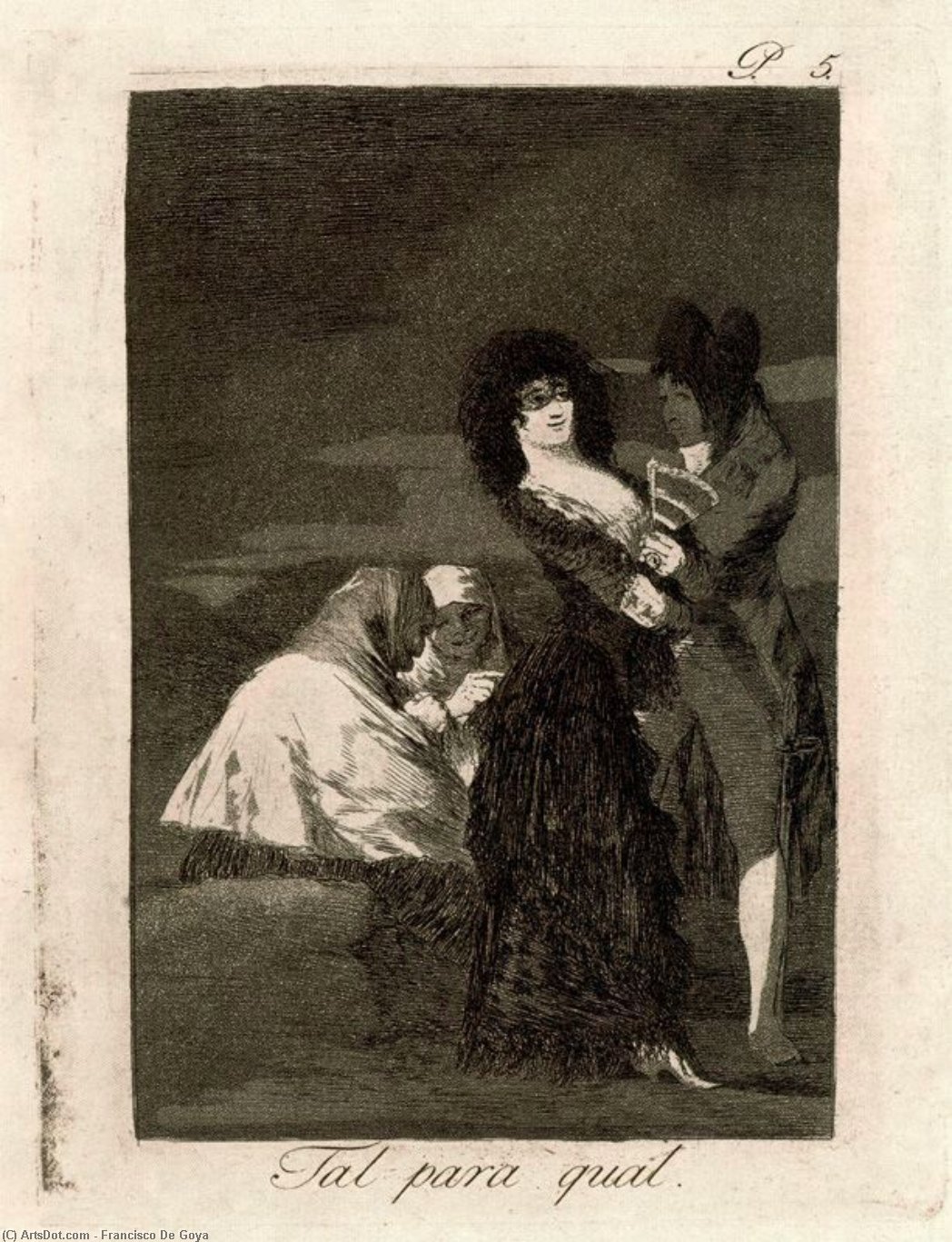
Explore Francisco Goya’s ‘Tal para cual,’ a haunting monochromatic etching revealing social disparity & deception. Masterful realism meets psychological depth – a unique art piece.
Francisco Goya, španski umetnik poznat po portretima, mračnim satiram i ciklusima 'Ratni jadi'. Pionir romantizma, njegov rad je ključan za razumevanje istorije umetnosti.
A Portrait of Disquiet: Decoding Goya’s ‘Tal para Cual’
Francisco José de Goya y Lucientes, a titan amongst Romantic artists, stands apart not merely for his prodigious output but for the unsettling honesty with which he confronted the darkness within human experience. His etching “Tal para Cual” (“Like for Like”), completed around 1800, exemplifies this profound engagement—a deceptively simple composition concealing layers of psychological complexity and biting social critique. This artwork isn’t merely a depiction; it's an interrogation of appearances versus reality, rendered with masterful precision using the techniques honed during his formative years at the Spanish court.
The Composition: Tightened Grip on Reality
The etching’s immediate impact is its claustrophobic framing. Goya eschews expansive vistas, instead concentrating on three figures – a woman adorned in opulent silks, an older woman draped in humble shawls, and a man—within a confined space that amplifies the tension between them. The cropped perspective forces viewers to confront these characters head-on, mirroring their predicament of being scrutinized and judged by unseen eyes. Lines dominate the image; sharply defined etching lines create dramatic contrasts of light and shadow, channeling the expressive power inherent in Goya’s style. These linear patterns subtly suggest organic forms—the human figures—while maintaining a deliberate flatness that underscores the scene's emotional core.
Technique: Etching – A Dance Between Light and Darkness
Goya’s mastery lies in his meticulous execution of etching, utilizing zinc or copper plates treated with acid to achieve remarkable tonal variation. The artist skillfully manipulates line weights and pressure, producing nuanced textures that convey both physicality and psychological state. This technique isn't simply about reproducing an image; it’s about channeling emotion onto the surface of the plate—a characteristic hallmark of Goya’s oeuvre. The resulting print possesses a haunting beauty born from controlled darkness and subtle illumination, mirroring the anxieties explored within the artwork itself.
Historical Context: Critique of Societal Facades
Created during Goya's turbulent period as court painter to Ferdinand VII, “Tal para Cual” reflects the pervasive disillusionment of the era. The painting serves as a pointed commentary on the hypocrisy and superficiality prevalent in aristocratic society—the woman’s posture suggests vulnerability and manipulation, while the older woman embodies quiet despair. Goya’s artistic vision aligns with Romantic sensibilities, prioritizing emotional truth over idealized beauty. He dismantles illusions, exposing the uncomfortable realities beneath polished surfaces.
Symbolism: Beyond Appearance
The etching's symbolism extends beyond its immediate depiction. The figures represent individuals trapped within societal expectations and judgments. Like for like—the title itself—suggests a mirroring of roles and responsibilities, highlighting the imbalance of power dynamics. Goya’s use of chiaroscuro – dramatic contrasts between light and shadow – reinforces this thematic concern, symbolizing the hidden darkness lurking beneath outward appearances. Ultimately, “Tal para Cual” compels us to question our perceptions and confront the uncomfortable truths about human nature—a legacy that continues to resonate powerfully today.