A Crucible of Shadow and Soul
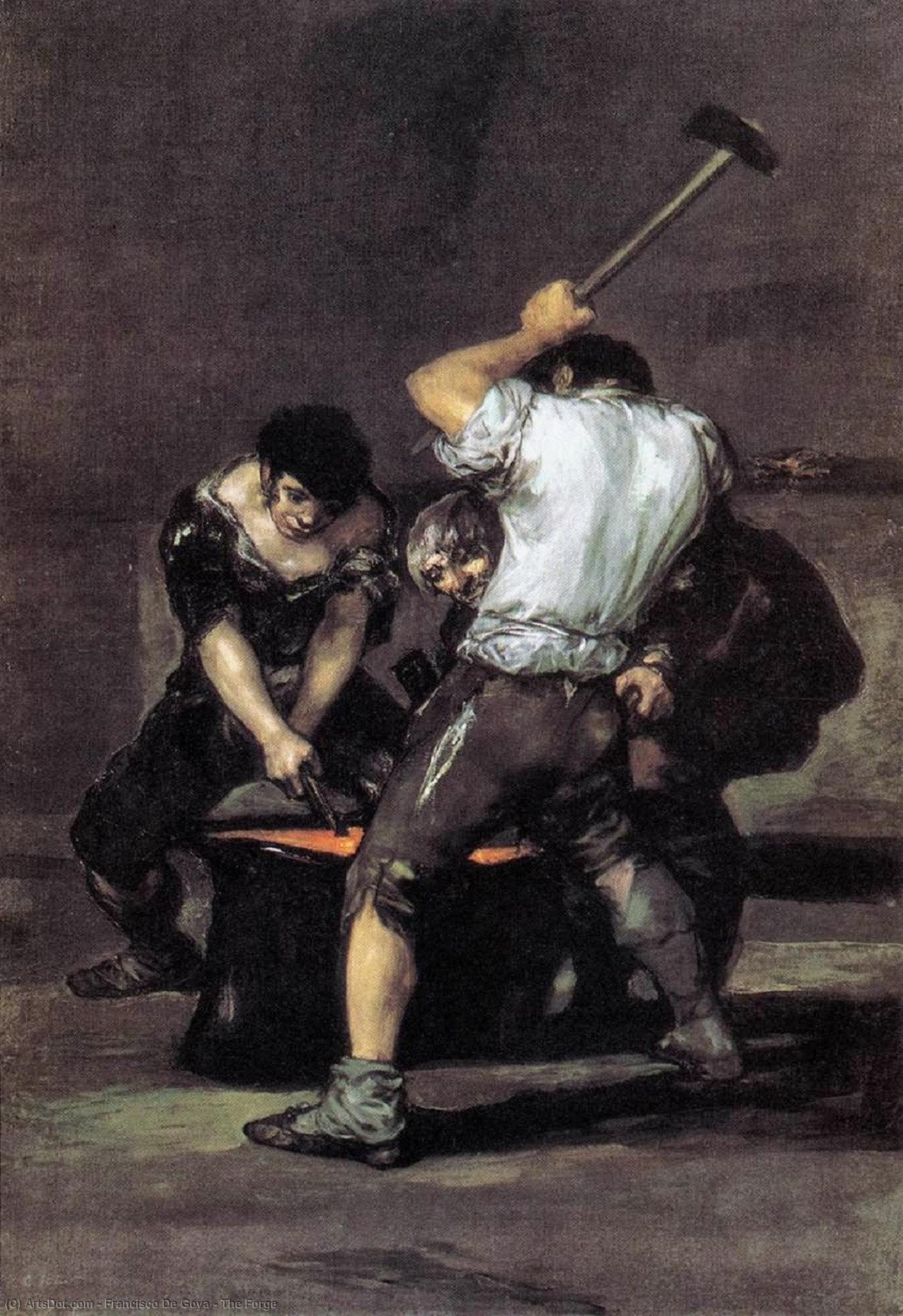
In the hauntingly visceral masterpiece The Forge, Francisco José de Goya y Lucientes invites us into a world where the boundaries between physical labor and psychological torment dissolve. Painted during the turbulent years of 1815-1820, this work transcends the traditional genre painting of a workshop scene to become a profound meditation on power, coercion, and the human condition. As one gazes upon the canvas, the immediate sensation is one of heavy, atmospheric tension. The composition is masterfully orchestrated through dynamic diagonal lines—the aggressive angle of a raised hammer and the strained postures of the figures—which drive the viewer’s eye directly into the heart of a confrontation that feels both ancient and urgently contemporary.
The scene unfolds within a dark, indistinct space, a choice that serves to isolate the central drama and amplify its unsettling intensity. Goya utilizes a somber, earthy palette dominated by deep browns, charcoal grays, and bruised blacks, punctuated only by subtle, subdued reds that suggest the heat of the forge and the underlying threat of violence. This deliberate use of color creates an oppressive mood, enveloping the subjects in a gloom that feels almost tactile. The lighting is nothing short of theatrical; a sharp, directional light source emerges from the shadows to illuminate the muscularity of the hammer-wielder and the vulnerable form of the kneeling figure, casting deep, dramatic shadows that heighten the sense of mystery and impending action.
The Artistry of Tension and Technique
Technically, The Forge showcases Goya’s transition toward a more expressive, proto-modern style. His brushwork is remarkably loose and gestural, eschewing meticulous detail in favor of emotional urgency. This textured approach is particularly evident in the rendering of skin tones and heavy fabrics, where broad, vigorous strokes convey the raw physicality of manual labor and the grit of the workshop environment. The way the light catches the ridges of the paint adds a sculptural quality to the figures, making their struggle feel tangible to the observer.
<
For the discerning collector or interior designer, this painting offers more than mere decoration; it provides a focal point of immense intellectual and emotional depth. The symbolism within the work is layered and provocative. The hammer, poised at the apex of its arc, serves as a potent symbol of force, control, and the capacity for destruction. The interaction between the two men—one dominant, one subjugated—can be read as a biting social critique of the power dynamics prevalent in Spain’s political landscape during the era of absolutist rule. It is a painting that demands contemplation, making it an ideal acquisition for those who seek art that challenges the spirit and enriches the atmosphere of a sophisticated space.
Whether viewed as a study in Romanticism or a precursor to the raw emotion of Expressionism, The Forge remains an enduring testament to Goya’s ability to capture the darker recesses of the human psyche. To possess a high-quality reproduction of this work is to bring a piece of art history's most profound shadows into one's own collection, offering a window into a moment where light and darkness, strength and vulnerability, are forever locked in a dramatic, eternal struggle.