A Meeting of Masters: The Soul in Stone
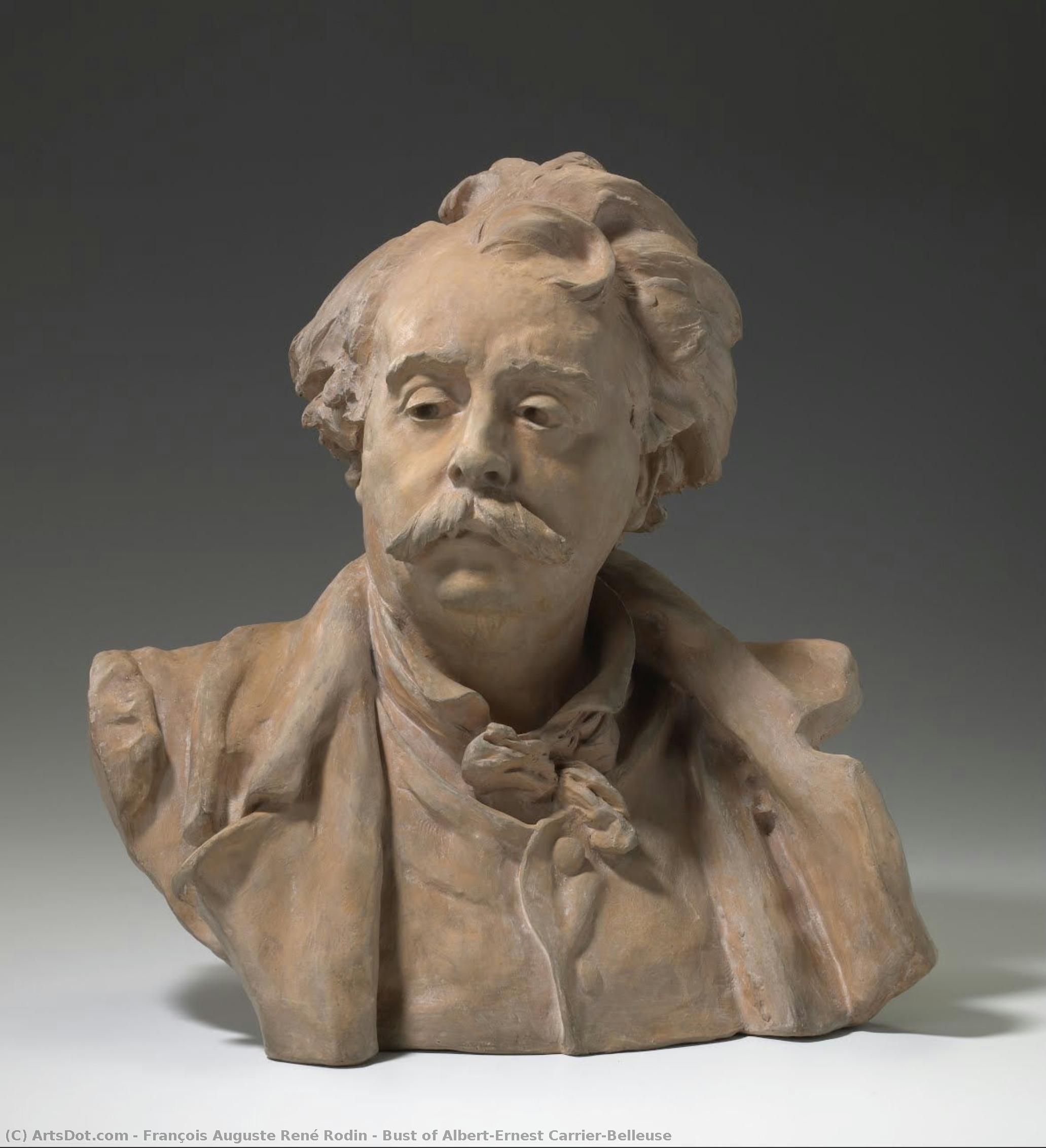
In the quiet, hallowed halls of the Rodin Museum in Paris, there exists a profound dialogue captured not in words, but in the eternal stillness of marble. The Bust of Albert-Ernest Carrier-Belleuse, sculpted by the legendary Auguste Rodin in 1882, is far more than a mere portrait; it is a breathtaking encounter between two titans of nineteenth-century French sculpture. When we gaze upon this masterpiece, we are not simply looking at the likeness of a man, but witnessing Rodin’s ability to breathe life into stone, capturing the very essence of a contemporary peer who served as both an inspiration and a monumental figure in the artistic landscape of his time.
The subject, Albert Ernest Carrier Belleuse, was a sculptor of immense versatility, whose early training as a goldsmith lent him a precision that Rodin deeply respected. In this bust, Rodin transcends the traditional boundaries of portraiture. While the face is rendered with meticulous detail—the texture of the beard, the thoughtful set of the eyes, and the dignified presence of the bow tie—there is an underlying psychological depth that pulls the viewer into a state of contemplation. It is a work that invites the observer to wonder about the thoughts passing through the mind of the sitter, mirroring Rodin’s own lifelong obsession with capturing the turbulent, inner landscapes of the human soul.
The Alchemy of Impressionism and Classical Grace
Technically, this sculpture represents a pivotal moment in the evolution of modern art. While the bust retains a certain Classical nobility, it is heavily imbued with the spirit of Impressionism. Rodin was a master of light and shadow, and here he utilizes his skill to create a surface that seems to vibrate with life. Through a sophisticated application of technique, likely involving the delicate carving of Carrara marble, Rodin employs a method reminiscent of bas relief to manipulate how light hits the contours of the face. This creates a play of highlights and deep shadows that suggests movement and texture, making the stone appear almost as soft as skin.
For the discerning collector or interior designer, this piece offers an unparalleled sense of prestige and intellectual depth. The way the light dances across the furrowed brow and the intricate details of the facial hair provides a dynamic visual experience that changes depending on the lighting of a room. It is a work of profound symbolism; it represents the transition from the rigid, idealized forms of Neoclassicism toward a more honest, raw, and expressive representation of human existence. To possess a reproduction of such a piece is to bring a fragment of art history’s most transformative era into one's personal space.
An Eternal Legacy for the Modern Collector
The historical context of 1882 was one of great artistic upheaval, and Rodin stood at the precipice of change. This bust serves as a bridge between the academic traditions of the past and the emotive power of the future. The emotional impact of the work lies in its intimacy; it feels as though we are standing in the sculptor's studio, witnessing a private moment of recognition between two masters. There is a palpable sense of respect and shared purpose etched into every curve of the marble.
Whether placed in a sunlit library, a sophisticated gallery, or a curated living space, the Bust of Albert-Ernest Carrier-Belleuse acts as a focal point of profound elegance. It does not merely decorate a room; it elevates it, providing a conversation piece that speaks of craftsmanship, history, and the enduring power of human emotion. For those seeking to surround themselves with art that possesses both technical brilliance and a haunting, beautiful presence, this Rodin masterpiece remains an incomparable choice.