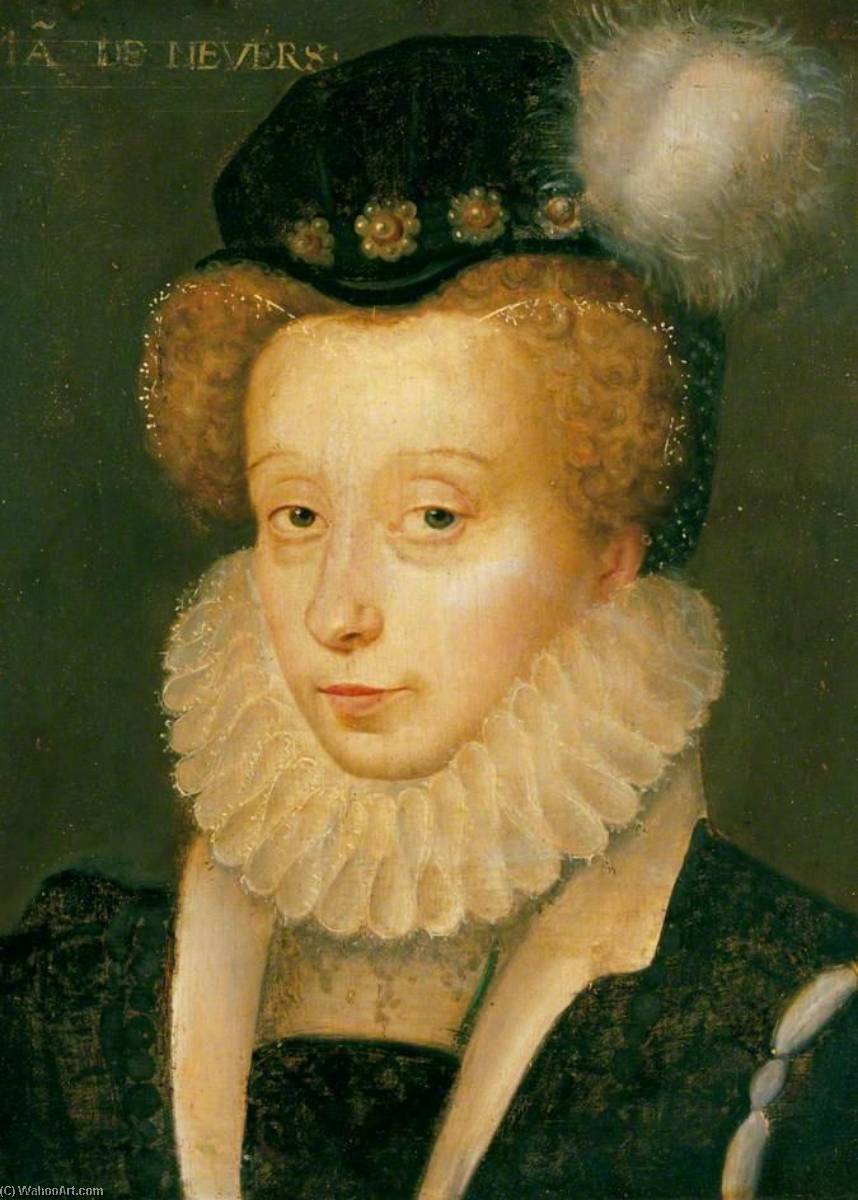
Henriette de Cleves, 4th Duchess of Nevers – A Portrait Steeped in Renaissance Elegance
François Clouet’s depiction of Henriette de Cleves stands as a testament to the artistic fervor of the French Renaissance—a period defined by humanist ideals and opulent patronage. Executed around 1568, this oil painting on panel transcends mere likeness; it embodies the refined sensibilities of its time and offers a glimpse into the life of a prominent noblewoman navigating the complexities of royal politics.
Subject Matter and Composition
The portrait captures Henriette de Cleves in a pose that exudes confidence and grace. She is positioned centrally within the frame, gazing directly at the viewer with an expression of serene composure. Her attire—a sumptuous gown adorned with intricate lace and embellished with pearls—reflects the fashions of the era, highlighting the Duchess’s status as a wealthy and influential figure.
Style and Technique – Flemish Influence Meets Italian Grace
Clouet skillfully blends elements of Flemish naturalism with the burgeoning influence of Italianate art. The artist employs meticulous detail to render textures—the delicate folds of fabric, the sheen of pearls—creating a palpable sense of realism. However, he achieves an ethereal quality through subtle shading and atmospheric perspective, reminiscent of Venetian painters like Titian and Giorgione. This fusion demonstrates Clouet’s artistic versatility and his ability to adapt to evolving stylistic trends.
Historical Context – The Turbulent Reigns of Henry II and Francis II
Henriette de Cleves's portrait was created during a period marked by significant political instability in France. Henry II reigned until 1562, facing challenges from Huguenot rebels who demanded religious freedom. His subsequent marriage to Catherine de Medici—a union fraught with tension—further fueled discord within the royal family. Henriette’s role as Queen consort underscored the importance of diplomacy and strategic alliances in securing dynastic stability. The painting serves as a visual record of this tumultuous era, capturing the anxieties and aspirations of the French court.
Symbolism – Layers of Meaning Beyond Appearance
Beyond its aesthetic beauty, Henriette de Cleves’s portrait is laden with symbolic significance. The ruffled collar—a fashionable accessory—represents aristocratic status and sophistication. Similarly, the feathered hat symbolizes power and prestige, reflecting Henriette's position as a Duchess and her influence within the royal court. These visual cues invite contemplation on themes of femininity, nobility, and social hierarchy – elements central to Renaissance artistic conventions.
Emotional Impact – Tranquility Amidst Uncertainty
Despite the backdrop of political upheaval, Clouet manages to convey an aura of serenity in Henriette’s gaze. Her countenance exudes composure and dignity—a reflection perhaps of her inner resilience amidst external pressures. The painting's harmonious composition and masterful technique contribute to its enduring emotional impact, inviting viewers to appreciate not only its visual splendor but also the psychological depth conveyed by the artist.