The Enigmatic Beauty of a Parisian Aristocrat
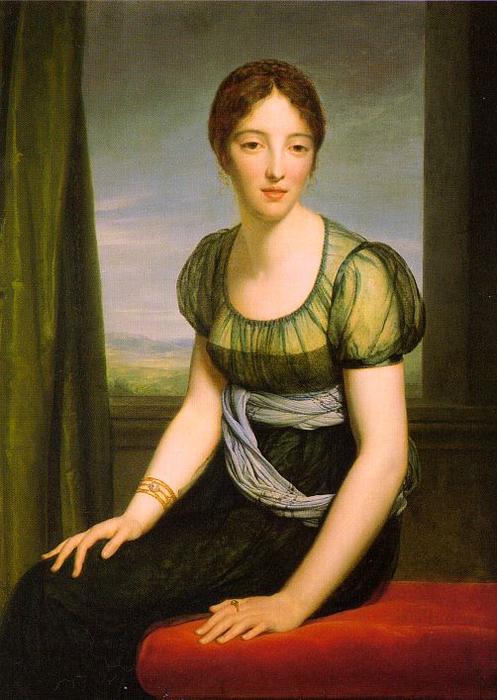
François Gérard’s “La Comtesse Regnault de Saint-Jean d’Angély” is more than just a portrait; it's a meticulously crafted window into the refined world of late 18th-century French aristocracy. Painted in 1798, during the height of the Neoclassical movement, this oil on panel captures the essence of a woman poised between elegance and quiet strength – Countess Regnault herself, a figure shrouded in historical intrigue.
The painting immediately draws the eye to the subject’s serene expression. Her gaze is direct, yet not confrontational, suggesting an inner composure and perhaps a hint of melancholy. The soft lighting, expertly rendered by Gérard, creates a sense of intimacy, as if we are privy to a private moment within her opulent surroundings. Notice how the light gently caresses her face, highlighting the delicate curve of her cheekbones and the subtle shimmer in her eyes – details that speak volumes about the artist’s mastery of capturing texture and mood.
Neoclassical Refinement: Gérard's Signature Style
François Gérard was a pivotal figure in the transition from Rococo to Neoclassicism, and “La Comtesse Regnault” exemplifies this shift. He inherited the elegance of his predecessor Boucher but tempered it with a newfound emphasis on order, clarity, and idealized beauty. The composition is carefully balanced, adhering to classical principles of symmetry and proportion. Gérard’s brushwork is smooth and controlled, creating a polished surface that reflects the aristocratic sensibilities of the era. Observe the meticulous detailing in her gown – the rich fabrics, the intricate embroidery, all rendered with painstaking precision.
The background, though subtly suggested, reinforces the painting's overall atmosphere. The muted tones and indistinct shapes contribute to a sense of timelessness, transporting us back to a world of courtly rituals and refined manners. Gérard’s use of color is restrained yet sophisticated, relying on subtle gradations and harmonious combinations to create depth and visual interest.
A Glimpse into the Countess's World
The identity of Countess Regnault de Saint-Jean d’Angély remains somewhat elusive, adding an element of mystery to the portrait. Historical records suggest she was a prominent figure in Parisian society, known for her intelligence and social grace. Her pose – seated on what appears to be a luxurious chaise lounge – speaks volumes about her status and leisure. The delicate necklace around her neck is a symbol of wealth and refinement, while the subtle gesture of her hand hints at an inner life beyond mere appearances.
The painting’s creation coincided with a period of significant political and social upheaval in France—the end of the monarchy and the rise of revolutionary ideals. While “La Comtesse Regnault” depicts a world of aristocratic privilege, it also offers a poignant reminder of the enduring allure of beauty and grace, even amidst times of change.
The Enduring Legacy: Reproduction and Inspiration
Today, "La Comtesse Regnault de Saint-Jean d’Angély" stands as a testament to François Gérard's artistic genius. Hand-painted reproductions capture the essence of this iconic portrait, allowing art lovers to bring its timeless beauty into their homes. Whether you are an admirer of Neoclassical art, a collector seeking a statement piece, or simply drawn to the elegance and sophistication of 18th-century France, this painting offers a captivating glimpse into a bygone era.