A Symphony of Color and Spirit
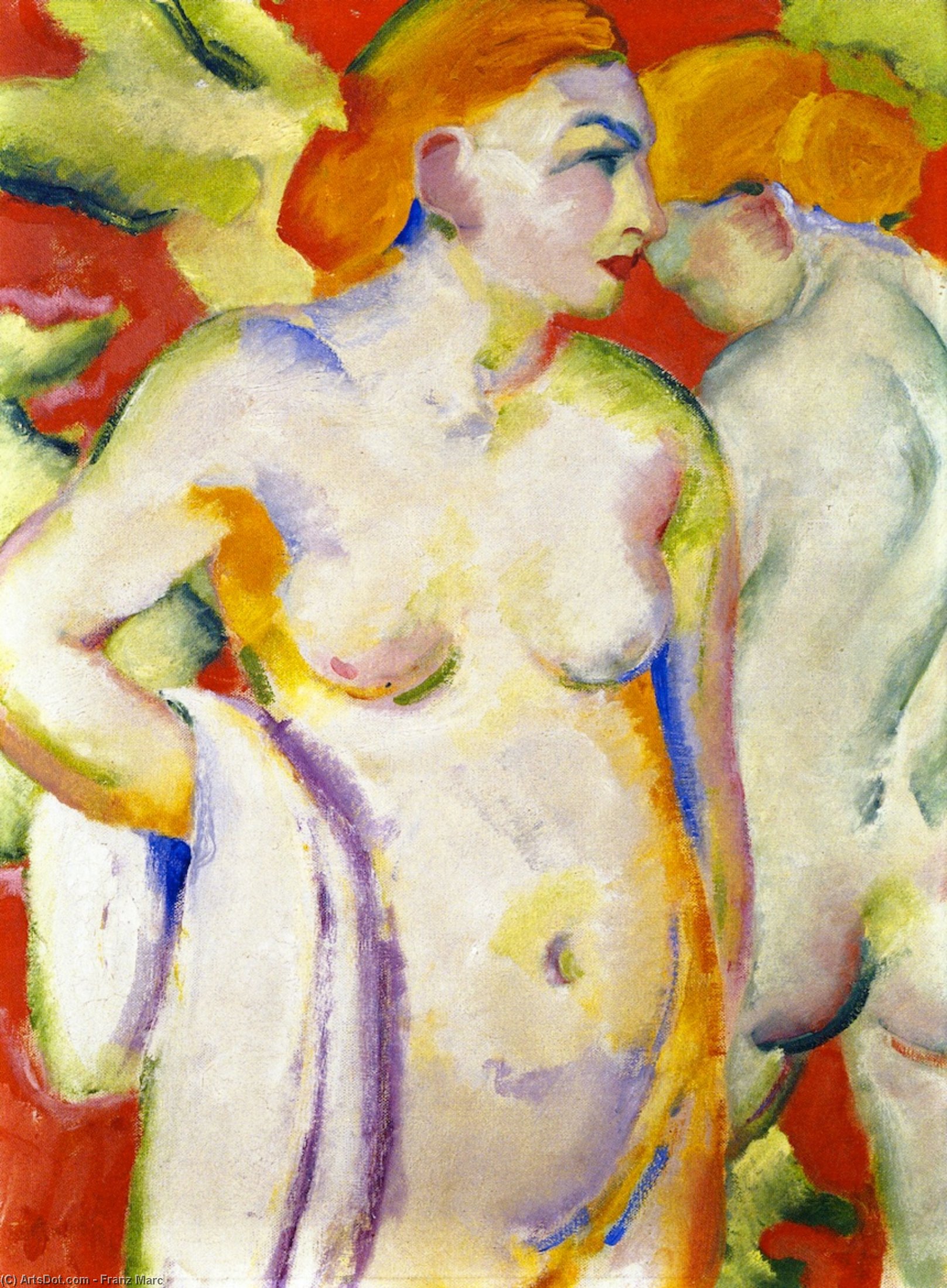
To step into the world of Franz Marc is to abandon the mundane surface of reality and descend into a realm where color breathes, vibrates, and speaks the language of the soul. His 1910 masterpiece, "Nudes on Vermilion" (also known as Two Nudes on Red), stands as a cornerstone of German Expressionism, offering far more than a mere depiction of the human form. At its heart, this painting is an embodiment of Marc's profound spiritual convictions, meticulously rendered with a technique that continues to fascinate art historians and collectors alike. The artwork presents a seemingly simple scene: two nude figures positioned side by side against a backdrop of vibrant vermilion—a shade of red known for its intensity and association with passion and vitality. Yet, beneath this striking surface lies a complex tapestry of meaning, where the boundaries between humanity and the natural world begin to dissolve.
The composition is masterfully dynamic, pulling the viewer into a rhythmic dance of shapes and hues. Scattered amongst the women are smaller, stylized figures—representations of animals that hint at a deeper symbolic significance. Their placement suggests an interconnectedness between all living things, reflecting Marc's unwavering belief in the transformative power of observing the natural world. The gaze of the women directs towards something unseen, inviting a quiet contemplation about inner states and unspoken emotions. For the discerning collector or interior designer, this piece offers a profound focal point; it is a work that does not merely occupy space but actively transforms the atmosphere of a room, infusing it with a sense of primordial energy and spiritual depth.
The Fauvist Pulse and Expressive Technique
Marc’s artistic style in this period was undeniably influenced by the Fauvist movement, a revolution in art spearheaded by visionaries like Henri Matisse. Unlike the Impressionists, who sought to capture the fleeting nuances of light, Marc utilized bold, non-naturalistic colors to convey emotion directly to the viewer's psyche. In "Nudes on Vermilion," the palette is dominated by that searing, radiant red, which serves as a stage for the interplay of light and form. This use of color was not accidental; for Marc, colors held specific spiritual weights—yellow represented gentle, feminine joy, while blue symbolized masculine spirituality. By layering these hues, he created a visual language capable of expressing the very heartbeat of existence.
The physical execution of the painting is equally captivating. Marc employed a technique characterized by thick impasto, applying paint in heavy, palpable layers that create a rich texture across the canvas. This tactile quality enhances the painting’s visual impact, allowing light to catch the ridges of the brushstrokes and adding a sense of movement to the static figures. For those seeking a high-quality reproduction, capturing this essential texture is paramount, as it is the physical weight of the paint that gives the work its life. The result is an artwork that feels less like a flat image and more like a living, breathing entity—a masterpiece of texture and tone that remains as provocative today as it was at the dawn of the twentieth century.
A Legacy of Emotional Resonance
Beyond its technical brilliance, "Nudes on Vermilion" serves as a window into a pivotal moment in art history. Created during a time of great social and political upheaval in Europe, the painting represents a rebellion against the gray, industrial reality of the era. Marc sought to find purity within the animal kingdom and the natural landscape, using his brush to bridge the gap between the physical eye and the spiritual heart. This search for truth is what gives the work its enduring emotional impact; it resonates with anyone who has ever felt the call of the wild or the need for a deeper connection to the universe.
Whether displayed in a contemporary gallery setting or as a centerpiece in a curated home collection, this work continues to inspire awe. It is an invitation to look past the literal and embrace the elemental. For the art lover, it is a piece of history; for the decorator, it is a bold statement of elegance and vitality; and for the collector, it is a rare opportunity to possess a fragment of the Der Blaue Reiter spirit—a timeless testament to the power of color to move the human spirit.