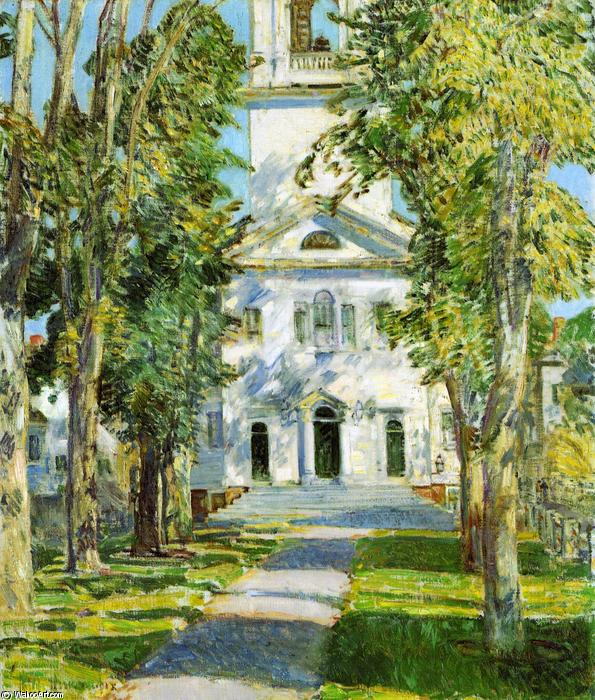
A Moment Frozen in Time: Exploring Frederick Childe Hassam’s “The Church at Gloucester”
“The Church at Gloucester,” painted by American Impressionist Frederick Childe Hassam in 1918, transcends mere depiction; it embodies a palpable sense of tranquility and observation—a hallmark of Hassam's distinctive artistic vision. Currently residing within the Metropolitan Museum of Art’s collection in New York City, this canvas offers more than just a visual representation of a Gloucester church; it encapsulates the spirit of its era and speaks to enduring themes of faith and contemplation.
Composition and Technique: Capturing Light and Atmosphere
Hassam's masterful technique—primarily oil on canvas—allowed him to achieve remarkable luminosity and textural detail. He eschewed academic conventions, prioritizing instead an expressive approach that prioritized capturing fleeting moments of light and color. The painting’s pyramidal composition draws the eye upwards towards the towering white steeple, immediately establishing a focal point against which the surrounding greenery is contrasted. Notice how Hassam skillfully utilizes dappled sunlight filtering through the trees—a technique characteristic of Impressionism—creating a shimmering effect that imbues the scene with warmth and vibrancy. Precise brushstrokes delineate the tree trunks and branches, conveying both solidity and movement, mirroring the natural rhythms of Gloucester’s landscape.
Historical Context: The Dawn of Modern America
Painted during the tumultuous years following World War I, “The Church at Gloucester” reflects a broader cultural shift toward embracing American identity and celebrating the beauty of everyday life. Hassam's work aligns with the burgeoning Impressionist movement in the United States, which sought to move away from Romantic idealism and embrace realism informed by perceptual experience. The church itself serves as a symbol of resilience and continuity amidst societal upheaval—a quiet bastion of faith and tradition against the backdrop of rapid modernization. Gloucester, Massachusetts, was undergoing significant industrial growth during this period, yet Hassam’s depiction prioritizes the serene pastoral landscape, suggesting an aspiration for harmony between humanity and nature.
Symbolism: Light, Faith, and Reflection
Beyond its visual splendor, “The Church at Gloucester” resonates with deeper symbolic meanings. The steeple represents aspiration and spiritual elevation—a reaching towards something transcendent. The church windows symbolize illumination and divine grace, inviting contemplation and introspection. Furthermore, the benches positioned in the foreground subtly encourage viewers to pause and consider their own place within the larger context of life’s journey. Hassam's deliberate choice of color palettes – predominantly greens and whites – reinforces these themes, conveying a sense of peace and purity.
Emotional Impact: A Window into Tranquility
Ultimately, “The Church at Gloucester” succeeds in transporting the viewer to a moment of stillness—a visual meditation on beauty and faith. Hassam’s ability to evoke emotion through color and light is undeniable; the painting's serene atmosphere invites contemplation and fosters a feeling of connection with the natural world. It stands as a testament to Hassam’s enduring legacy as one of America’s foremost Impressionist painters, continuing to inspire admiration for its exquisite craftsmanship and profound artistic vision.
- Explore high-quality reproductions at ArtsDot.com.
- Learn more about Frederick Childe Hassam’s life and work: Discover More