A Glimpse into Aristocratic Introspection
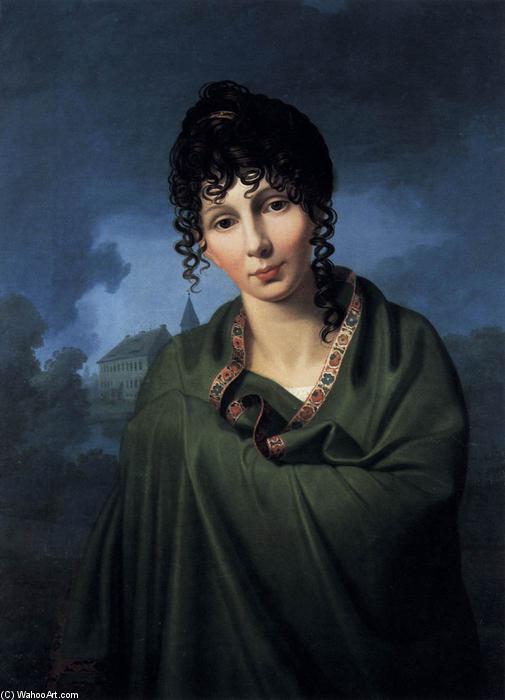
The portrait of Countess Luise von Voss by Friedrich Bury transports us across the threshold of early nineteenth-century European aristocracy. It is more than a mere likeness; it is a carefully composed meditation on status, contemplation, and the quiet dignity afforded to women of means during that transformative era. The subject is presented with an arresting stillness, her gaze subtly directed away from the viewer, suggesting a rich inner life unfolding beneath the surface of formal portraiture. Bury masterfully captures this sense of introspection. Her curly hair frames a face imbued with thoughtful melancholy, inviting the observer to wonder at the narratives held within those shadowed eyes.
Mastery in Muted Tones and Texture
Technically, the painting is a testament to academic skill, particularly in its handling of texture and light. Bury employs a palette dominated by muted, sophisticated tones—deep charcoals, soft ivories, and subtle earth hues—which lend the entire composition a somber, yet profoundly elegant mood. Observe the exquisite rendering of her attire; the dark fabric drapes with an almost liquid grace over her shoulders, punctuated by delicate lace or embroidery at the high collar. This attention to the tactile quality of the materials, from the soft fall of the velvet-like garment to the individual strands of hair, speaks to a painter deeply concerned with verisimilitude and material splendor.
The Context of Early Nineteenth-Century Portraiture
Dating to 1810, this work sits at a fascinating juncture in art history. The late Georgian or early Biedermeier period saw portraiture evolving from overt displays of power into more nuanced explorations of the sitter's character. While the background hints at an idealized landscape—a suggestion of trees and distant architecture—it remains subordinate to the figure, anchoring her within a private moment rather than a grand public stage. This compositional choice elevates the psychological depth of the portrait, suggesting that true status in this era was found not just in lineage, but in cultivated sensibility.
A Touch of Timeless Elegance for Your Space
For the discerning collector or designer, this piece offers an unparalleled infusion of historical gravitas and refined beauty. Reproducing the subtle drama and exquisite detail of Bury’s brushwork allows one to anchor a room with an air of cultivated European history. The soft diffusion of light across the canvas makes it ideal for spaces requiring quiet sophistication—a drawing-room corner, a library niche, or a formal reception area. It is art that does not shout its presence but rather whispers tales of bygone refinement, adding depth and narrative weight to any interior setting.