Otkrijte Gabriela Metsua (1629-1667), holandskog majstora Zlatnog doba poznatog po žanrovskim scenama, portretima i enterijerima. Pod uticajem Rembrandta i Vermera, Metsu je vešto prikazivao svakodnevni život sa izuzetnim detaljima i simbolizmom.
Otkrijte evropsku umetnost od 13. do 19. veka u Nacionalnoj galeriji Londona! Saznajte više o remek-delima Van Goga, Rembranta i drugih – ulaz je besplatan!
Ujedinjeno Kraljevstvo
London
Nacionalna Galerija
Rembrandtova 'Devica sa staklenikom'
Preko 2.300 slika
Muzej umetnosti
1824
Da bi se prikazala savremena britanska umetnost.
2
Koji je osnovni cilj Nacionalne Galerije?
A Symphony of Silence and Light
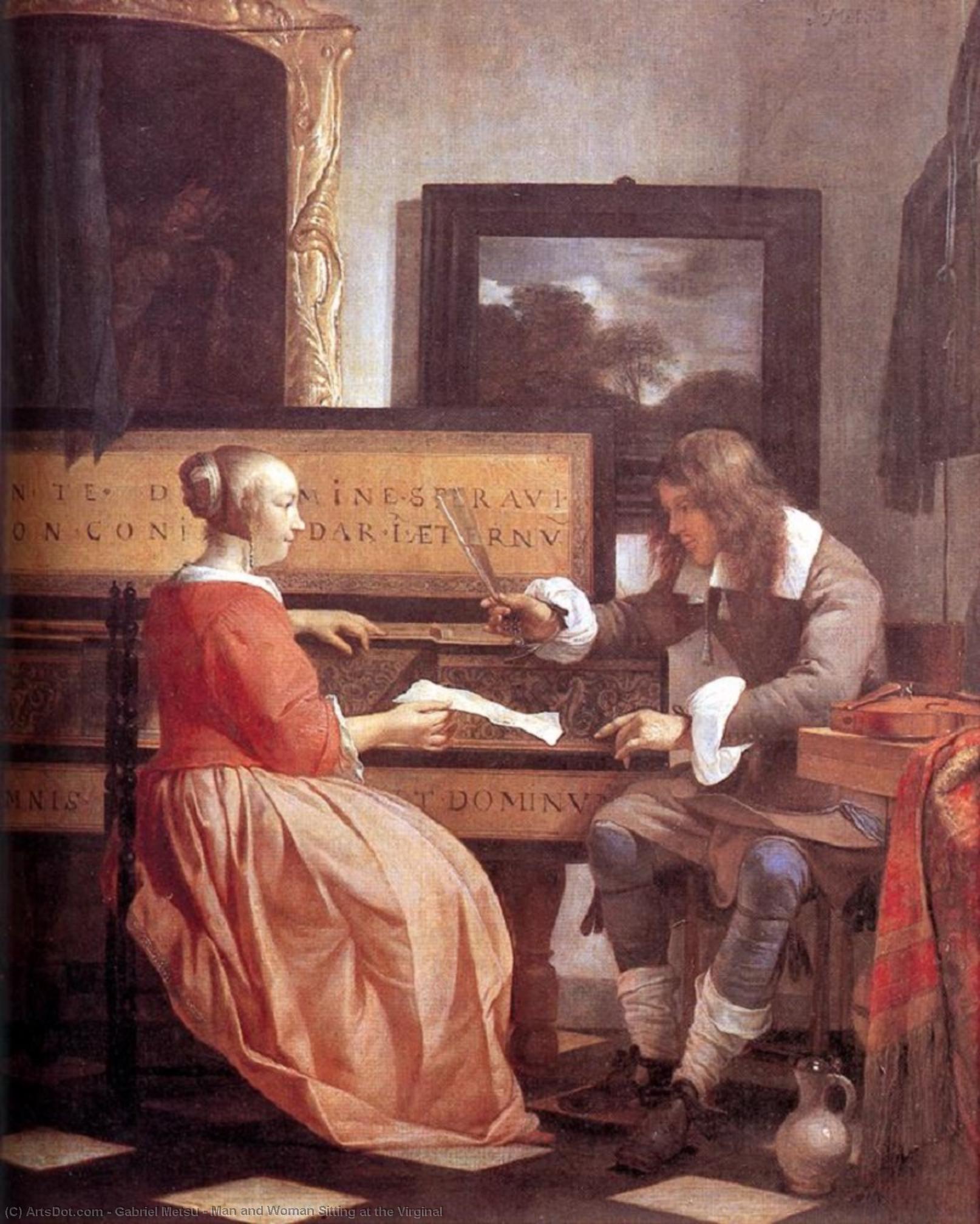
In the quiet corners of the Dutch Golden Age, few artists captured the tender pulse of domestic life as masterfully as Gabriel Metsu. His work, “Man and Woman Seated by a Virginal,” serves as a breathtaking window into a world where music, romance, and stillness converge. Completed around 1660, this painting is far more than a mere depiction of a musical moment; it is an intimate portrait of harmony. As the viewer enters the scene, they are immediately enveloped by a soft, atmospheric light that seems to breathe life into the very air of the room. The composition centers on a young couple, their connection suggested not through grand gestures, but through the delicate, shared focus on the sheet music held between them. There is a profound sense of domestic serenity here, an invitation to pause and appreciate the beauty found in the most unassuming of human connections.
The technical brilliance of Metsu lies in his ability to marry the dramatic intensity of the Baroque period with the subtle, observational grace of genre painting. Drawing inspiration from the legendary Rembrandt, Metsu employs a sophisticated use of chiaroscuro, allowing light to sculpt the figures and pull them forward from the velvety shadows of the background. This interplay of light and shadow creates an illusionistic depth that makes the room feel tangible, as if one could reach out and touch the polished wood of the virginal or the fine fabric of the woman's attire. His brushwork is meticulous yet fluid, lending a textural richness to the objects scattered throughout the scene—from the delicate vases positioned with strategic balance to the humble bowl resting between the lovers, which adds a layer of grounded, earthly comfort to the ethereal atmosphere.
Symbolism and the Art of Living
Beyond its aesthetic splendor, the painting is rich with the symbolic language of seventeenth-century Holland. The virginal itself—a keyboard instrument of the era—acts as a powerful metaphor for the tuning of souls; just as music requires precise harmony between notes, so too does a successful union require the alignment of hearts. The act of presenting sheet music becomes a gesture of shared intellectual and emotional pursuit, suggesting that true intimacy is built upon shared passions. Every element in the room has been placed with intention to reinforce this theme of balance. The two vases, standing like silent sentinaries within the composition, mirror the equilibrium of the couple, while the soft glow illuminating the scene evokes a sense of divine or natural blessing upon their quiet companionship.
For the discerning collector or interior designer, this masterpiece offers an unparalleled opportunity to introduce a sense of timeless elegance and psychological depth into a space. A high-quality reproduction of this work does not merely decorate a wall; it anchors a room with a narrative of peace and sophistication. Whether placed in a sunlit library or a moody, contemporary study, the painting’s ability to evoke nostalgia and tranquility makes it a versatile centerpiece. It invites conversation, prompting onlookers to reflect on the enduring value of quiet moments and the profound beauty found in the art of living well.