A Vision of Opulence and its Fragility
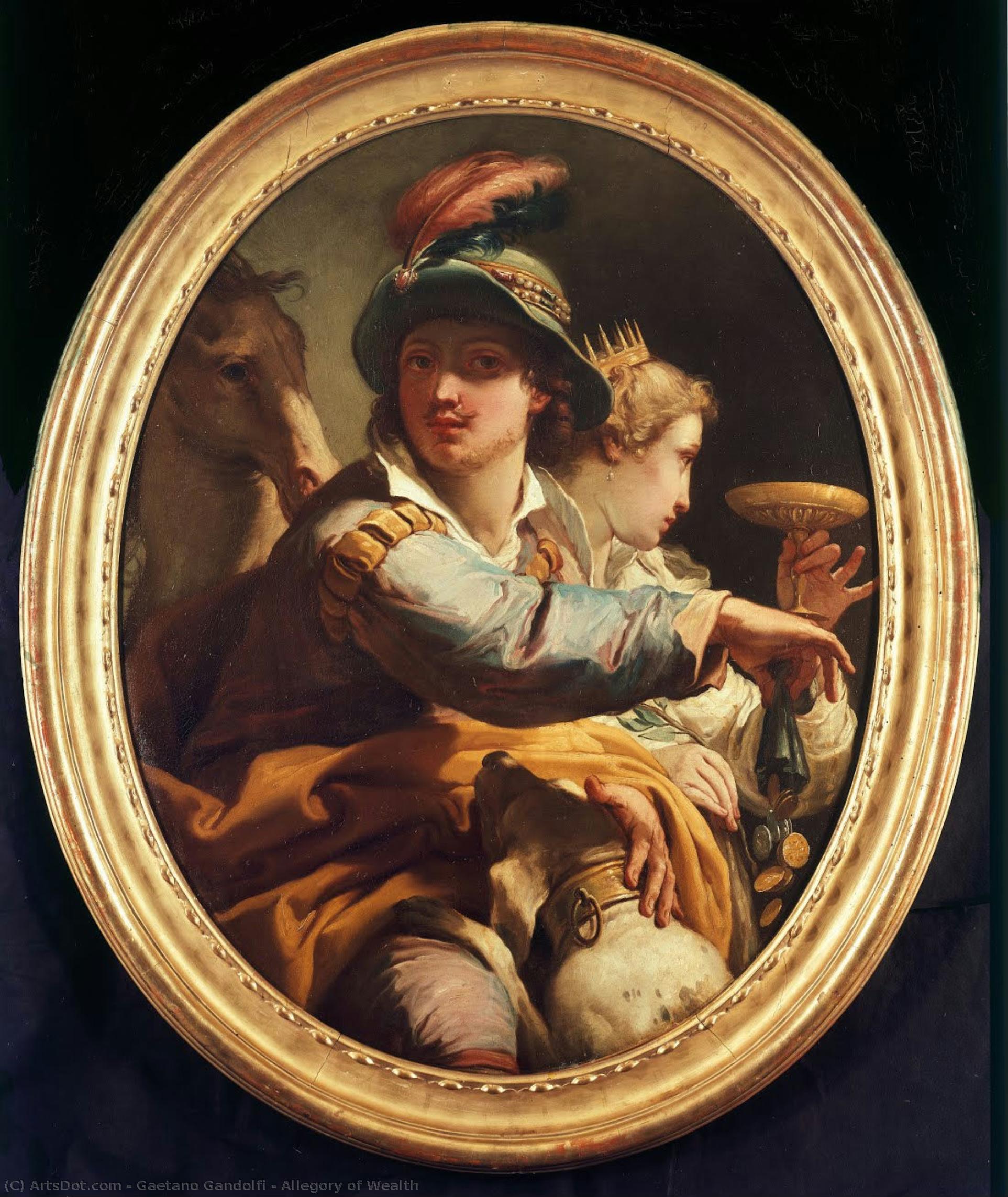
In the grand tradition of the Bolognese Baroque, Gaetano Gandolfi’s Allegory of Wealth serves as a profound meditation on the nature of earthly abundance. Created in 1779, this exquisite oval composition transcends mere portraiture to offer a complex narrative on status and the fleeting essence of material gain. The painting captures a middle-aged couple, draped in magnificent attire that speaks of high social standing, yet there is a palpable tension beneath the surface of their splendor. While one might expect a celebration of prosperity, Gandolfi weaves a subtle warning into the very fabric of the scene, inviting the viewer to look beyond the shimmering silks and golden vessels to find a deeper, more philosophical truth.
The composition is masterfully balanced, utilizing a dynamic arrangement of figures and animals to guide the eye through a landscape of luxury. At the heart of the work, the man and woman are positioned with a striking sense of detachment; unlike the idealized, romanticized couples found in pastoral idylls, these figures turn away from one another, suggesting that wealth can often act as a barrier to human connection. Surrounding them, the presence of powerful horses and a vigilant hunting hound reinforces their aristocratic identity, yet these elements also ground the allegory in a sense of earthly, physical reality. The interplay of light and shadow—a hallmark of Gandolf and his late Baroque training—adds a dramatic depth that makes the scene feel both intimate and monumental.
Symbolism and the Transient Nature of Gold
Every element within this masterpiece is imbued with symbolic weight, designed to provoke thought in the discerning observer. The man’s action of emptying a purse of coins, allowing the wealth to literally flow through his fingers, serves as a poignant memento mori—a reminder of the transience of all worldly possessions. This movement of gold acts as a visual metaphor for the inevitable loss of what we hold most dear. Complementing this is the woman’s golden drinking bowl, an object of beauty that nonetheless underscores the ephemeral nature of pleasure and consumption.
The painting also functions within a larger historical context, likely originally part of a series depicting the seasons of human life. If we view this work as representing the autumn of life, the themes of accumulation and eventual loss become even more resonant. For collectors and interior designers, this piece offers more than just aesthetic beauty; it provides a conversational centerpiece that explores the duality of human existence—the tension between the desire for permanence through wealth and the reality of our fleeting time on earth. A high-quality reproduction of this work brings not only the sophisticated elegance of 18th-century Italy into a space but also an enduring intellectual depth that continues to captivate the modern soul.