Otkrijte Georga Flegela, nemačkog slikara poznatog po prefinjenim mrtvim slikama iz 17. veka koje prikazuju hranu, cveće i elegantne postavke stolova. Istražite njegovo bogato umetničko nasleđe!
Louvre
(Paris, France)
Otkrijte bezvremenske remek-dela Louvra! Putujte kroz istoriju umetnosti od drevnog Egipta do renesansnih ikona – Mona Liza, Venere Miloska i još mnogo toga. Pariško kulturno blago čeka na vas!
A) Kraljevskom dvorcem isključivo za Luja XIV.
B
Prema datom tekstu, šta je bila prvobitna svrha palate Louvre?
A Vision in Scales: The Enigmatic Mastery of Georg Flegel
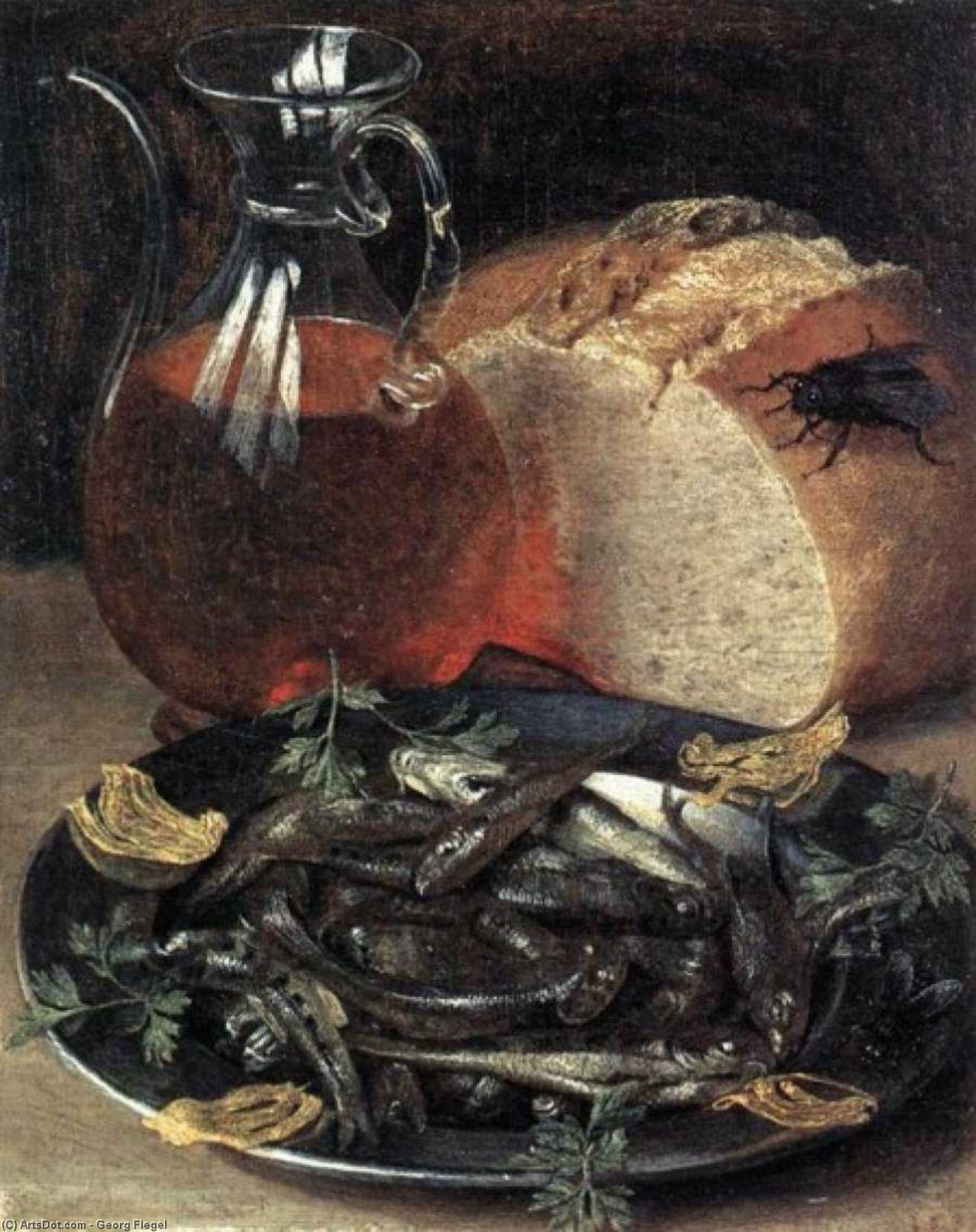
In the year 1637, amidst the opulent yet turbulent courts of Prague and Vienna, a singular artistic vision emerged from Olomouc that would forever alter the trajectory of the still-life genre. Georg Flegel’s Still-Life with Fish is far more than a mere depiction of a meal; it is a profound exploration of Mannerist intellect and visual trickery. At first glance, the viewer is greeted by a meticulously arranged porcelain plate, laden with various fish, accompanied by a solitary bottle and scattered fruit. Yet, as one lingers before this small but mighty composition, the boundaries between reality and illusion begin to dissolve. Flegel employs a technique of startling precision, where the arrangement of the aquatic subjects is not accidental but purposeful, designed to mimic human facial features. This breathtaking metamorphosis—where flora and fauna coalesce into a figurative phantom—echoes the groundbreaking spirit of Arcimboldo, inviting the observer into a world where nature itself becomes a mask.
The technical execution of this piece reveals Flegel’s status as a master of light and texture. Working on a modest scale of 19 x 15 cm, the artist achieves an expansive sense of depth through the clever manipulation of perspective. Each scale of the fish catches the light with a wet, shimmering brilliance, while the smooth surface of the porcelain plate provides a stark, clean contrast to the organic complexity of the subject matter. This mastery of illusionism—a hallmark of the Mannerist movement—challenges the viewer to look beyond the literal. The painting does not merely represent objects; it orchestrates them into a psychological experience, demanding an intellectual engagement that transcends the simple act of seeing. For the collector or the designer, this work offers a captivating focal point that rewards prolonged contemplation with every new discovery.
Symbolism and the Shadows of History
To understand Still-Life with Fish, one must look through the lens of the era in which it was born. Created during the height of the Thirty Years' War, a period of immense political instability within the Holy Roman Empire, the painting carries an underlying tension. While the surface presents a bountiful arrangement, there is a subtle, haunting quality to the composition that speaks to the fragility of life. The choice of fish as a central motif often carried deep religious and symbolic weight in 17th-century Europe, frequently serving as an allegory for spiritual nourishment or the transient nature of earthly existence. In this specific work, the "vanity" aspect of the still life—the concept of memento mori—is subtly woven into the very arrangement of the elements, reminding us that even the most beautiful and abundant displays are subject to the passage of time.
For those seeking to integrate such a masterpiece into a contemporary interior, this reproduction offers an unparalleled opportunity to introduce historical depth and intellectual intrigue. The painting’s ability to bridge the gap between the decorative and the profound makes it an ideal selection for spaces that value storytelling and classical elegance. Whether placed in a curated gallery setting or used as a sophisticated accent in a modern study, Flegel’s work serves as a window into a lost era of artistic experimentation. It is a piece that does not merely occupy space; it commands it, offering a timeless dialogue between the viewer and the profound mysteries of the natural world.