Otkrijte Georga Flegela, nemačkog slikara poznatog po prefinjenim mrtvim slikama iz 17. veka koje prikazuju hranu, cveće i elegantne postavke stolova. Istražite njegovo bogato umetničko nasleđe!
Otkrijte evropsku umetnost u Alte Pinakotheku u Minhenu! Istražite renesansna i barokna remek-dela Džerara, Rembranta i Rubensa u prelepom neoklasičnom ambijentu.
Nemačka
Minhen
Alte Pinakothek
Renesansna umetnost
600 slika
Muzej umetnosti
1836
Gotska renesansa
2
Koji je arhitektonski stil dominantno zastupljen u dizajnu Alte Pinakotheka?
A Symphony of Nature and Abundance
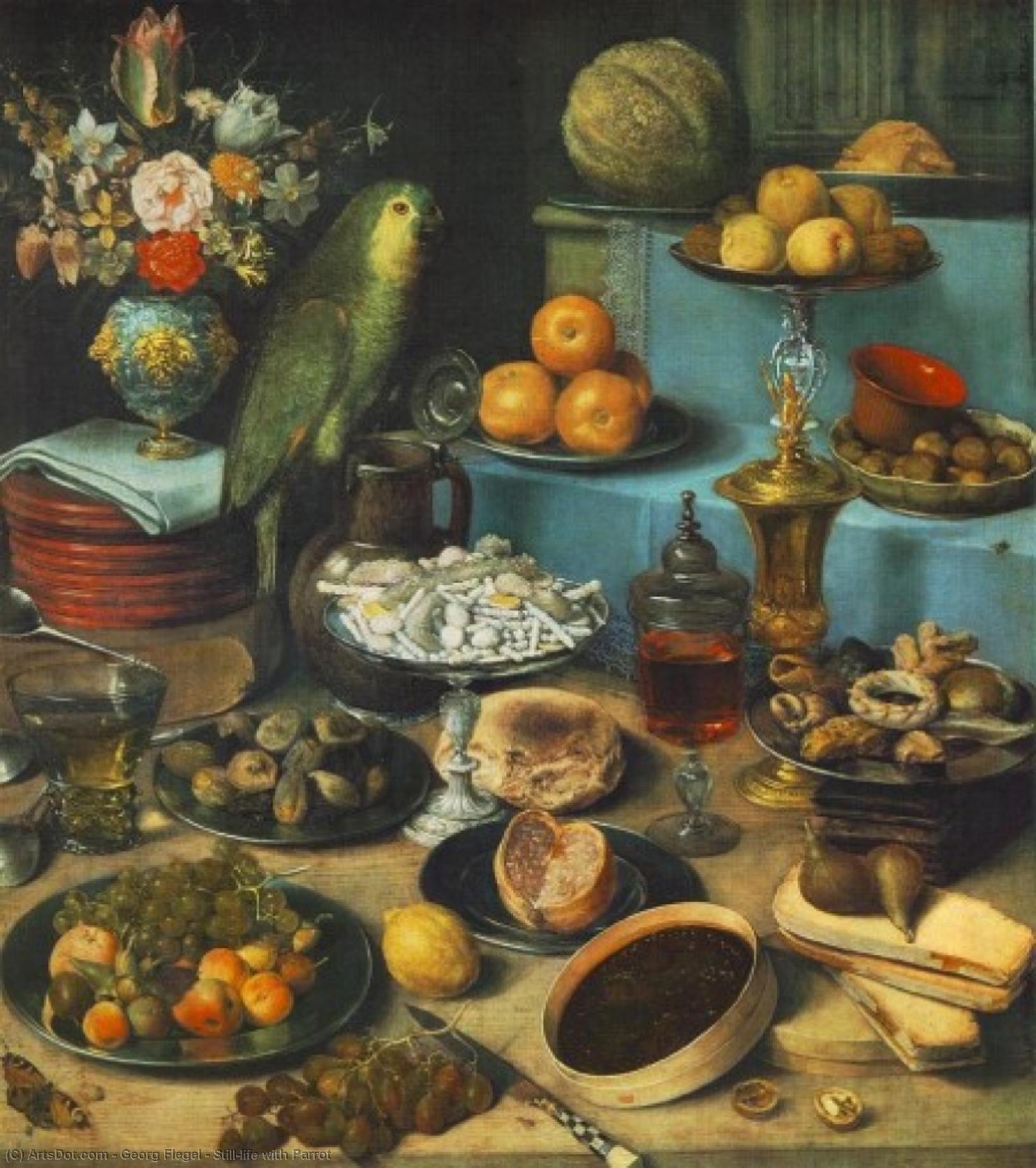
In the quiet, contemplative realm of seventeenth-century Dutch and German still life, few works capture the delicate tension between the wild and the domestic as exquisitely as Georg Flegel’s Still-life with Parrot. This mesmerizing composition invites the viewer into a world where every element—from the vibrant plumage of an exotic bird to the humble skin of a ripening apple—is rendered with a devotion to truth that borders on the miraculous. The scene is set upon a sturdy table, a stage prepared for a silent drama of textures and colors. A parrot, perched with an air of regal curiosity, serves as the focal point, its presence bridging the gap between the untamed wonders of distant lands and the curated comforts of a refined interior. Around this central figure, a bountiful harvest of fruits and vegetables is scattered, creating a visual feast that celebrates the tactile richness of the natural world.
The technique employed by Flegel is nothing short of masterful, showcasing the meticulous precision characteristic of the era's finest practitioners. Each brushstroke serves to define the subtle gradients of light as it dances across the waxy surface of an apple or catches the soft, downy edges of a leaf. The artist utilizes a sophisticated interplay of light and shadow to create a profound sense of three-dimensionality, making the objects appear almost tangible to the touch. One can almost feel the cool smoothness of the ceramic plates and the crispness of the vegetables. This level of detail is not merely decorative; it is an exercise in observation, where the artist’s ability to replicate the luster of moisture or the matte texture of organic decay elevates the painting from a simple arrangement to a profound meditation on the fleeting nature of life.
Symbolism and the Art of Observation
Beyond its surface beauty, the Still-life with Parrot is steeped in the symbolic language of the Baroque period. In the context of the seventeenth century, such arrangements were rarely just displays of wealth or culinary abundance; they were often laden with memento mori—reminders of mortality and the passage of time. The parrot, an exotic inhabitant of a far-off world, represents the reach of human discovery and the allure of the unknown, yet its placement amidst perishable fruits suggests the inevitable cycle of growth and decay. The apples, scattered with intentional randomness, serve as symbols of both temptation and the seasonal rhythms of the earth. For the discerning collector or interior designer, this painting offers more than just a visual anchor; it provides a narrative depth that invites continuous re-examination.
For those looking to integrate such a masterpiece into a contemporary space, the emotional impact of Flegel’s work is unparalleled. A high-quality reproduction of this piece brings an atmosphere of timeless elegance and intellectual curiosity to any room. Whether placed in a sunlit library or a sophisticated dining area, the painting acts as a window into a bygone era of scientific wonder and artistic devotion. It commands attention not through loud colors or aggressive movement, but through a quiet, enduring grace that harmonizes perfectly with both classical and modern decor. To possess such a work is to hold a piece of history that celebrates the exquisite beauty found in the smallest details of our existence.