This Met website provides comprehensive information about the artwork, including its dimensions, credit line, curator’s department, and related research resources. It highlights Yewell's contribution to American art history and offers access to The Met's Open Access API for scholarly exploration.
The Grandeur Captured: A Study in Venetian Devotion
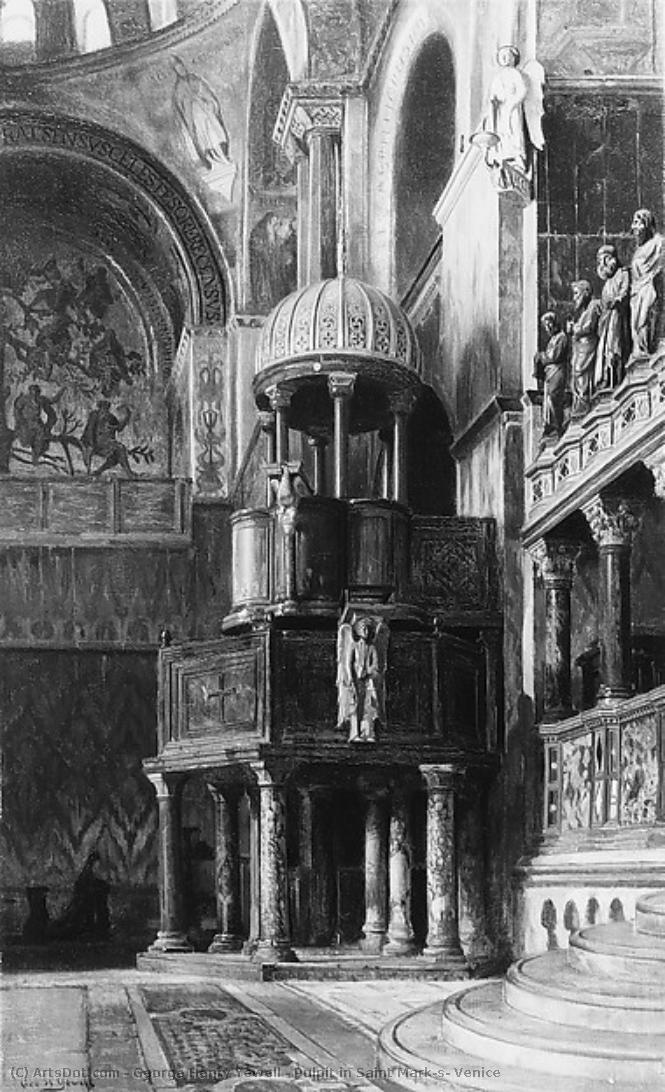
To gaze upon this depiction of the Pulpit in Saint Mark's Basilica is to step across the threshold of time and into the hushed, echoing grandeur of Renaissance Venice. This work, rendered with painstaking detail by George Henry Yewell, transcends mere architectural documentation; it is a meditation on faith, craftsmanship, and the enduring power of sacred space. The composition immediately draws the eye toward the ornate pulpit, which dominates the scene from a slightly elevated, yet intimately framed perspective. One can almost hear the echoes of sermons once delivered from this very spot, imagining the weight of history settling upon the carved stone.
Mastery in Line and Shadow: Technical Brilliance
What elevates this piece beyond simple illustration is Yewell’s masterful handling of line work. The artist employs a technique reminiscent of meticulous academic drawing—a pencil or charcoal rendering that speaks volumes through its graphite whispers. Observe how the varying densities of hatching and cross-hatching are deployed; they do not merely shade, but they build texture. The rough grain of ancient stone contrasts beautifully with the implied smoothness of polished marble, while the delicate patterns suggested in the background mosaics shimmer under an unseen light source. The use of linear perspective is breathtakingly effective, drawing the viewer deep into the basilica's vast interior, making the space feel both monumental and deeply personal.
Historical Echoes and Artistic Context
Dating to 1870, this work places us in a period where artistic study often merged rigorous observation with romantic reverence for antiquity. George Henry Yewell’s background suggests an artist deeply invested in the traditions of draftsmanship, skills honed through years of dedicated practice. The subject matter—a key feature within one of the world's most significant religious sites—grounds the piece firmly in 19th-century artistic documentation, yet its emotional resonance feels timeless. It speaks to a culture that valued visible artistry as an extension of spiritual devotion.
Symbolism and Emotional Resonance for the Modern Collector
For the contemporary collector or designer, this reproduction offers more than just decorative appeal; it is an artifact imbued with symbolic weight. The pulpit itself symbolizes proclamation—the sharing of profound ideas and enduring truths. The overall atmosphere evoked is one of awe and quiet contemplation. Imagine this piece gracing a library, a study, or a grand hall; it instantly bestows an air of cultivated intellect and deep cultural appreciation upon the space. It invites moments of pause, encouraging the viewer to look closer, to trace the lines, and to feel the weight of history in their own home.