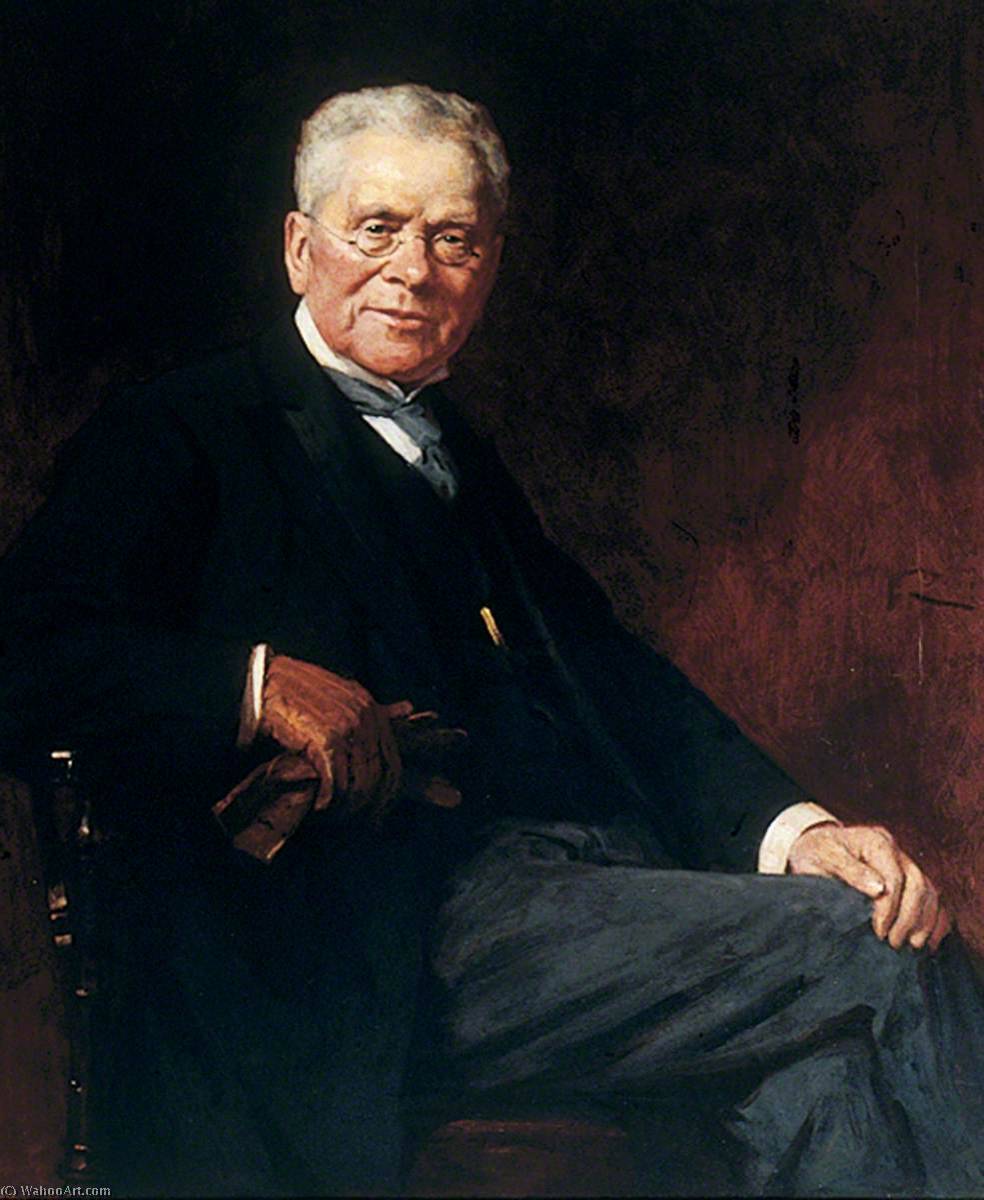
George Reid’s Impressionistic portrait captures Frederick Spark's quiet contemplation amidst diffused light, reflecting Canadian artistic heritage and a masterful alla prima technique—a serene glimpse into Victorian Canada that invites you to explore this timeless masterpiece.
Meta Description: George Agnew Reid (1860-1947): Slavite srpskog umetničkog stvaritelja poznatog po žanrovskim slikama i muralima koji su oblikovali nacionalnu umetničku identitet Kanade. Poznati dela uključuju "Spynie Castle", "Mrs Alexander Hay Moncur" i "Foreclosure of Mortgage".
Leeds Art Gallery je zgrada zaštićena kao spomenik od značaja koja čuva izuzetnu kolekciju britanske umetnosti od 18. veka do danas. Uz dela umetnika poput Klare Birnberg i Henrija Mura, nudi redovne izložbe i programe za sve uzraste.
Frederick R. Spark (1831–1919), JP – A Portrait of Quiet Reflection
The painting “Frederick R. Spark (1831–1919), JP” by George Reid stands as a testament to the understated beauty of Canadian Impressionism, capturing a moment of contemplative repose within a meticulously crafted tableau. Executed in 1907, this artwork transcends mere representation; it delves into the psychological landscape of its subject and subtly communicates a profound sense of inner peace—a characteristic hallmark of Reid’s oeuvre.
Subject Matter & Composition
At first glance, the portrait depicts Frederick R. Spark, a prominent Justice of Peace from Wingham, Ontario, seated comfortably in a chair positioned slightly behind another chair. The positioning suggests a deliberate consideration of space and hierarchy, reflecting the social standing of Spark within his community. Reid’s masterful use of light—primarily diffused natural illumination—bathes Spark's face and upper torso, highlighting the texture of his skin and conveying an aura of serenity. The inclusion of a book resting on Spark’s lap serves as a visual anchor, symbolizing intellect and perhaps hinting at a life dedicated to legal scholarship and civic duty.
Style & Technique – Impressionistic Nuances
Reid's artistic approach aligns closely with the tenets of Impressionism, prioritizing fleeting impressions over precise detail. Unlike academic painting traditions that sought to achieve photographic realism, Reid embraced brushstrokes—loose, visible marks—to capture the ephemeral qualities of light and atmosphere. The artist skillfully blended pigments on canvas using a technique known as alla prima – applying paint directly onto the surface without layering – resulting in vibrant colors and subtle tonal variations that imbue the painting with warmth and luminosity. Notice particularly the delicate rendering of drapery; Reid achieves an ethereal effect through careful observation and skillful blending, mirroring the Impressionist fascination with capturing the subtleties of natural light.
Historical Context & Artistic Influences
The painting emerged during a period of significant artistic innovation in Canada West—a time when artists like Reid were actively experimenting with new styles and techniques inspired by European masters such as Claude Monet and Pierre-Auguste Renoir. Reid’s formative years at Philadelphia’s Pennsylvania Academy of the Fine Arts under Thomas Eakins solidified his commitment to realism, albeit tempered by Impressionistic sensibilities. Eakins' influence is evident in Reid’s meticulous attention to anatomical accuracy—particularly noticeable in Spark’s hands—demonstrating a sophisticated understanding of artistic principles.
Symbolism & Emotional Resonance
Beyond its formal elements, “Frederick R. Spark” resonates with deeper symbolic meanings. The seated posture embodies stillness and contemplation – an ideal state for reflection and judgment. The book symbolizes knowledge and wisdom, suggesting Spark’s intellectual pursuits and moral integrity. Reid's masterful manipulation of light contributes to the painting's emotional impact, fostering a feeling of tranquility and conveying a sense of dignified repose. It invites viewers to contemplate the quiet beauty of human experience and appreciate the subtle artistry that elevates a portrait beyond mere likeness.
Conclusion
“Frederick R. Spark” exemplifies George Reid’s distinctive artistic vision—a harmonious blend of Impressionistic technique and humanist observation. This captivating artwork continues to inspire admiration for its understated elegance, technical prowess, and profound emotional depth, securing its place as a cornerstone of Canadian art history.