A Window Into Dutch Dignity
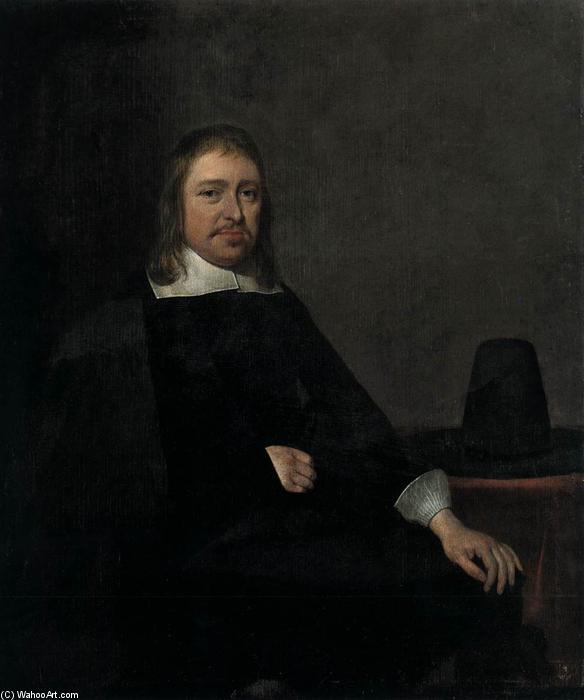
In the quiet corners of the seventeenth century, amidst the burgeoning prosperity of the Dutch Republic, there emerged a style of portraiture that sought to capture far more than the mere surface of a face. Gerard ter Borch’s Portrait of a Seated Man stands as a profound testament to this era, offering a window into a world defined by intellectual depth and understated elegance. This is not a painting designed for grand, theatrical displays; rather, it is an intimate encounter with a soul. The subject, captured in a three-quarter view, sits with a poised gravity that suggests a life of contemplation and social standing. Through the masterful use of chiaroscuro, ter Borch directs our gaze toward the subtle interplay of light and shadow, pulling the viewer into a private moment of stillness that feels as immediate today as it did in the 1660s.
The technical brilliance of this work lies in its remarkable tactile realism. Ter Borch was a virtuoso of texture, and in this portrait, his ability to manipulate oil paint on canvas is nothing short of extraordinary. One can almost feel the weight of the dark, heavy fabric of the man's coat and the soft, matte quality of the felt hat resting beside him. The artist employs thin, meticulous glazes to create a luminous skin tone that possesses a velvety, lifelike warmth, contrasted against the crisp, stark white of the collar. This careful attention to detail does not merely showcase technical skill; it serves to ground the subject in reality, making his presence feel tangible and his quiet dignity undeniable.
The Soul Within the Shadows
Beyond the physical rendering, the painting functions as a psychological study. The color palette is intentionally restrained, dominated by a somber symphony of blacks, deep browns, and muted grays. This lack of chromatic distraction forces the observer to focus on the subject's expression—a face etched with a sense of introspection and perhaps a hint of melancholy. In the context of the Dutch Golden Age, such portraits were often commissioned by the rising merchant and professional classes, who valued the virtues of restraint, piety, and intellectual rigor over the ostentatious displays of European royalty. The man's attire—sober yet refined—speaks to this cultural ethos of "quiet wealth" and moral character.
For the discerning collector or interior designer, this masterpiece offers a profound sense of atmosphere. It possesses an inherent ability to anchor a room, providing a focal point of historical weight and emotional resonance. Whether placed in a contemporary gallery setting or a classic study, the Portrait of a Seated Man invites conversation and reflection. It is more than a reproduction; it is an invitation to experience the timeless allure of Dutch mastery, bringing a piece of history’s most sophisticated era into the modern living space.