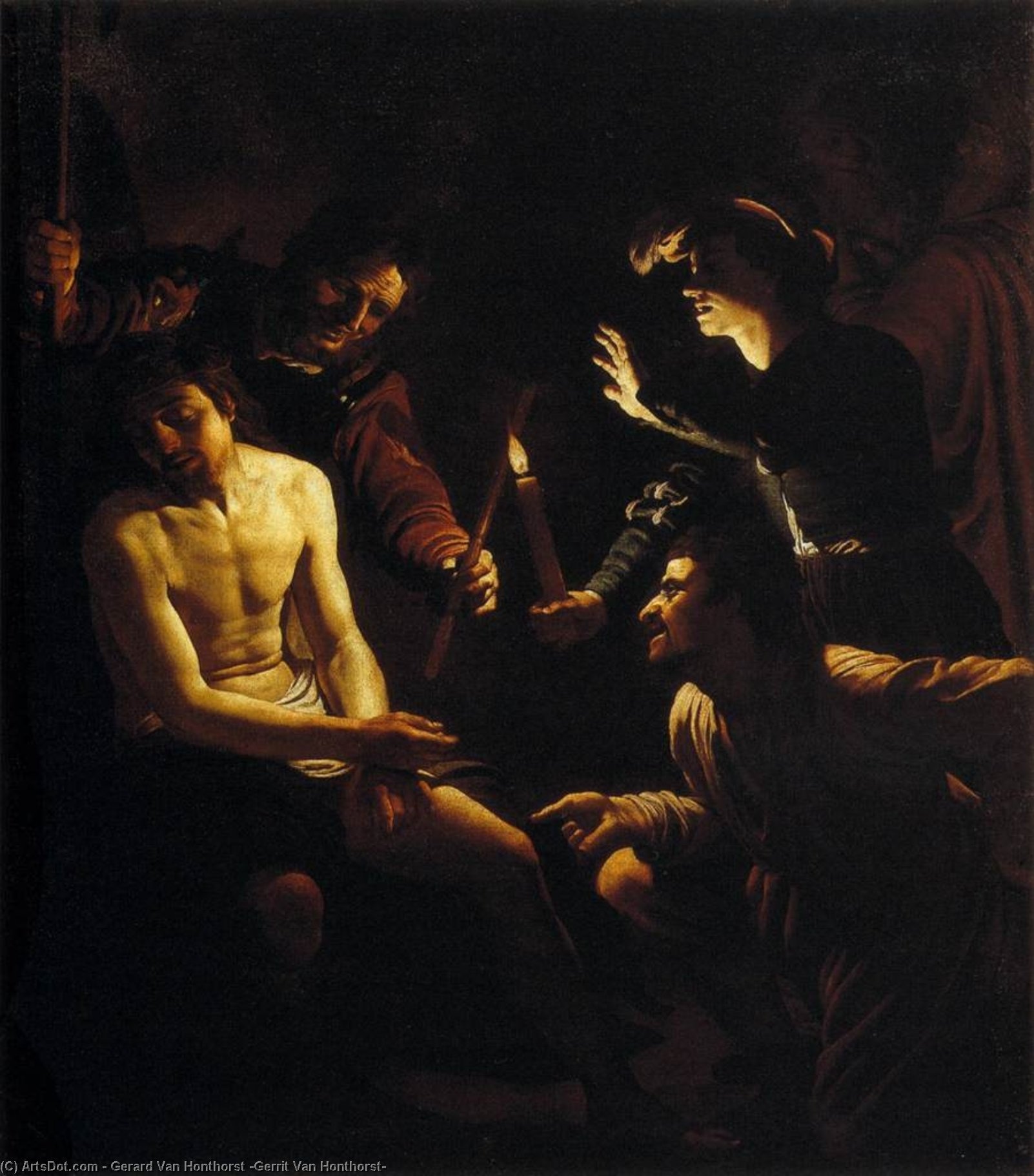
The Mocking of Christ: A Baroque Masterpiece by Gerard van Honthorst
Gerard van Honthorst’s “The Mocking of Christ,” painted in 1616, is more than just a depiction of a biblical scene; it's a visceral exploration of human suffering and religious drama – a cornerstone of the Dutch Baroque. Measuring an impressive 197 x 171 cm, this oil on canvas work immediately commands attention with its dramatic use of light and shadow, a hallmark of Honthorst’s distinctive style and a direct reflection of Caravaggio's profound influence. The painting transports us to a moment of intense vulnerability, capturing the raw emotion of Christ’s humiliation with startling realism.
A Symphony of Light and Shadow – Chiaroscuro at its Finest
Honthorst was a master of chiaroscuro, a technique that elevates a scene beyond mere representation. The composition is dominated by stark contrasts: pools of intense light illuminate the central figures – Christ and his tormentors – while the background dissolves into an almost impenetrable darkness. This deliberate manipulation of light isn’t merely aesthetic; it serves to heighten the emotional impact. The upward-directed illumination casts dramatic shadows, emphasizing the physical strain on Christ's body and intensifying the sense of anguish surrounding him. Notice how the figures are sculpted by this interplay of light and dark, creating a dynamic and almost three-dimensional effect that draws the viewer directly into the heart of the scene.
Symbolism Woven into the Narrative
Beyond its technical brilliance, “The Mocking of Christ” is rich in symbolic meaning. The painting’s narrative aligns closely with accounts found within the New Testament, depicting the moment following Christ's trial and condemnation. The figures themselves are rendered with meticulous detail – the roughspun clothing, the expressions of cruelty and despair – contributing to a powerful sense of realism. The dark background isn’t simply an absence of light; it represents the spiritual darkness surrounding Christ’s suffering, a deliberate choice that amplifies the painting's religious significance. The act of mockery itself is laden with symbolism, representing not just physical abuse but also the betrayal of faith and the ultimate sacrifice.
Historical Context & Artistic Legacy
Created during the height of the Dutch Golden Age, “The Mocking of Christ” reflects the artistic currents of its time. Honthorst’s work aligns with the broader Baroque movement's emphasis on emotional intensity and dramatic storytelling. His connection to Caravaggio is undeniable; he adopted the Italian master’s techniques of tenebrism, creating a style that was both powerful and deeply moving. The painting’s enduring appeal lies in its ability to evoke empathy and contemplation – a testament to Honthorst's skill as an artist and his profound understanding of human emotion. It is a significant piece within the oeuvre of Van Honthorst, alongside his celebrated work, “Saint Sebastian,” currently held at the National Gallery in London.