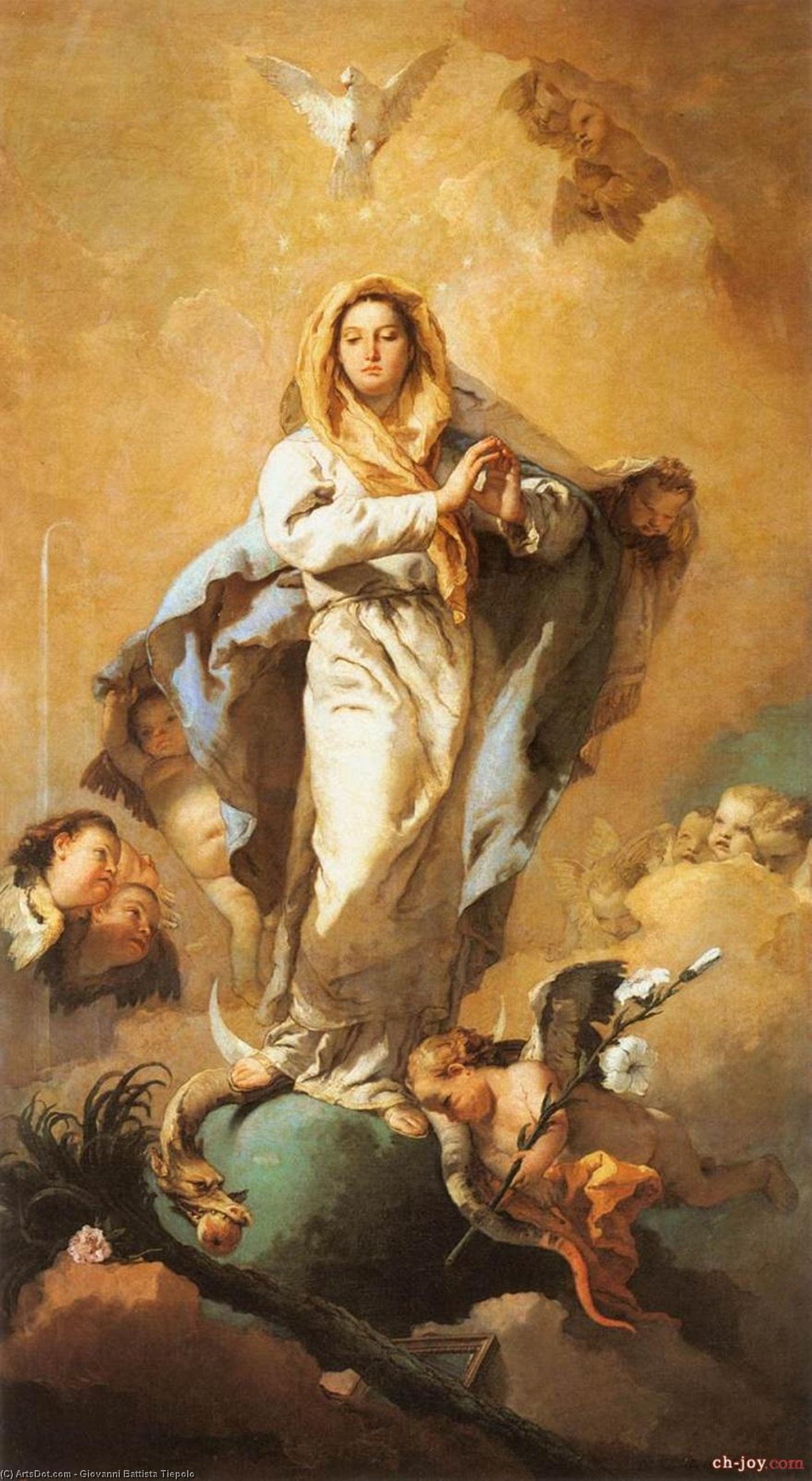
A Divine Embrace: Giambattista Tiepolo’s “The Immaculate Conception”
Giambattista Tiepolo's "The Immaculate Conception," painted in 1767, isn’t merely a depiction of the Virgin Mary; it’s an immersive experience of celestial grace and profound spiritual drama. This monumental canvas, measuring nearly three meters tall, transports the viewer to a realm where divine intervention unfolds with breathtaking splendor. Commissioned during a period of fervent religious devotion in Europe, Tiepolo masterfully blends Baroque dynamism with Rococo elegance, creating a work that is both powerfully emotive and exquisitely detailed.
The scene centers on Mary, presented as a figure of serene majesty within a billowing drapery that seems to ripple with the very breath of heaven. Her pose—a gentle inclination of her head, hands clasped in prayer—conveys an aura of profound humility and acceptance. Below her, bathed in radiant light, is the Sacred Heart of Jesus, a symbol of divine love and sacrifice, surrounded by a chorus of angels engaged in adoration. The globe at Mary’s feet represents Earth, subtly suggesting that this miraculous event – the Immaculate Conception – holds universal significance.
The Baroque Palette: Light, Movement, and Dramatic Composition
Tiepolo was renowned for his ability to capture light with unparalleled brilliance, a hallmark of his signature style. In “The Immaculate Conception,” he employs dramatic chiaroscuro—a stark contrast between light and shadow—to heighten the emotional impact of the scene. The golden hues emanating from the Sacred Heart flood the composition, illuminating Mary’s face and drawing the viewer's eye towards this central symbol of divine grace. The swirling clouds and drapery are rendered with a sense of dynamic movement, creating an illusion of depth and volume that pulls the viewer into the heart of the narrative.
The artist’s masterful use of diagonal lines—evident in the sweeping folds of Mary's robe and the placement of the figures—contributes to the overall sense of dynamism. These lines converge towards the upper portion of the canvas, directing the viewer’s gaze upwards toward the divine light, reinforcing the painting’s spiritual message. The flattened perspective, characteristic of Baroque art, prioritizes emotional impact over strict realism, allowing Tiepolo to convey a powerful sense of awe and reverence.
Symbolism Woven into Divine Narrative
Beyond its immediate depiction of Mary and Jesus, “The Immaculate Conception” is rich in symbolic meaning. The dove, a traditional symbol of the Holy Spirit, descends from above, signifying divine grace and the fulfillment of prophecy. The angels surrounding the Sacred Heart represent the heavenly host, celebrating this momentous event. Even the globe at Mary’s feet serves as a potent symbol—a reminder that this miraculous conception has implications for all humanity.
The painting's historical context is crucial to understanding its significance. During the 18th century, the doctrine of the Immaculate Conception was gaining traction within Catholic circles. Tiepolo’s work served not only as a devotional image but also as a visual argument for this belief—a testament to Mary’s purity and her unique role in salvation history. The painting reflects the prevailing religious fervor of the time, capturing the intense emotions associated with faith and divine grace.
A Legacy of Light: Tiepolo's Enduring Influence
Giambattista Tiepolo was a pivotal figure in Venetian art, known for his monumental frescoes that transformed palaces and churches into immersive experiences. “The Immaculate Conception” exemplifies his mastery of color, composition, and light—qualities that have ensured its enduring appeal. His innovative techniques continue to inspire artists today, cementing his place as one of the most influential painters of the Baroque era.
Reproductions of this magnificent artwork offer a remarkable opportunity to bring Tiepolo’s vision into your home or office. The rich colors and dramatic lighting will create a focal point that evokes feelings of serenity, reverence, and spiritual contemplation. Consider commissioning a hand-painted reproduction—a faithful recreation of this masterpiece that captures the essence of Tiepolo's genius.