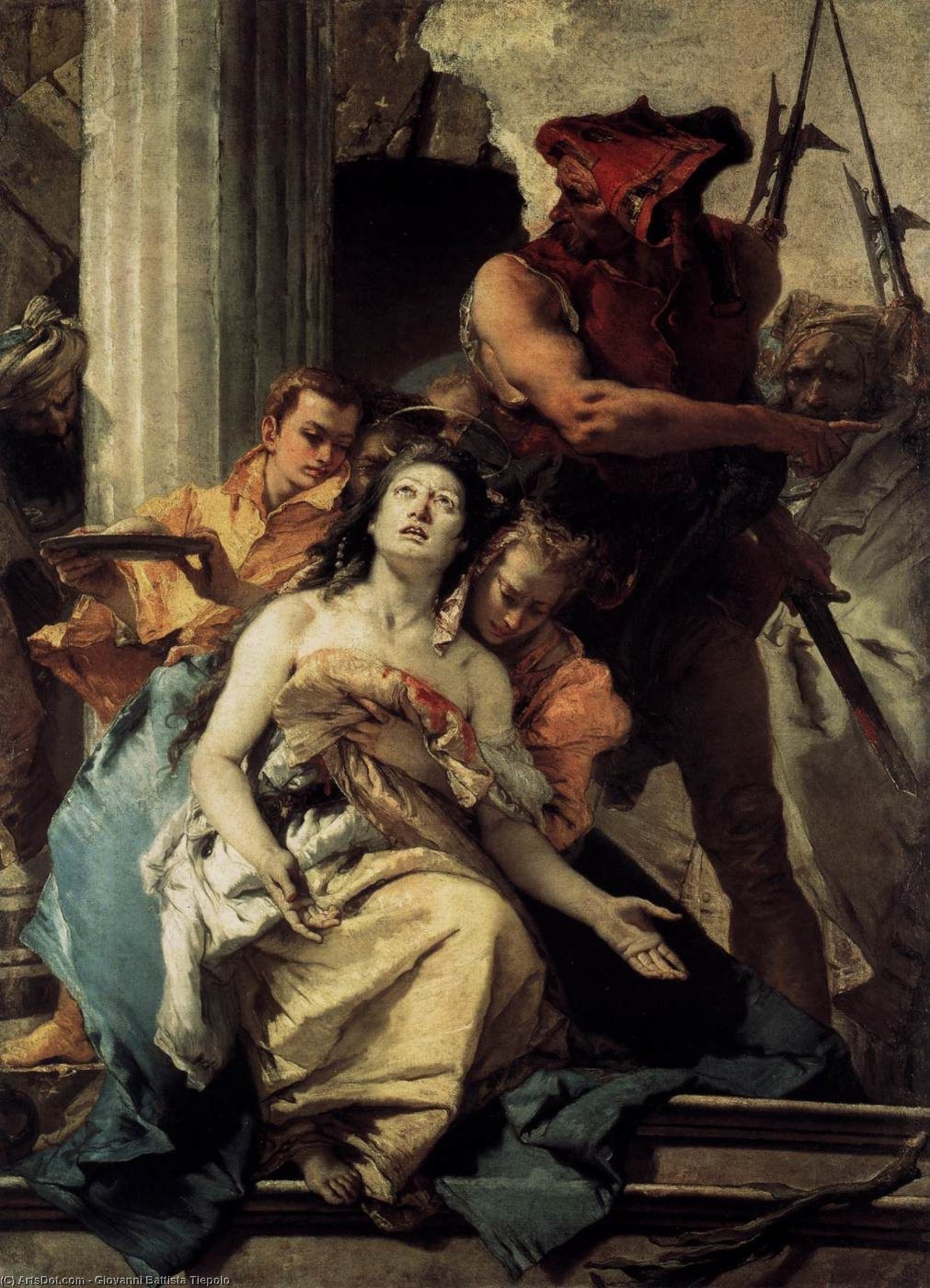
The
Martyrdom of St Agatha is a stunning oil on canvas painting created by
Giovanni Battista Tiepolo in 1750. This masterpiece measures 184 x 131 cm and is a perfect example of the
Rococo style. The painting was originally commissioned for the high altar of the church of S. Agata in Lendinara, Italy.
Historical Context
The story of
St Agatha is one of devotion and sacrifice. She steadfastly refused to make sacrifices to the heathen gods, even when faced with threats of torture and death. The painting depicts her martyrdom, which occurred in 251 AD during the persecution of Christians by Emperor Decius.
The Artist: Giovanni Battista Tiepolo
Giovanni Battista Tiepolo (1696-1770) was an Italian painter and printmaker from Venice. He is considered one of the greatest painters of the 18th century, known for his mastery of fresco painting and his ability to capture light and color in his works. You can find more information about
Giovanni Battista Tiepolo on
ArtsDot.com.
Style and Technique
The painting features a rich palette of warm colors, including reds, oranges, and yellows, which create a sense of warmth and intimacy. The artist's masterful use of
chiaroscuro adds depth and dimension to the composition, while his loose brushwork creates a sense of movement and energy.
Related Paintings by Giovanni Battista Tiepolo
If you enjoyed learning about the
Martyrdom of St Agatha, be sure to check out some of our other related paintings by
Giovanni Battista Tiepolo, including:
These works showcase Tiepolo's mastery of different styles and techniques, from still lifes to allegorical paintings. You can also visit the
Museum Parrocchiale (Verolanuova, Italy) on
ArtsDot.com to learn more about the artist's work.
The
Martyrdom of St Agatha is a powerful and moving painting that captures the spirit of Christian martyrdom. The work showcases Tiepolo's mastery of color, light, and composition, making it a true masterpiece of
Rococo art.