Explore the masterful works of Giampietrino, a Lombard painter in Leonardo's circle. Known for Madonnas & mythological scenes, his copies & originals showcase late-Renaissance style.
Louvre
(Paris, France)
Otkrijte bezvremenske remek-dela Louvra! Putujte kroz istoriju umetnosti od drevnog Egipta do renesansnih ikona – Mona Liza, Venere Miloska i još mnogo toga. Pariško kulturno blago čeka na vas!
A) Kraljevskom dvorcem isključivo za Luja XIV.
B
Prema datom tekstu, šta je bila prvobitna svrha palate Louvre?
A Poignant Encounter with Tragedy and Grace
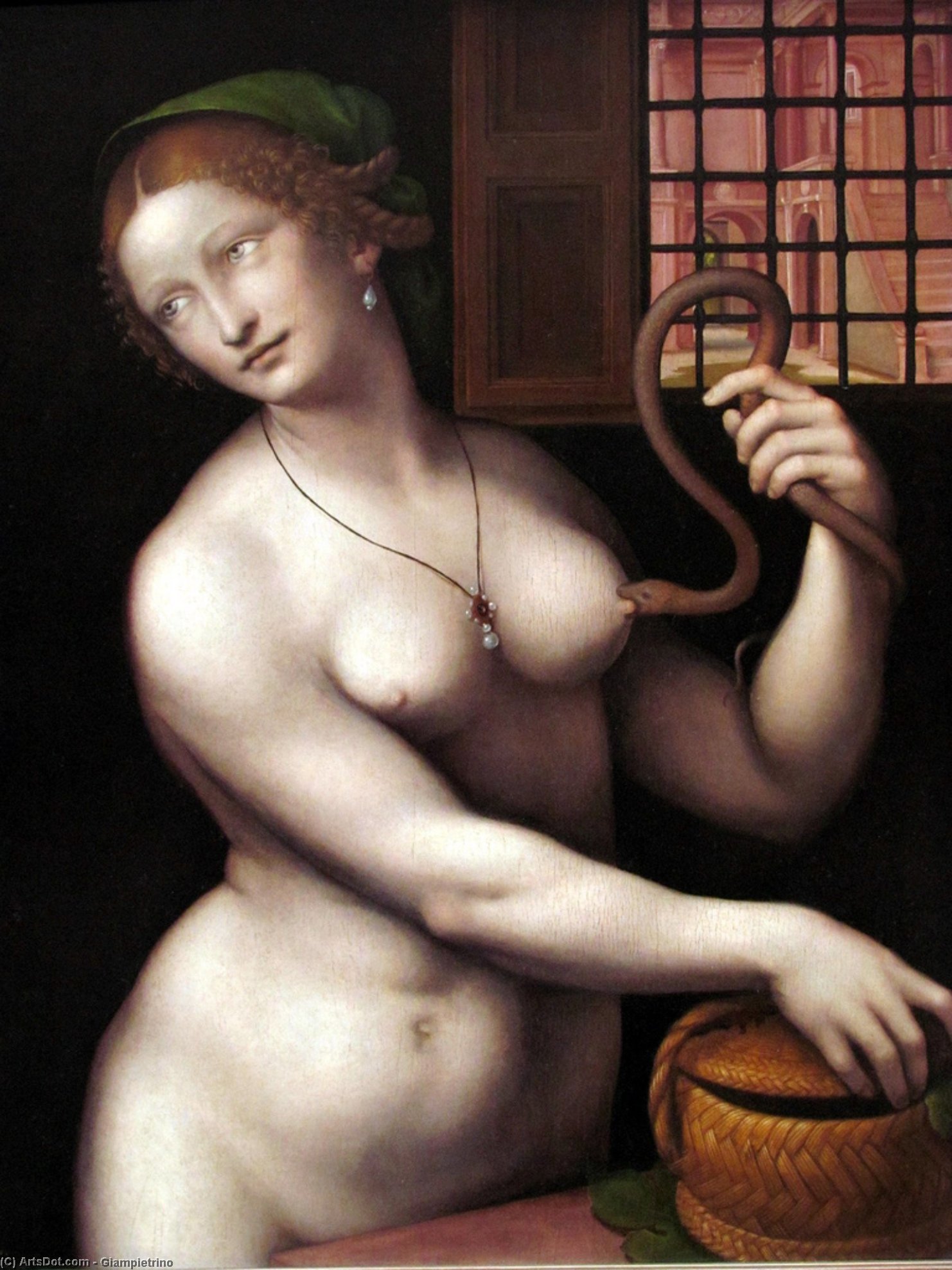
In the quiet intensity of Giampietrino’s The Death of Cleopatra, we are invited into a moment of profound historical and personal transition. This masterpiece, painted in 1538, serves as more than just a depiction of a legendary demise; it is a breathtaking fusion of Hellenistic grandeur and the delicate naturalism of the Italian Renaissance. The portrait captures the Egyptian Queen at the precipice of eternity, her figure imbued with a dignity that transcends the violence of her end. As she sits before an open, airy window, the soft light illuminates a scene that feels simultaneously intimate and monumental, making it an exquisite focal point for any collection dedicated to the evocative power of classical history.
The composition is a masterclass in Renaissance structure, utilizing a pyramidal arrangement to anchor Cleopatra within the frame. This technique, famously championed by Leonardo da Vinci—whose influence breathes through every stroke of Giampietrino’s brush—directs the viewer's eye upward toward the Queen's face, ensuring her emotional presence remains the heart of the work. The artist employs a sophisticated use of chiaroscuro, creating dramatic contrasts between light and shadow that lend a sculptural weight to her features and a haunting depth to the surrounding atmosphere. For the discerning collector, this interplay of light offers a dynamic visual experience that changes beautifully depending on the lighting of a room.
Symbolism and the Art of the Sublime
Every element within this painting is laden with symbolic resonance, designed to stir the soul and provoke contemplation. The most striking feature is the snake held within Cleopatra’s hand—a potent emblem that represents both the venomous deceit of her fate and the royal authority she wields even in her final moments. This delicate yet deadly interaction serves as a memento mori, a reminder of the fleeting nature of power and life. The way the light catches the scales of the serpent and the subtle textures of her jewelry creates a tactile reality that draws the viewer into her tragic narrative.
Beyond the central drama, the meticulous rendering of the drapery and the luminous skin tones speak to Giampietrino's mastery of oil glazes. The layering of pigment achieves a translucent quality, allowing a soft glow to emanate from Cleopatra’s form, contrasting with the darker, more somber undertones of her impending death. This tension between beauty and decay makes the piece an extraordinary choice for interior designers looking to introduce narrative depth and emotional complexity into a space. To possess a reproduction of this work is to hold a piece of the Renaissance spirit—a timeless tribute to the intersection of human vulnerability and eternal legend.