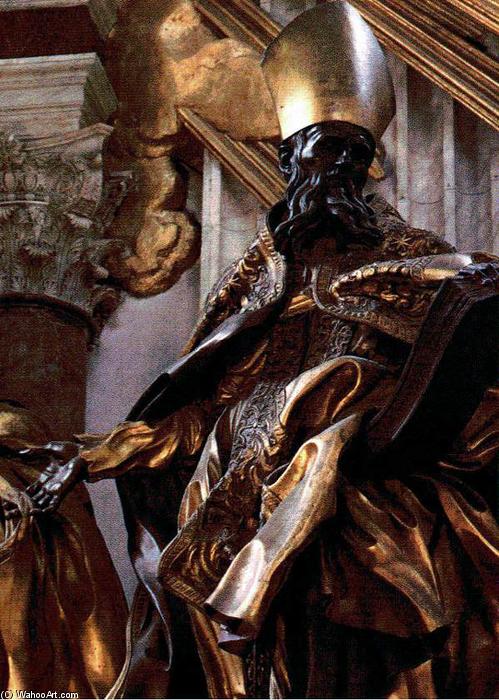
A Vision in Bronze: The Spiritual Intensity of Bernini’s Saint Augustine
Within the hallowed, echoing grandeur of St. Peter’s Basilica, amidst the overwhelming splendor of the Vatican, resides a masterpiece that commands a different kind of attention—one rooted not in outward spectacle, but in inward profoundness. Gian Lorenzo Bernini’s Statue of Saint Augustine is a breathtaking triumph of the Baroque era, capturing a moment of divine introspection that transcends the cold medium of bronze. While many of Bernini's works are celebrated for their explosive movement and theatricality, this sculpture offers a window into the soul, presenting a figure caught in the silent, turbulent currents of spiritual revelation. To behold this work is to witness the intersection of human intellect and divine grace, rendered with a technical mastery that breathes life into metal.
The subject, Saint Augustine of Hippo, stands as one of the most formidable pillars of Christian theology. Bernini does not merely depict a historical figure; he sculpts the very essence of contemplation. The artist utilizes the contrapposto technique to imbue the saint with a subtle, lifelike dynamism, suggesting that even in stillness, the spirit is in motion. Every fold of the religious attire, from the heavy drapery to the symbolic pallium draped over his shoulders, has been meticulously rendered to catch the light and create deep, dramatic shadows characteristic of the Baroque style. This interplay of light and dark—the chiaroscuro of sculpture—serves to heighten the emotional weight of the piece, drawing the viewer into Augustine's private moment of prayer.
Symbolism and the Language of Devotion
Every element of this sculpture serves as a silent sermon. As the eye wanders over the figure, one notices the hand resting tenderly upon his chest—a gesture that universally communicates humility, sincerity, and the heartbeat of faith. This physical connection to the self emphasizes the internal nature of Augustine's struggle and eventual triumph in faith. In his other hand, he holds a book, a powerful symbol of the profound theological treatises and scriptural wisdom that defined his life. The weight of the bronze seems to vanish when one considers how Bernini has used texture to suggest the softness of skin and the ruggedness of sacred texts, creating a tactile experience that invites deep emotional resonance.
For the discerning collector or the designer of contemplative spaces, this work offers more than mere decoration; it provides an anchor of historical and spiritual gravity. A high-quality reproduction of this masterpiece brings into a contemporary interior the same sense of gravitas and intellectual depth found in the heart of Rome. It is a piece that does not shout for attention but rather commands respect through its quiet, enduring power. Whether placed in a library, a study, or a curated gallery, the Statue of Saint Augustine serves as a timeless reminder of the beauty found in reflection and the enduring legacy of one of history's greatest artistic geniuses.