A Study in Isolation: De Chirico’s Haunting Horse
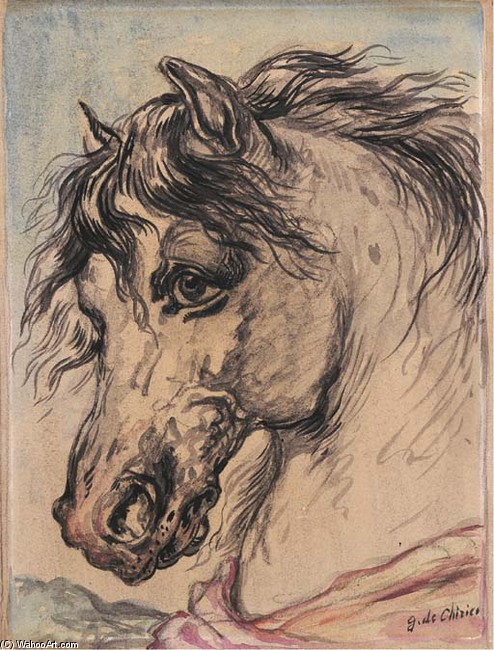
Giorgio de Chirico's "Study of a Horse" is not merely a depiction of an animal; it’s a distilled fragment of the subconscious, a visual echo of existential unease rendered with unsettling precision. Painted during his pivotal period of Metaphysical art – roughly between 1909 and 1917 – this work embodies the core tenets of his unique aesthetic: a deliberate fracturing of reality, an exploration of memory and dream, and a profound sense of alienation. The image presents a horse, partially turned away from the viewer, its head tilted in a gesture that suggests both attentiveness and detachment. Its long, flowing mane and tail are rendered with meticulous detail, hinting at a majestic presence, yet the overall effect is profoundly melancholic. The muted color palette – dominated by ochres, browns, and greys – contributes to this atmosphere of quiet sorrow, evoking the stillness of a forgotten landscape.
De Chirico’s artistic journey was deeply rooted in both classical influences and modern anxieties. Trained initially at the Athens Polytechnic, he absorbed traditional techniques, but it was his time in Munich that truly shaped his vision. There, amidst the intellectual currents of pre-war Europe—the writings of Nietzsche, Schopenhauer, and Weininger—he began to dismantle conventional perspectives and explore the irrationality of human experience. This period saw him move away from representational painting towards a style characterized by dreamlike cityscapes, symbolic objects, and an unsettling sense of displacement. “Study of a Horse” perfectly encapsulates this shift; it’s less about portraying a living creature than capturing a fleeting impression, a fragment of a memory or a half-formed thought.
The Language of Symbolism
De Chirico's Metaphysical paintings are renowned for their intricate symbolism, and “Study of a Horse” is no exception. The horse itself carries multiple layers of meaning. In classical mythology, horses often represent strength, nobility, and wildness – qualities that here seem tempered by isolation and vulnerability. Its averted gaze suggests a retreat from the world, a refusal to engage fully with its complexities. The setting—a sparsely rendered landscape—further amplifies this sense of loneliness. The absence of other figures or familiar landmarks creates an atmosphere of profound solitude, reinforcing the horse’s detachment.
Furthermore, the inclusion of mannequins – a recurring motif in de Chirico's work – adds another layer of unsettling ambiguity. These inanimate figures, often positioned within his paintings, represent idealized forms stripped of their humanity, serving as silent witnesses to the drama unfolding before them. Their presence here subtly suggests a critique of modern society and its obsession with appearances, highlighting the emptiness beneath the surface of reality.
Technique and Perspective
The painting’s technical execution is equally significant. De Chirico employed a meticulous approach, utilizing precise lines and carefully rendered details to create an illusion of depth and space. However, he deliberately distorted perspective, employing techniques that challenge our sense of spatial orientation. The receding planes seem to converge at an impossible point, creating a disorienting effect that mirrors the subjective experience of memory and dream. The use of dry brushstrokes contributes to the painting’s textured surface, adding to its tactile quality and reinforcing the feeling of a tangible, yet elusive, reality.
Emotional Resonance and Legacy
"Study of a Horse" is not simply a beautiful image; it's a powerful meditation on themes of isolation, memory, and the fragility of human existence. It resonates with viewers precisely because it taps into our own anxieties about loneliness and the unsettling feeling that something essential has been lost. De Chirico’s work profoundly influenced the development of Surrealism, paving the way for artists who sought to explore the hidden depths of the unconscious mind. Reproductions of this evocative piece offer a unique opportunity to bring this haunting vision into your home, inviting contemplation and sparking dialogue about the complexities of human experience.
Resources: